 3 citations
,
October 1988 in “Clinics in Dermatology”
3 citations
,
October 1988 in “Clinics in Dermatology” Using 3% topical minoxidil can help women with hair loss, but more research is needed.
26 citations
,
June 1988 in “PubMed” 3% topical minoxidil is ineffective for severe chronic alopecia areata.
 5 citations
,
July 2020 in “JAMA Dermatology”
5 citations
,
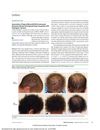
July 2020 in “JAMA Dermatology” Minoxidil solution applied twice daily improved hair growth in patients with Woolly Hair/Hypotrichosis due to LIPH gene issues, with mild side effects.
 14 citations
,
July 1987 in “Contact Dermatitis”
14 citations
,
July 1987 in “Contact Dermatitis” A small percentage of minoxidil users may develop an allergic skin reaction.
 September 2023 in “Cureus”
 Topical finasteride might be a good alternative for hair loss treatment with fewer side effects, but more research is needed.

Topical minoxidil was effective in promoting hair growth for male pattern baldness.
A woman's use of minoxidil for hair loss caused fluid buildup in her chest, which went away when she stopped using the product.
September 2022 in “Journal of Sulaimani Medical College” The combination treatment showed some improvement but wasn't significantly better than using betamethasone valerate alone.
 34 citations
,
January 1987 in “Dermatology”
34 citations
,
January 1987 in “Dermatology” Topical minoxidil effectively and safely treats extensive alopecia areata but doesn't change its course.
11 citations
,
February 1986 in “Archives of Dermatology” A 5% minoxidil solution led to better hair regrowth in severe alopecia areata than a 1% solution, but results were often not cosmetically acceptable.
 55 citations
,
February 1985 in “Archives of Dermatology”
55 citations
,
February 1985 in “Archives of Dermatology” Using minoxidil on the scalp can help grow hair for people with hereditary baldness.
 16 citations
,
January 1986 in “Dermatology”
16 citations
,
January 1986 in “Dermatology” Using minoxidil lotion for hair regrowth in androgenetic alopecia has limited success and should be evaluated carefully.
 July 1989 in “British Journal of Dermatology”
 Minoxidil helps increase hair growth and density in people with hair loss, with higher concentrations giving better results.
 May 1987 in “Inpharma (Balgowlah)”
 Topical minoxidil may slow hair loss but often doesn't lead to satisfactory hair regrowth and requires ongoing treatment.
 24 citations
,
March 1987 in “Journal of The American Academy of Dermatology”
24 citations
,
March 1987 in “Journal of The American Academy of Dermatology” Minoxidil 1% and 2% best promote hair growth and may prevent hair loss.
36 citations
,
March 1989 in “Cleveland Clinic Journal of Medicine” 3% topical minoxidil effectively treats extensive alopecia areata.
June 2026 in “Skin Appendage Disorders” Tretinoin may help some who don't respond to minoxidil alone, but it's not a first choice due to possible irritation.
 19 citations
,
May 2017 in “Dermatologic Surgery”
19 citations
,
May 2017 in “Dermatologic Surgery” Combining platelet-rich plasma with 5% minoxidil solution improves hair regrowth in androgenetic alopecia patients.
 13 citations
,
January 2016 in “Journal of the Egyptian Women's Dermatologic Society (Print)”
13 citations
,
January 2016 in “Journal of the Egyptian Women's Dermatologic Society (Print)” Minoxidil works faster and is more cost-effective for treating hair loss, but platelet-rich plasma microneedling can be an alternative for those who can't use minoxidil.
 1 citations
,
July 2017 in “Global journal of pharmacy & pharmaceutical sciences”
1 citations
,
July 2017 in “Global journal of pharmacy & pharmaceutical sciences” A new hair loss treatment was created using minoxidil and tretinoin in stable niosomes, which effectively released the drugs over time.
7 citations
,
April 2021 in “Journal of Pharmacy and Pharmaceutical Sciences” Cetirizine 1% helps hair growth in men with no major side effects, but minoxidil 5% works better.
 1 citations
,
January 2010
1 citations
,
January 2010 Mesotherapy is more effective than topical spray for female hair loss treatment.
 July 2025 in “Journal of Investigative Dermatology”
 Minoxidil may improve nail growth and appearance.
 December 2024 in “http://isrctn.com/”
 MpowerTM may improve hair growth and satisfaction more than plain minoxidil, with mild side effects.
 268 citations
,
April 2009 in “International Journal of Pharmaceutics”
268 citations
,
April 2009 in “International Journal of Pharmaceutics” Niosomes improve minoxidil skin delivery for hair loss treatment.
 3 citations
,
January 2019 in “DOAJ (DOAJ: Directory of Open Access Journals)”
3 citations
,
January 2019 in “DOAJ (DOAJ: Directory of Open Access Journals)” Pumpkin seed oil may help hair grow and could be an alternative treatment for male hair loss.
AGA causes permanent hair loss; women use 2% minoxidil, men use 1 mg finasteride daily.
 April 2008 in “Blackwell Publishing Ltd eBooks”
 AGA causes permanent hair loss; minoxidil helps men, finasteride helps men, minoxidil somewhat helps women, estrogens/antiandrogens lack evidence for women.
 226 citations
,
September 2001 in “Journal of The American Academy of Dermatology”
226 citations
,
September 2001 in “Journal of The American Academy of Dermatology” Hair loss in women is genetic, diagnosed by examination and biopsy, and treated with minoxidil, finasteride, or transplantation.
 14 citations
,
July 1987 in “Dermatologic Clinics”
14 citations
,
July 1987 in “Dermatologic Clinics” The document concludes that treating female hair loss should target reducing excess androgen and blocking its effects on hair follicles, with the best treatments being hormonal therapy, adrenal suppression, and topical minoxidil.