 1 citations
,
April 2025 in “Cureus”
1 citations
,
April 2025 in “Cureus” Dead Sea water and magnetized saline water can protect skin from UVB damage by activating autophagy.
January 2022 in “UiTM Institutional Repositories (Universiti Teknologi MARA)” 2EVCO, enhanced with aloe vera and pandan leaves, promotes faster hair growth and improves skin health.
 December 2024 in “Skin Appendage Disorders”
 Non-prescription products can help manage androgenic alopecia.
22 citations
,
January 1999 in “Journal of Toxicology Clinical Toxicology” An overdose of Rogaine can cause severe health issues like low blood pressure and heart problems.
June 2022 in “Zenodo (CERN European Organization for Nuclear Research)” Microneedles offer a painless way to deliver drugs effectively but need more research before they can be widely used.
 July 2019 in “Facial Plastic Surgery Clinics of North America”
 New techniques and technologies are improving facial plastic and reconstructive surgery.
 10 citations
,
January 2017 in “Expert Opinion on Pharmacotherapy”
10 citations
,
January 2017 in “Expert Opinion on Pharmacotherapy” The conclusion is that more research is needed to better understand and treat adult acne, and that patient education and simple treatment plans are important for better results.
11 citations
,
December 2021 in “Journal of Ginseng Research/Journal of ginseng research” Red ginseng oil is believed to have various health benefits and is safe, but more research is needed to fully understand how it works.
 183 citations
,
January 2018 in “Cosmetics”
183 citations
,
January 2018 in “Cosmetics” Essential oils in cosmetics can offer benefits but may cause allergies and should be used carefully.
 3 citations
,
October 2024 in “World Journal of Advanced Research and Reviews”
3 citations
,
October 2024 in “World Journal of Advanced Research and Reviews” Silver nanoparticles are useful in medicine and technology for their antibacterial properties and potential in drug delivery and dentistry.
 May 2026 in “Zenodo (CERN European Organization for Nuclear Research)”
 Biochanin A from soy is a promising and safe candidate for treating hair loss.
 5 citations
,
November 2007 in “British journal of nursing”
5 citations
,
November 2007 in “British journal of nursing” Nurses should treat emollients as medications, understanding their use and effects for treating skin conditions.
 2 citations
,
March 2020 in “International Journal of Molecular Sciences”
2 citations
,
March 2020 in “International Journal of Molecular Sciences” Topical treatments can deliver active molecules to skin stem cells, potentially helping treat skin and hair disorders, including skin cancers and hair loss.
 14 citations
,
December 2013 in “Experimental Dermatology”
14 citations
,
December 2013 in “Experimental Dermatology” The T-zone on the face has more androgen receptors and produces more oil than the U-zone.
 1 citations
,
September 2024 in “IP Indian Journal of Clinical and Experimental Dermatology”
1 citations
,
September 2024 in “IP Indian Journal of Clinical and Experimental Dermatology” Topical tofacitinib is a safe and effective treatment for autoimmune skin disorders.
 January 2021 in “Research journal for veterinary practitioners”
 The document does not determine if essential fatty acids improve rabbit skin health.
 1 citations
,
February 2025 in “Journal of Biomedical Research & Environmental Sciences”
1 citations
,
February 2025 in “Journal of Biomedical Research & Environmental Sciences” Mushroom extracts can help with anti-aging, skin care, and hair loss in cosmetics.
 17 citations
,
January 2016 in “Dermatology research and practice”
17 citations
,
January 2016 in “Dermatology research and practice” Emu oil may slow down skin healing but increases hair growth in burn wounds.
 January 2020 in “Veterinary world/Veterinary World”
 The natural topical treatment improved rabbits' skin and hair condition.
 1 citations
,
April 2017 in “Journal of Investigative Dermatology”
1 citations
,
April 2017 in “Journal of Investigative Dermatology” Topical glucocorticoids thin the skin and change collagen structure.
 January 2023 in “Vìsnik problem bìologìï ì medicini”
 Androgenic alopecia causes hair follicle degradation and skin restructuring, but some hair elements remain.
 5 citations
,
August 2018
5 citations
,
August 2018 Plant extracts can benefit skin but must be safe and high-quality.
 3 citations
,
October 1979 in “Laboratory animals”
3 citations
,
October 1979 in “Laboratory animals” Hairless rats are good for testing anti-inflammatory drugs, similar to haired rats, without needing to remove fur.
 September 2014 in “Springer eBooks”
 Men and women experience skin aging differently due to changes in sex hormone levels with age.
 22 citations
,
November 2018 in “Brazilian Journal of Pharmaceutical Sciences”
22 citations
,
November 2018 in “Brazilian Journal of Pharmaceutical Sciences” New physical methods like electrical currents, ultrasound, and microneedles show promise for improving drug delivery through the skin.
 1 citations
,
December 2023 in “npj biofilms and microbiomes”
1 citations
,
December 2023 in “npj biofilms and microbiomes” Single-cell engineered biotherapeutics show promise for skin treatment but need more research and trials.
 14 citations
,
October 2020 in “Natural Products and Bioprospecting”
14 citations
,
October 2020 in “Natural Products and Bioprospecting” Various treatments, including FDA-approved drugs, natural products, and oral supplements, can help with hair loss, but a patient's medical history and potential allergies should be considered when choosing a treatment.
 10 citations
,
November 2015 in “Experimental Dermatology”
10 citations
,
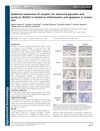
November 2015 in “Experimental Dermatology” Skin RAGE levels are linked to inflammation and cell death.
 4 citations
,
July 2013 in “Journal of Dermatological Science”
4 citations
,
July 2013 in “Journal of Dermatological Science” Pregnancy right after giving birth in mice lacking IL-10 causes milk that leads to liver issues and hair loss in their babies.
 1 citations
,
December 2015 in “The Egyptian Journal of Histology”
1 citations
,
December 2015 in “The Egyptian Journal of Histology” Hypothyroidism harms rat skin, but topical triiodothyronine may help improve it.