 16 citations
,
October 1994 in “The Journal of Steroid Biochemistry and Molecular Biology”
16 citations
,
October 1994 in “The Journal of Steroid Biochemistry and Molecular Biology” Two non-steroidal antiandrogens, RU 58841 and RU 56187, form a common metabolite at different rates, which may influence their effects; RU 56187 could be used for prostate cancer treatment and RU 58841 for acne treatment.
1 citations
,
January 2004 in “Medicina de Familia SEMERGEN” Finasteride may help prevent prostate cancer.
May 2008 in “10th European Congress of Endocrinology”  17 citations
,
November 1997 in “Andrology”
17 citations
,
November 1997 in “Andrology” Finasteride effectively treats enlarged prostate and male baldness, improves symptoms of hirsutism in women, but doesn't work for acne, and may delay prostate cancer progression with few side effects.
14 citations
,
June 2014 in “World Journal of Urology” The herbal combination of saw palmetto and stinging nettle reduces nighttime urination in men with urinary issues.
 2 citations
,
April 2019 in “Dermatologic Therapy”
2 citations
,
April 2019 in “Dermatologic Therapy” A patient with alopecia had hair regrowth with tofacitinib but developed a skin reaction, choosing to continue the treatment despite the side effect.
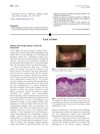 8 citations
,
December 2008 in “Journal of The American Academy of Dermatology”
8 citations
,
December 2008 in “Journal of The American Academy of Dermatology” Finasteride can cause a unique skin reaction on the penile shaft.
October 2025 in “Biomedicines” Terminalia chebula fruit extract helps hair growth by reducing DHT and boosting hair cell activity.
P-3074 effectively blocks scalp DHT better than oral finasteride.
December 2025 in “Actas Dermo-Sifiliográficas” Ritlecitinib is effective and safe for treating severe alopecia areata in people aged 12 and older.
January 2005 in “Chinese New Drugs Journal” Locally made finasteride tablets work the same as imported ones.
4 citations
,
April 2020 in “Dermatology practical & conceptual” Topical finasteride works faster and better than 17α-estradiol for postmenopausal hair loss.
 15 citations
,
November 2020 in “Pharmaceutics”
15 citations
,
November 2020 in “Pharmaceutics” Tofacitinib nanoparticles can safely and effectively treat alopecia areata by targeting hair follicles.
1 citations
,
May 2002 in “The Journal of Urology”  1 citations
,
May 2017 in “Journal of the American Academy of Dermatology”
1 citations
,
May 2017 in “Journal of the American Academy of Dermatology” Oral tofacitinib may be an effective and tolerable treatment for some people with severe alopecia areata.
 October 2008 in “The Journal of Urology”
 Finasteride reduces prostate cancer risk but may increase high-grade tumors and has side effects; biopsy methods have similar outcomes; psychosocial factors affect sexual recovery post-surgery.
 67 citations
,
January 2007 in “Climacteric”
67 citations
,
January 2007 in “Climacteric” Estrogens and SERMs can help with skin aging, but their safety and effectiveness need more research.
1 citations
,
September 2001 in “PubMed” ONO-3403 effectively reduces mouse skin tumor growth without side effects.
 1 citations
,
July 2024 in “Journal of the European Academy of Dermatology and Venereology”
1 citations
,
July 2024 in “Journal of the European Academy of Dermatology and Venereology” Oral dutasteride is effective and safe for treating frontal fibrosing alopecia.
January 2021 in “Figshare” Finasteride's molecular properties and active sites were identified using computational methods.
April 2026 in “The Journal of Urology” Finasteride and dutasteride reduce semen quality, with dutasteride having a stronger negative effect.
January 2005 in “Metas de Enfermería” Serenoa repens may help with prostate issues, but more research is needed to confirm its effectiveness.
143 citations
,
May 2002 in “PubMed” LGD1069 effectively prevents breast tumors in mice without toxicity.
 27 citations
,
October 2001 in “Journal of Medicinal Chemistry”
27 citations
,
October 2001 in “Journal of Medicinal Chemistry” Researchers found new potential but less potent rat enzyme inhibitors using a 3D model.
January 2026 in “Dermatologic Therapy” FOL100 lotion is safe and effective for increasing hair growth in men with male pattern baldness.
 October 2024 in “International Journal of Research in Dermatology”
 Tofacitinib is a promising and safe treatment for moderate to severe alopecia areata.
 2 citations
,
April 2021 in “Canadian Journal of Urology”
2 citations
,
April 2021 in “Canadian Journal of Urology” Five-alpha reductase inhibitors, like finasteride and dutasteride, can treat enlarged prostates, improve urination, reduce need for prostate surgery, and lower the risk of prostate cancer, but may increase the risk of higher grade prostate cancer. They can also treat male pattern baldness.
November 2022 in “Asian Journal of Pharmaceutical Research” The hydrogel with Finasteride provides controlled, sustained drug release and improved bioavailability.
January 2026 in “Journal of Dermatological Treatment” Oral finasteride may cause more sexual side effects than expected, possibly due to negative publicity and reporting bias.