14 citations
,
August 2017 in “International Journal of Immunopathology and Pharmacology” Photodynamic therapy improved skin issues from sorafenib when other treatments failed.
 February 2026 in “Zenodo (CERN European Organization for Nuclear Research)”
 Gut bacteria overgrowth may cause some Post-Finasteride Syndrome symptoms.
Alkylating agents can kill cancer cells but may cause skin and allergic reactions.
6 citations
,
October 2006 in “International Journal of Dermatology” Hair splitting and nail detachment are linked conditions.
33 citations
,
May 2017 in “Journal of Clinical Oncology” ETC-159 was safe up to 30 mg, but no tumor shrinkage was seen.
8 citations
,
November 2025 in “Journal of Translational Medicine” Targeted protein degradation could improve cancer treatment by effectively targeting the Wnt pathway.
2 citations
,
July 2009 in “Mayo Clinic Proceedings” A 66-year-old woman with skin lesions and other symptoms improved after treatment for porphyria cutanea tarda.
November 2021 in “Natural product research” Certain polyphenols may help treat skin pigmentation disorders.
 December 2025 in “Zenodo (CERN European Organization for Nuclear Research)”
 Ficus platyphylla leaf extract is likely safe in high doses for rats.
35 citations
,
December 2014 in “Clinical and experimental dermatology” Oxidative stress may play a role in causing alopecia areata.
 28 citations
,
January 2000 in “Medical Mycology”
28 citations
,
January 2000 in “Medical Mycology” Fungal infections in lab animals can interfere with research.
 May 2025 in “Antioxidants”
 Natural products show promise for treating diseases but need more research to understand and use them effectively.
November 2025 in “Contribuciones a las Ciencias Sociales” Laboratory tests are crucial for safer and more effective aesthetic procedures.
9 citations
,
March 2022 in “Journal of Chemical Information and Modeling” New inhibitors may reduce gut toxicity from cancer drugs.
 51 citations
,
January 2024 in “Nanoscale”
51 citations
,
January 2024 in “Nanoscale” Nano-PROTACs could improve drug targeting and delivery by using nanotechnology.
 July 2011 in “British Journal of Dermatology”
 Dermatologists give better information on pathology forms, hypersensitivity vasculitis is a common skin issue, misdiagnoses can occur, and various skin conditions are linked to loss of elastin or genetic factors.
"Coco de mono" seeds cause temporary hair loss due to selenocystathionine.
 128 citations
,
January 1996 in “Journal of analytical toxicology.”
128 citations
,
January 1996 in “Journal of analytical toxicology.” Hair analysis can detect cocaine use but doesn't accurately show the amount or timing of use.
 4 citations
,
January 2018 in “General Physiology and Biophysics”
4 citations
,
January 2018 in “General Physiology and Biophysics” The steroids allopregnanolone and allotetrahydrodeoxycorticosteron worsened absence seizures in rats.
 6 citations
,
September 2024 in “Metabolism and Target Organ Damage”
6 citations
,
September 2024 in “Metabolism and Target Organ Damage” Skin enzymes convert topical drugs into active forms, affecting drug effectiveness and safety.
 6 citations
,
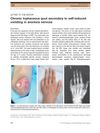
May 2010 in “The Journal of Dermatology”
6 citations
,
May 2010 in “The Journal of Dermatology” A woman with anorexia developed gout from self-induced vomiting.
 February 2023 in “Frontiers in Endocrinology”
 Too much male hormone in mothers can negatively affect the sexual behavior of both male and female baby mice.
 March 2025 in “medRxiv (Cold Spring Harbor Laboratory)”
 Hair proteomics could be a promising non-invasive way to identify stress-related disorders.
 5 citations
,
January 2017 in “Clinics in Dermatology”
5 citations
,
January 2017 in “Clinics in Dermatology” Skin symptoms without a medical cause often reflect psychological stress and are influenced by culture, requiring a team approach for treatment.
September 2018 in “BAUST Journal” October 2019 in “Asian College of Neuropsychopharmacology” July 2023 in “Panacea Journal of Medical Sciences” Chemotherapy often causes skin, hair, and nail problems in cancer patients.
 7 citations
,
January 2022 in “Animal Reproduction”
7 citations
,
January 2022 in “Animal Reproduction” Using rodents for research shows that health problems in the womb can cause diseases later in life.
21 citations
,
May 2014 in “Toxicological Sciences” Toluene diisocyanate exposure can cause immune sensitization by interacting with proteins in hair follicles and sebaceous glands.
 March 2024 in “Cancer Research”
 Eliminating senescent cells can prevent and reverse chemotherapy-induced peripheral neuropathy.