November 2025 in “Journal of Investigative Dermatology” A new genetic mutation causing Xeroderma Pigmentosum was found in an 8-year-old girl, affecting her DNA repair.
22 citations
,
February 2012 in “Journal of Investigative Dermatology” A specific gene mutation causes severe skin and nail issues and hair loss.
January 2022 in “Mammalian Genome” The wavy coat in NCT mice is caused by multiple genes, including a mutation in the Prss53 gene.
 February 2026 in “Frontiers in Medicine”
 Personalized sonidegib dosing can effectively treat Gorlin-Goltz syndrome with fewer side effects.
 July 2022 in “Journal of Investigative Dermatology”
 A specific mutation in Kras causes abnormal tissue changes by making a cell signal continuously active, which disrupts normal cell coordination.
 November 2025 in “Archiv für Pathologische Anatomie und Physiologie und für Klinische Medicin”
 Sporadic trichoblastic neoplasms generally don't recur or spread, with one case showing a specific genetic fusion.
Skin tumor cells in patients with tuberous sclerosis have higher levels of a protein called cathepsin B.
52 citations
,
June 1991 in “Journal of Virology” The hamster polyomavirus middle T antigen is linked to tumors in hamsters and associates with a specific tyrosine kinase.
11 citations
,
March 2021 in “The journal of investigative dermatology/Journal of investigative dermatology” A gene mutation causes early keratinocyte maturation leading to hair loss in Olmsted syndrome.
August 2019 in “Anais Brasileiros de Dermatologia” April 2012 in “Cancer Research” Stat3 influences keratinocyte stem cell behavior, affecting differentiation and migration.
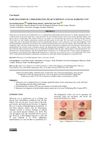 March 2022 in “Folia Medica Indonesiana”
 The lump on a woman's scalp was a rare, potentially cancerous tumor from the hair follicle, not a common cyst.
 April 2023 in “Cancer research”
 KRTAP2-3 could help predict cancer recurrence by identifying specific cancer cells.
28 citations
,
February 2010 in “Experimental Dermatology” The frizzy mouse and hairless rat mutations are due to changes in the Prss8 gene.
3 citations
,
August 2022 in “International Journal of Molecular Sciences” TSC2-/meth cells can cause skin lesions, hair growth, and lung issues, and may be treated with chromatin remodeling agents.
1 citations
,
December 2020 in “International journal of molecular sciences” External factors can cause skin cancer cells that usually don't spread to grow and form tumors in mice.
47 citations
,
April 2000 in “Experimental Dermatology” A new gene mutation causes a rare type of hair loss.
 5 citations
,
December 2017 in “The Journal of Dermatology”
5 citations
,
December 2017 in “The Journal of Dermatology” A new gene mutation caused a man's rare skin condition, Schöpf-Schulz-Passarge syndrome.
54 citations
,
February 2002 in “Carcinogenesis” Increasing SSAT makes skin more prone to cancer.
 10 citations
,
November 2017 in “Journal of Investigative Dermatology”
10 citations
,
November 2017 in “Journal of Investigative Dermatology” A mutation in the FAM83G gene is linked to skin and hair abnormalities in two related individuals.
175 citations
,
September 1998 in “British Journal of Dermatology” Keratin 17 gene mutations cause both steatocystoma multiplex and pachyonychia congenita type 2.
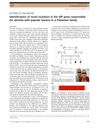 5 citations
,
September 2013 in “The Journal of Dermatology”
5 citations
,
September 2013 in “The Journal of Dermatology” Researchers found a new mutation in the HR gene causing hair loss and skin bumps in a Pakistani family.
January 2026 in “American Journal of Medical Genetics Part A” A new genetic variant causes trichothiodystrophy in two brothers, but their mother may carry it without showing symptoms.
 3 citations
,
February 2011 in “Journal of Biomedical Research/Journal of biomedical research”
3 citations
,
February 2011 in “Journal of Biomedical Research/Journal of biomedical research” A new mutation in the KRT86 gene was found to cause the hair disorder monilethrix in a Han family.
March 2025 in “Laboratory Investigation” Mesothelioma of the tunica vaginalis testis is rare, often high-grade, and has a median survival of about 24 months.
40 citations
,
December 2010 in “Human Genetics” 65 citations
,
September 2014 in “Orphanet Journal of Rare Diseases” Different STUB1 gene mutations cause varied symptoms in autosomal recessive ataxias.
 9 citations
,
July 2008 in “Oncology Reports”
9 citations
,
July 2008 in “Oncology Reports” HPV16-transformed cells can change human skin cell properties, aiding tumor growth.
January 2025 in “Case Reports in Oncological Medicine” Consider Sertoli-Leydig cell tumors in Peutz-Jeghers syndrome patients with adnexal masses.
26 citations
,
September 2001 in “Journal of Investigative Dermatology” BSSP may help skin tumors grow and could be a marker or target for skin cancer treatment.