August 2026 in “Frontiers in Surgery” Eyebrow reconstruction is improving with new, less invasive techniques and regenerative medicine.
 8 citations
,
January 2015 in “Clinical and Experimental Dermatology”
8 citations
,
January 2015 in “Clinical and Experimental Dermatology” A new model for hair regeneration in mice was created in 2015, which is faster and less invasive than the old method, producing normal hairs in about 21 days.
 January 2020 in “Modern Plastic Surgery”
 The traditional method of estimating skin graft success by looking is generally reliable but less so for inexperienced observers and in certain wound conditions.
4 citations
,
August 2008 in “Plastic & Reconstructive Surgery” The flap effectively sealed leaks and served as a barrier, with minor complications, for anterior skull base surgery.
 16 citations
,
February 2014 in “Journal of Investigative Dermatology”
16 citations
,
February 2014 in “Journal of Investigative Dermatology” Researchers developed a mouse model that tracks hair growth using bioluminescence, improving accuracy in studying hair cycles.
 September 2020 in “Journal of the turkish academy of dermatology”
 Some dermatology patients in Turkey use traditional medicine, with herbal remedies being most common, but these treatments can have mixed results and risks.
 6 citations
,
January 2018 in “Annals of dermatology/Annals of Dermatology”
6 citations
,
January 2018 in “Annals of dermatology/Annals of Dermatology” Hyaluronic acid filler can safely and effectively improve facial contour in Parry-Romberg Syndrome.
 March 1998 in “Dermatologic Surgery”
 The Miniflap Hair Restoration method effectively restores hair and reduces baldness, but may cause some hair loss and increased baldness in the crown, with the Juri flap method suggested as a quicker, less risky alternative.
39 citations
,
June 1999 in “Seminars in cutaneous medicine and surgery” Optical hair removal devices showed potential for long-term hair removal in 1999.
 August 1999 in “Current Opinion in Otolaryngology & Head and Neck Surgery”
 In 1999, surgical hair restoration improved a lot, making hair look more natural with fewer procedures, thanks to better scalp treatments and a new method called follicular-unit hair grafting.
The conclusion is that closing scalp wounds is possible, but restoring hair without donor material is still a major challenge.
1 citations
,
January 2010 Redistributing existing hair is the best solution for scalp alopecia.
May 2002 in “Therapeutische Umschau” Hypertrichosis and hirsutism can cause psychological issues, with laser treatments being the most promising for permanent hair removal.
Doctors recommend postoperative radiation for male breast cancer, advise against testosterone for vasomotor symptoms post-adrenalectomy, suggest non-hormonal treatments for atrophic vaginitis after mastectomy, note no specific treatment for anticoagulant-induced hair loss, and call for more research on silicosis from silicon carbide exposure.
 July 2014 in “Plastic and Reconstructive Surgery”
 The rib-sparing technique in breast reconstruction may lead to more complications without reducing the need for further surgery.
 July 2014 in “Plastic and Reconstructive Surgery”
 The rib-sparing technique in breast reconstruction may lead to more complications without reducing the need for further surgery.
 December 2020 in “Springer eBooks”
 Hair restoration surgery, using modern techniques like FUE and FUT, effectively restores hair with minimal recovery time and high success rate.
April 2026 in “International Journal of Engineering Research and Science & Technology” The new AI system accurately diagnoses hair disorders and offers personalized treatment recommendations.
 August 2010 in “The Journal of Dermatology”
 The document concludes that low-dose acne treatment is most suitable for moderate acne, with high patient satisfaction and low relapse rates.
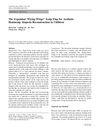 8 citations
,
March 2009 in “Aesthetic Plastic Surgery”
8 citations
,
March 2009 in “Aesthetic Plastic Surgery” The "flying-wings" scalp flap technique is a simple, safe, and effective way to reconstruct large areas of scalp loss in children.
 13 citations
,
April 2017 in “Journal of Alternative and Complementary Medicine”
13 citations
,
April 2017 in “Journal of Alternative and Complementary Medicine” Traditional and complementary medicine may help with skin conditions, but more high-quality research is needed.
 1 citations
,
January 2010 in “Elsevier eBooks”
1 citations
,
January 2010 in “Elsevier eBooks” The document concludes that local flaps are effective for reconstructive surgery in the head and neck, offering good skin match and function.
 March 2026 in “Clinical Cosmetic and Investigational Dermatology”
 Effective hair removal is crucial for better cosmetic results in forehead flap reconstruction, with laser hair removal being the preferred method.
 3 citations
,
January 2018
3 citations
,
January 2018 Amla oil may help treat hair loss.
 June 2024 in “Archives of Plastic Surgery”
 Hair transplantation on a reconstructed scalp can effectively improve hair growth and appearance.
 4 citations
,
May 2013 in “Annals of Plastic Surgery”
4 citations
,
May 2013 in “Annals of Plastic Surgery” Hair transplants onto a scalp reconstruction flap improved appearance successfully.
 9 citations
,
June 2014 in “Journal of Craniofacial Surgery”
9 citations
,
June 2014 in “Journal of Craniofacial Surgery” The method for sideburn reconstruction was safe and effective, giving natural-looking hair with minimal scarring.
 30 citations
,
February 2018 in “Journal of Pharmacy and Pharmacology”
30 citations
,
February 2018 in “Journal of Pharmacy and Pharmacology” Hedychium spicatum has medicinal properties but needs more research for scientific validation and use.
Ayurvedic herbs may reduce side effects and improve effectiveness of cancer treatments.
 26 citations
,
July 2006 in “Current Opinion in Otolaryngology & Head and Neck Surgery”
26 citations
,
July 2006 in “Current Opinion in Otolaryngology & Head and Neck Surgery” New techniques in scalp reconstruction have improved cosmetic results and reduced complications, especially for large defects.