April 2017 in “The journal of investigative dermatology/Journal of investigative dermatology” A girl with excessive hair growth had a genetic change on chromosome 17 that reduced the activity of two genes linked to hair growth.
 January 2022 in “Dermatology Review”
 EGFR inhibitors can cause unusual localized hair growth.
July 2025 in “Pediatric Transplantation” A rare skin infection in a 10-year-old kidney transplant patient was successfully managed by adjusting medication.
8 citations
,
January 2011 in “International journal of trichology” Accurate diagnosis of APL is crucial to avoid unnecessary treatments.
2 citations
,
March 2024 in “Pediatric Dermatology” Two siblings have a rare hair condition caused by a new genetic variant.
 March 2026 in “Dermatopathology”
 A rare skin tumor with extra hair growth was found and safely removed from a 27-year-old woman.
5 citations
,
March 1981 in “PubMed” A girl grew extra hair in areas where she had insect bites.
 April 2016 in “Journal of The American Academy of Dermatology”
 The study found that Temporal Triangular Alopecia often starts in early childhood, mainly affects the left side of the scalp, and has no effective treatment except surgery.
 September 2016 in “Journal of Dermatological Science”
 Björnstad syndrome causes twisted hair from birth.
144 citations
,
May 1990 in “Journal of the American Academy of Dermatology” 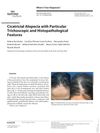 November 2018 in “Skin appendage disorders”
 The document concludes that a woman has both Frontal Fibrosing Alopecia and Lichen Simplex Chronicus, a previously unreported combination of conditions.
2 citations
,
June 2023 in “Medicine” A rare skin cancer on a man's elbow was successfully treated with surgery, showing no recurrence after one year.
 21 citations
,
October 2019 in “The journal of investigative dermatology/Journal of investigative dermatology”
21 citations
,
October 2019 in “The journal of investigative dermatology/Journal of investigative dermatology” A specific gene change plus an additional mutation in the same gene cause hereditary trichilemmal cysts.
18 citations
,
February 2001 in “Der Hautarzt” A woman with myotonic dystrophy had multiple skin tumors on her scalp, suggesting a genetic link.
December 2022 in “Laboratory Animal Research” Trichoblastomas in aged house musk shrews show unique features and may involve serum amyloid A in inflammation.
 32 citations
,
January 2017 in “Orphanet journal of rare diseases”
32 citations
,
January 2017 in “Orphanet journal of rare diseases” FOXN1 gene mutations cause a rare, severe immune disease treatable with cell or tissue transplants.
 2 citations
,
August 2014 in “Archivos argentinos de pediatría”
2 citations
,
August 2014 in “Archivos argentinos de pediatría” A 6-year-old girl with Turner syndrome also had psoriasis, alopecia areata, and trachyonychia.
8 citations
,
January 2013 in “Australasian journal of dermatology” Trichodysplasia spinulosa is a rare skin condition caused by a virus, treatable with antiviral medication.
 September 2023 in “International Journal of Dermatology”
 Younger people are at a higher risk for Fibrosing Alopecia in a Pattern Distribution than previously thought, with common symptoms and possible involvement of mast cells in its development.
1 citations
,
September 2023 in “Portuguese Journal of Dermatology and Venereology” Trichoscopy can help diagnose and decide when to biopsy folliculotropic mycosis fungoides.
 4 citations
,
January 2020 in “Skin appendage disorders”
4 citations
,
January 2020 in “Skin appendage disorders” A woman with an unusual pattern of hair loss was confirmed to have Frontal Fibrosing Alopecia and treated with specific medications.
4 citations
,
April 1978 in “PubMed” Netherton syndrome in a boy caused skin and hair issues, and treatment didn't work.
 July 2010 in “Journal of Investigative Dermatology”
 Scientists found gene mutations that affect hair loss, skin stem cells, and skin disorders, and identified drugs that may help treat blood vessel and skin conditions.
August 2021 in “Indian dermatology online journal” A young boy with a rare skin and nail condition improved significantly with simple topical treatments.
35 citations
,
September 2011 in “The Journal of Dermatology” Trichoscopy helps accurately diagnose temporal triangular alopecia.
 5 citations
,
January 2012 in “International journal of trichology”
5 citations
,
January 2012 in “International journal of trichology” A 2-year-old boy had no hair and unusual organ placement, and it's unclear if it's genetic or coincidental.
1 citations
,
January 2008 8 citations
,
July 2015 in “International Journal of Dermatology” A new DSG4 gene mutation causes hair defects in a young girl.
2 citations
,
January 2017 in “International Journal of Trichology” Trichoscopy can reveal specific hair and scalp changes in linear morphea.
3 citations
,
August 1988 in “PubMed”