January 2016 in “Dermatology online journal” A 15-year-old girl has a benign skin tumor on her neck.
9 citations
,
January 2012 in “International journal of trichology” Trichostasis spinulosa can be diagnosed with a simple skin biopsy and treated with specific gels, but lesions may return after stopping treatment.
4 citations
,
March 1999 in “International Journal of STD & AIDS” Netherton's syndrome can cause frequent bacterial infections beyond just skin issues.
February 2018 in “The journal of sexual medicine” Telemedicine is effective for sexual medicine consultations.
Diagnosing scalp fungal infections is difficult due to similar symptoms with other conditions, requiring careful examination and specific tests.
 41 citations
,
March 2017 in “PLoS neglected tropical diseases”
41 citations
,
March 2017 in “PLoS neglected tropical diseases” Isotretinoin shows promise as a treatment for Chagas disease by effectively inhibiting key transporters in the parasite.
 4 citations
,
December 2013 in “International Journal of Dermatology”
4 citations
,
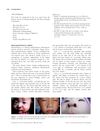
December 2013 in “International Journal of Dermatology” Three children with nasal fungal infections were successfully treated with potassium iodide and sometimes itraconazole.
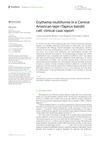 May 2023 in “Frontiers in veterinary science”
 A young tapir with a rare skin condition improved after treatment with wound cleaning, cream, and oral medication.
1 citations
,
August 2025 in “Australasian Journal of Dermatology” Anti-TNF therapy can cause a rare hair loss condition similar to alopecia areata.
19 citations
,
November 1979 in “Archives of dermatology” Tretinoin may be effective for treating Fox-Fordyce disease.
62 citations
,
July 2022 in “Science Immunology” TREM2 macrophages and unsaturated lipids contribute to acne inflammation.
9 citations
,
October 1947 in “The Lancet” 1 citations
,
November 1947 in “The Lancet” 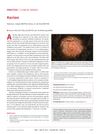 10 citations
,
May 2017 in “CMAJ. Canadian Medical Association journal”
10 citations
,
May 2017 in “CMAJ. Canadian Medical Association journal” The boy had a fungal scalp infection called kerion, which was cured with oral antifungal medication.
November 2021 in “CRC Press eBooks” Tinea capitis is a fungal infection of the scalp that mainly affects children and can cause symptoms from mild itching to severe inflammation.
91 citations
,
November 1987 in “Archives of Dermatology”  December 2025 in “TURKDERM”
 Facial trichostasis spinulosa is a chronic condition with significant cosmetic impact, especially in young women.
November 2021 in “Skin appendage disorders” Self-induced hair loss should be considered in patients with androgenetic alopecia.
March 2021 in “LA Referencia (Red Federada de Repositorios Institucionales de Publicaciones Científicas)” A dog with a rare skin infection caused by a human fungus was successfully treated with antifungal medication.
 17 citations
,
August 1983 in “Australasian Journal of Dermatology”
17 citations
,
August 1983 in “Australasian Journal of Dermatology” The review says skin conditions with sterile pustules need more research for better treatments.
February 2026 in “Bioscientia Medicina Journal of Biomedicine and Translational Research” Eosinophilic pustular folliculitis should be considered in teens with persistent skin issues for accurate diagnosis and treatment.
 55 citations
,
May 2014 in “Journal of feline medicine and surgery”
55 citations
,
May 2014 in “Journal of feline medicine and surgery” Combining systemic and topical treatments, guided by weekly fungal cultures, effectively treats cat ringworm.
January 2002 in “Linchuang pifuke zazhi” A young woman had a rare scalp tumor usually found in older women.
1 citations
,
March 2013 in “Clinical, cosmetic and investigational dermatology” The boy's hair loss was due to a hair-pulling disorder, not just a fungal infection.
 July 2022 in “The journal of investigative dermatology/Journal of investigative dermatology”
 The early genes of a specific virus can cause abnormal skin cell growth and hair follicle changes.
 October 2025 in “Indian Journal of Dermatology”
 Dermoscopy can help diagnose tuberous sclerosis by identifying unique skin patterns.
2 citations
,
January 1983 in “Archives of Dermatology” A 3-year-old boy's scalp infection was treated with ketoconazole.
11 citations
,
March 2002 in “Pediatric Dermatology” Temporal triangular alopecia is a non-scarring hair loss seen in some Asian children.
13 citations
,
July 2012 in “International Journal of Trichology” TTD symptoms vary widely, requiring thorough evaluations.
 January 2007 in “Revista del Centro Dermatológico Pascua”
 A 2-year-old boy was diagnosed with a rare genetic condition causing fragile hair, intellectual issues, and short stature.