 March 2012 in “Journal of The American Academy of Dermatology”
 Dermoscopy helps diagnose different hair loss conditions, and characteristics vary among ethnicities and individual cases.
April 2023 in “The Medical Journal of Australia” A five-year-old girl has a harmless, unchanging bald patch on her scalp.
 36 citations
,
June 2018 in “Journal of The American Academy of Dermatology”
36 citations
,
June 2018 in “Journal of The American Academy of Dermatology” Dermoscopy is useful for diagnosing various skin, hair, and nail disorders and can reduce the need for biopsies.
 July 2024 in “International Journal of Dermatology Venereology and Leprosy Sciences”
 Trichoscopy is a useful, painless tool for diagnosing and monitoring children's hair and scalp issues.
 1 citations
,
January 2019 in “Paediatrics and Child Health”
1 citations
,
January 2019 in “Paediatrics and Child Health” The document concludes that understanding hair biology and recognizing hair conditions are crucial for managing and treating hair loss in children.

A woman with a rare hair loss condition developed skin cancer in the bald area.
 November 2009 in “Actas dermo-sifiliográficas/Actas dermo-sifiliográficas”
 Hair transplantation effectively treated a bald patch in an 18-year-old woman with Temporal Triangular Alopecia.
 20 citations
,
January 2013 in “Annals of Dermatology”
20 citations
,
January 2013 in “Annals of Dermatology” Topical minoxidil successfully treated temporal triangular alopecia.
14 citations
,
January 2010 in “Dermatology” Some people with congenital triangular alopecia have a central tuft of hair in the bald patch, but the cause is unknown.
July 2025 in “International Journal of Trichology” Trichoscopy effectively diagnoses temporal triangular alopecia in children.
 13 citations
,
March 2002 in “Pediatric Dermatology”
13 citations
,
March 2002 in “Pediatric Dermatology” A child was initially wrongly diagnosed with a fungal scalp infection but actually had a non-scarring hair loss condition called Temporal Triangular Alopecia.
 7 citations
,
December 2008 in “Expert Review of Dermatology”
7 citations
,
December 2008 in “Expert Review of Dermatology” The document concludes that various childhood hair and nail disorders exist, some may improve on their own, and advances in genetics and immunology could enhance treatment and counseling.
 April 2012 in “Informa Healthcare eBooks”
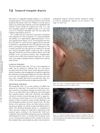
 Temporal triangular alopecia is a lifelong condition with hairless patches on the side of the head that may be present from birth.
 April 2024 in “Indian Journal of Paediatric Dermatology”
 Congenital triangular alopecia and vitiligo can occur together, but treatment for one may not affect the other.
 January 2010 in “Elsevier eBooks”
 The document concludes that different types of hair loss have specific treatments, and early diagnosis is crucial for preventing permanent hair loss.
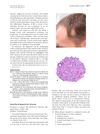
The man has Temporal Triangular Alopecia, a stable, non-scarring hair loss condition best treated with hair transplantation.
 24 citations
,
January 2015 in “Current problems in dermatology”
24 citations
,
January 2015 in “Current problems in dermatology” The document concludes that accurate diagnosis of hair loss in children is crucial due to limited treatment options and the condition's psychological impact.
 July 2018 in “Elsevier eBooks”
 The most common cause of hair loss in children is tinea capitis, followed by alopecia areata and telogen effluvium.
 1 citations
,
February 2014 in “Hair therapy & transplantation”
1 citations
,
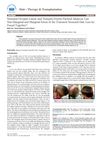
February 2014 in “Hair therapy & transplantation” A baby boy had two types of temporary hair loss at birth, which might be two forms of newborn hair loss combined.
 56 citations
,
March 2010 in “Journal of Dermatology”
56 citations
,
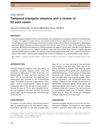
March 2010 in “Journal of Dermatology” Most cases of Temporal Triangular Alopecia are found in early childhood and may be related to genetic conditions.
 4 citations
,
February 1988 in “Journal of the American Academy of Dermatology”
4 citations
,
February 1988 in “Journal of the American Academy of Dermatology” Congenital triangular alopecia is more common than thought and some treatments can be beneficial for appearance concerns.
 1 citations
,
February 2004 in “Journal of The European Academy of Dermatology and Venereology”
1 citations
,
February 2004 in “Journal of The European Academy of Dermatology and Venereology” Hair loss improved with treatment and successful transplant.
 January 2016 in “Springer eBooks”
 The document concludes that there are various causes and treatments for hair loss, with hair transplantation being a notable option.
 122 citations
,
April 1995 in “Journal of Cutaneous Pathology”
122 citations
,
April 1995 in “Journal of Cutaneous Pathology” The document describes how to tell different types of non-scarring hair loss apart by looking at hair and scalp tissue under a microscope.
 8 citations
,
January 1996 in “Springer eBooks”
8 citations
,
January 1996 in “Springer eBooks” Male pattern baldness may be caused by factors like poor blood circulation, scalp tension, stress, and hormonal imbalances, but the exact causes are still unclear.
 April 2012 in “Informa Healthcare eBooks”
 The document concludes that diagnosing hair loss requires evaluating multiple histological features, as no single feature is definitive on its own.
2 citations
,
September 2023 in “Journal of the Egyptian Womenʼs Dermatologic Society” Exclamation mark hairs and broken hairs best indicate active alopecia areata.
 1 citations
,
April 2023 in “International Journal of Homoeopathic Sciences”
1 citations
,
April 2023 in “International Journal of Homoeopathic Sciences” Phosphorus may help treat alopecia areata.
 April 2024 in “International Journal of Research Publication and Reviews”
 Alopecia areata causes hair loss with varied treatment responses and frequent relapses.
 November 2017 in “Pediatrics in Review”
 A 4-year-old girl with hair loss was diagnosed with early-onset trichotillomania and improved with behavioral interventions.