 June 2026 in “EXPERIMENTAL & CLINICAL MEDICINE GEORGIA”
 Trichoscopy is useful for assessing androgenetic alopecia severity but can't determine hair loss stage alone.
 January 2022 in “Journal of Dermatology and Dermatologic Surgery”
 Trichoscopy is useful for quickly diagnosing different types of hair loss without needing biopsies.
10 citations
,
March 1997 in “Pediatric Dermatology” A rare case of trichothiodystrophy was found with autism, seizures, and mental retardation.
4 citations
,
April 2024 in “Clinical Cosmetic and Investigational Dermatology” Trichoscopy helps distinguish between scalp Discoid Lupus Erythematosus and Lichen Planopilaris for accurate diagnosis and treatment.
 February 2009 in “Journal of The American Academy of Dermatology”
 Female hair loss can be diagnosed using specific trichoscopy criteria.
 15 citations
,
November 2016 in “Journal of The American Academy of Dermatology”
15 citations
,
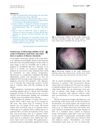
November 2016 in “Journal of The American Academy of Dermatology” Exclamation mark hairs suggest early scalp disease, while white dots indicate it's chronic.
 March 2023 in “Journal of skin and stem cell”
 Trichoscopy is a good, quick, non-invasive way to diagnose different types of hair loss.
1 citations
,
December 2022 in “Skin Appendage Disorders” Recognizing trichofolliculomas is important to avoid unnecessary surgery.
 16 citations
,
January 2010 in “American Journal of Neuroradiology”
16 citations
,
January 2010 in “American Journal of Neuroradiology” Specific brain and bone imaging findings can help diagnose Trichothiodystrophy.
 69 citations
,
August 2014 in “Journal of The American Academy of Dermatology”
69 citations
,
August 2014 in “Journal of The American Academy of Dermatology” Trichoscopy is a quick, cost-effective tool for diagnosing different hair loss conditions.
 January 2022 in “Klinicheskaya dermatologiya i venerologiya”
 Trichoscopy can diagnose hair loss by looking for common signs like uneven hair thickness, "yellow dots," and more thin hairs, which are found in both men and women.
28 citations
,
July 1980 in “British Journal of Dermatology” The hair disorder was caused by abnormal protein formation, making hair easily damaged.
 March 2025 in “Forum Dermatologicum”
 Trichoscopy is crucial for accurately diagnosing fibrosing alopecia in pattern distribution.
 March 2021 in “CRC Press eBooks”
 Trichoscopy helps tell apart Lichen planopilaris and Frontal fibrosing alopecia from other hair loss conditions.
4 citations
,
November 2018 in “Postgraduate Medical Journal” Trichoscopy is a useful, quick, and non-invasive way to diagnose tinea capitis.
1 citations
,
March 2022 in “Anais brasileiros de dermatologia/Anais Brasileiros de Dermatologia” Trichoscopy helps tell apart hair loss due to alopecia areata from trichotillomania in eyebrows.
March 2023 in “Journal of Cosmetic Dermatology” Trichoscopy is effective for diagnosing scalp ACC in darker skin tones.
 December 2024 in “Texila international journal of public health”
 Trichoscopy effectively diagnoses and monitors cicatricial alopecias, reducing the need for biopsies.
January 2016 in “Dermatology online journal” A 15-year-old girl has a benign skin tumor on her neck.
 January 2020 in “Medpulse International Journal of General Medicine”
 Trichoscopy helps diagnose and monitor hair loss, showing different signs at various stages of hair thinning.
The trichohyalin gene is located at chromosomal region 1q21 with other skin-related protein genes.
 September 2024 in “Archiv Euromedica”
 Trichoscopy is a quick, accurate, and non-invasive method to diagnose and treat non-scarring hair loss.
3 citations
,
May 2024 in “Skin Appendage Disorders” Trichoscopy helps diagnose and understand Discoid Lupus Erythematosus on the scalp by identifying specific patterns.
May 2022 in “Dermatology practical & conceptual” Trichoscopy is crucial for diagnosing and managing androgenetic alopecia, showing increased vellus hairs, empty follicles, and fibrosis with severity.
January 2022 in “Optometric clinical practice” A woman had a non-cancerous skin tumor on her eyelid removed successfully.
 3 citations
,
April 2016 in “International Journal of Dermatology”
3 citations
,
April 2016 in “International Journal of Dermatology” A young man was diagnosed with trichoepitheliomas, causing thick skin and hair loss.
47 citations
,
February 2014 in “Journal of Cutaneous Pathology” Matrical tumors share a common growth mechanism involving the Wnt pathway and consistent PHLDA1 expression.
13 citations
,
July 2012 in “International Journal of Trichology” TTD symptoms vary widely, requiring thorough evaluations.
5 citations
,
March 2023 in “Journal of the European Academy of Dermatology and Venereology” Trichoscopy can help identify systemic diseases, not just hair and scalp issues.

Both trichoscopy and folliscopy accurately diagnose telogen effluvium, but trichoscopy is easier and faster.