54 citations
,
November 1986 in “Journal of the American Academy of Dermatology” Generalized trichoepitheliomas with hair loss may indicate myasthenia gravis.
Asian patients show different trichoscopy features compared to Caucasians, like thicker hair and different alopecia signs.
 89 citations
,
December 2010 in “The Journal of Dermatology”
89 citations
,
December 2010 in “The Journal of Dermatology” The conclusion is that an algorithm using trichoscopy helps diagnose different types of hair loss but may need updates and a biopsy if results are unclear.
 March 2025 in “Forum Dermatologicum”
 Trichoscopy is crucial for accurately diagnosing fibrosing alopecia in pattern distribution.
 December 2020 in “TURKDERM”
 A 3-year-old boy was diagnosed with a rare, non-scarring hair loss condition called temporal triangular alopecia.
January 2025 in “Surgical & Cosmetic Dermatology” Temporal triangular alopecia causes permanent hair loss and can be managed with treatments like minoxidil or hair transplantation.
10 citations
,
April 2004 in “Journal of the American Academy of Dermatology” Localized hair growth and fat loss may share a common cause in lupus panniculitis.
1 citations
,
September 2025 in “Pediatric Dermatology” Behavioral interventions, especially habit reversal training, are most effective for treating trichotillomania in children.
2 citations
,
March 2023 in “Frontiers in Medicine” Proper cleansing can resolve dermatosis neglecta, which may indicate underlying psychiatric issues.
 February 2021 in “International journal of research in dermatology”
 A boy's hair, nails, and skin improved after 6 months of steroid treatment.
 90 citations
,
October 1983 in “British Journal of Dermatology”
90 citations
,
October 1983 in “British Journal of Dermatology” The unit area trichogram is a reliable method to assess hair loss and treatment response in people with androgenic alopecia by measuring hair density and thickness.
41 citations
,
December 2008 in “Pediatric Dermatology” Trichoscopy can diagnose Netherton syndrome without pulling hairs.
 March 2021 in “CRC Press eBooks”
 The document concludes that different patterns of hair thickness and scalp changes can help diagnose types of non-scarring hair loss.
4 citations
,
April 1983 in “The Journal of Dermatology” A 15-year-old girl with hypothyroidism had excess hair and skin issues due to blocked hair follicles.
 1 citations
,
April 2020 in “International Journal of Research in Dermatology”
1 citations
,
April 2020 in “International Journal of Research in Dermatology” Trichoscopy is a reliable method for diagnosing different types of hair loss.
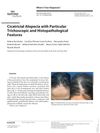 November 2018 in “Skin appendage disorders”
 The document concludes that a woman has both Frontal Fibrosing Alopecia and Lichen Simplex Chronicus, a previously unreported combination of conditions.
13 citations
,
July 2012 in “International Journal of Trichology” TTD symptoms vary widely, requiring thorough evaluations.
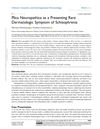 July 2023 in “Clinical, cosmetic and investigational dermatology”
 Plica neuropathica can be a sign of schizophrenia and improves with antipsychotic treatment.
 January 2008 in “Journal of The American Academy of Dermatology”
 Trichoscopy is a helpful and quick method to identify different types of hair loss in women.
December 2020 in “Dermatology practical & conceptual” Trichoscopy helped diagnose a teenage girl's hair loss as monilethrix.
October 2021 in “Skin appendage disorders” 72 citations
,
July 1984 in “Journal of Investigative Dermatology” 15 citations
,
February 2015 in “Anais brasileiros de dermatologia/Anais Brasileiros de Dermatologia” Dermoscopy helps accurately diagnose temporal triangular alopecia, avoiding unnecessary treatments.
1 citations
,
January 2013 in “Indian journal of dermatology, venereology, and leprology” A girl inherited excessive body hair from her mother and grandmother.
 4 citations
,
March 2015 in “Skin Research and Technology”
4 citations
,
March 2015 in “Skin Research and Technology” Trichotillometry is a reliable method to measure hair strength and assess hair loss treatments.
 39 citations
,
August 2021 in “JAAD International”
39 citations
,
August 2021 in “JAAD International” COVID-19 patients often experience hair loss and scalp pain, which may be related to the severity of their infection and treatment drugs.
9 citations
,
February 2012 in “Clinical Neurology and Neurosurgery” Dystonia may be part of PAS-4 and linked to immune issues.
 21 citations
,
April 2015 in “Psychology Research and Behavior Management”
21 citations
,
April 2015 in “Psychology Research and Behavior Management” Cognitive-behavioral therapy is the best treatment for hair-pulling disorder, and combining it with other therapies could improve results.
1 citations
,
January 2016 in “Dermatology Online Journal” Triangular temporal alopecia can occur in adults and should be correctly identified to prevent misdiagnosis.
April 2023 in “Dohuk medical journal” Trichoscopy effectively differentiates Androgenetic Alopecia from Telogen Effluvium.