 1 citations
,
March 2022 in “Berkala Ilmu Kesehatan Kulit dan Kelamin/Berkala ilmu kesehatan kulit dan kelamin (Periodical of dermatology and venerology)”
1 citations
,
March 2022 in “Berkala Ilmu Kesehatan Kulit dan Kelamin/Berkala ilmu kesehatan kulit dan kelamin (Periodical of dermatology and venerology)” Trichoscopy helps diagnose and monitor the treatment of fungal scalp infections in children.
 January 2026 in “Indian Journal of Dermatopathology and Diagnostic Dermatology”
 Corkscrew hairs can help diagnose trichotillomania.
 December 2024 in “IntechOpen eBooks”
 Trichoscopy helps diagnose and track alopecia areata by examining specific hair and scalp markers.
 129 citations
,
January 2009 in “International Journal of Trichology”
129 citations
,
January 2009 in “International Journal of Trichology” Trichoscopy can diagnose female hair loss with high accuracy by looking for specific patterns in hair and scalp appearance.
 1 citations
,
May 2016 in “Dermatologic Surgery”
1 citations
,
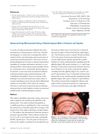
May 2016 in “Dermatologic Surgery” The document concludes that using a phototrichogram with a protractor and tapeline is a reliable and noninvasive way to measure hair loss.
 1 citations
,
March 2014 in “Turkderm”
1 citations
,
March 2014 in “Turkderm” Trichoscopy helps tell different hair loss types apart using specific scalp and hair patterns.
 April 2016 in “Journal of The American Academy of Dermatology”
 Different treatments are effective for hair loss conditions, but results vary by individual factors.
April 2023 in “Dohuk medical journal” Trichoscopy effectively differentiates Androgenetic Alopecia from Telogen Effluvium.
 68 citations
,
August 2012 in “Journal of the American Academy of Dermatology”
68 citations
,
August 2012 in “Journal of the American Academy of Dermatology” Dermatoscopy is a useful tool for diagnosing hair disorders and can help choose samples for more detailed analysis.
February 2023 in “Zenodo (CERN European Organization for Nuclear Research)” Trichoscopy is a useful and affordable tool for diagnosing Alopecia areata.
 2 citations
,
January 2008 in “Journal of The American Academy of Dermatology”
2 citations
,
January 2008 in “Journal of The American Academy of Dermatology” Trichoscopy is a helpful and quick method to diagnose hair loss without shaving.
 18 citations
,
July 2018 in “Skin appendage disorders”
18 citations
,
July 2018 in “Skin appendage disorders” Trichoscopy helps diagnose hair and scalp disorders in dark-skinned people by identifying unique patterns.
 16 citations
,
January 2015 in “Annals of Dermatology”
16 citations
,
January 2015 in “Annals of Dermatology” The study found specific hair and scalp patterns for different types of hair loss in Koreans, noting racial differences affect diagnosis.
 34 citations
,
April 2016 in “International Journal of Dermatology”
34 citations
,
April 2016 in “International Journal of Dermatology” Trichoscopy is a useful method for identifying primary cicatricial alopecias and their specific types.
 December 2024 in “Texila international journal of public health”
 Trichoscopy effectively diagnoses and monitors cicatricial alopecias, reducing the need for biopsies.
 7 citations
,
January 2018 in “Skin appendage disorders”
7 citations
,
January 2018 in “Skin appendage disorders” The document suggests recognizing "trichiatrists" as doctors specializing in hair and scalp health, using evidence-based treatments.
 2 citations
,
October 2023 in “Dermatology practical & conceptual”
2 citations
,
October 2023 in “Dermatology practical & conceptual” More research is needed to understand hair and scalp disorders in people with skin of color.
 37 citations
,
January 2017 in “International Journal of Dermatology”
37 citations
,
January 2017 in “International Journal of Dermatology” Trichoscopy helps tell apart alopecia areata and trichotillomania in Asians by looking at specific hair and scalp features.
October 2021 in “Indian Journal of Plastic Surgery” Trichoscopy helps hair transplant surgeons diagnose hair loss types and assess donor hair quality.
 January 2012 in “International Journal of Trichology”
 Psychological factors significantly affect hair health, suggesting a need for integrating mental health care in treating hair loss.
 89 citations
,
March 2018 in “The Journal of Dermatology”
89 citations
,
March 2018 in “The Journal of Dermatology” Trichoscopy helps diagnose and monitor alopecia areata by looking at a combination of specific hair and scalp features.
5 citations
,
February 2025 in “Journal of Clinical Medicine” A new method improves alopecia diagnosis using non-invasive steps.
 January 2022 in “Klinicheskaya dermatologiya i venerologiya”
 Trichoscopy can diagnose hair loss by looking for common signs like uneven hair thickness, "yellow dots," and more thin hairs, which are found in both men and women.
3 citations
,
January 2021 in “Medicinski arhiv” Trichoscopy, a hair loss evaluation technique, found that people with Androgenetic Alopecia have more thin hairs, yellow dots, and perifollicular discoloration than healthy individuals.
May 2025 in “International Journal of Trichology” Trichoscopic evaluation is important for assessing hair loss in women.
 30 citations
,
April 2009 in “Dermatologic Surgery”
30 citations
,
April 2009 in “Dermatologic Surgery” TrichoScan helps identify subtle hair thinning in women with androgenetic alopecia.
63 citations
,
February 2003 in “Australasian Journal of Dermatology” Global photography and phototrichogram techniques are the best current methods for measuring hair growth.
October 2024 in “Dermatology Practical & Conceptual” Trichoscopy effectively diagnoses eyebrow hair loss in certain conditions.
 91 citations
,
January 2009 in “International Journal of Trichology”
91 citations
,
January 2009 in “International Journal of Trichology” Different hair evaluation methods have their own pros and cons, and using multiple methods together is best for accurate hair loss diagnosis and tracking.
 September 2010 in “Advances in Dermatology and Allergology/Postępy Dermatologii i Alergologii”
 TrichoScan is reliable for counting and measuring hair density but may not accurately assess hair types in women with hair loss.