 June 2026 in “International Journal of Current Pharmaceutical Review and Research”
 PRP with minoxidil is more effective for hair growth than minoxidil alone.
 June 2026 in “International Journal of Drug Delivery Technology”
 Herbal remedies show promise for managing premature hair greying but need more research.
 May 2026 in “Clinical Cosmetic and Investigational Dermatology”
 White hair can make the scalp look more visible, which may be mistaken for hair loss.
 March 2026 in “Frontiers in Medicine”
 Diffuse unpatterned alopecia can affect donor areas, but treatment with finasteride and minoxidil can improve hair density.
 January 2026 in “Forum Dermatologicum”
 JAK inhibitors and combination therapies show promise for treating severe alopecia areata.

Higher cannabis exposure may lead to increased hair loss.
 January 2026 in “Journal of Case Reports and Scientific Images”
 Homeopathic treatment may help manage alopecia areata by considering the whole person.
 December 2025 in “IP Indian Journal of Clinical and Experimental Dermatology”
 Hair shaft disorders often indicate genetic or systemic issues and are managed by minimizing damage.
 December 2025 in “Reports of Morphology”
 Men with alopecia areata have different body fat distribution compared to healthy men.
 November 2025 in “International Journal of Research in Medical Sciences”
 Unani medicine may help treat a rare, hard-to-treat hair loss pattern in children.

Integrative hair therapy improved hair loss and regrowth.

Removing follicular plugging is crucial for effective alopecia treatment.
 June 2025 in “SAS Journal of Medicine”
 Early diagnosis of tufted hair is crucial for managing folliculitis decalvans, a chronic scalp condition.

Microneedling may improve quality of life and reduce inflammation in frontal fibrosing alopecia.
 April 2025 in “International Journal of Homoeopathic Sciences”
 A 7-year-old boy's hair regrew and his well-being improved after homeopathic treatment for alopecia areata.
 February 2025 in “Cureus”
 Hair transplants can rarely cause scalp inflammation leading to hair loss, needing early detection and treatment.

Intradermotherapy with minoxidil is as effective as topical application for treating hair loss.
 November 2024 in “Cureus”
 Combining therapy, behavior techniques, and medication can help manage trichotillomania and depression.
 August 2024 in “International Journal of Science and Research (IJSR)”
 PDO threads are effective and safe for non-surgical hair restoration.
 June 2024 in “Dermatology and therapy”
 Intramuscular injections improved hair density more than intradermal injections for treating hair loss.
 April 2024 in “Dermatologic surgery”
 Microneedling at a depth of 0.5 mm is the most effective single treatment for hair loss among the tested depths.
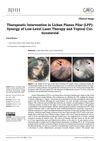 January 2024 in “Brazilian Journal of Hair Health”
 Combining low-level laser therapy with topical corticosteroids effectively improved Lichen Planopilaris symptoms.
 January 2024 in “Archives of dermatological research”
 Both treatments for alopecia areata showed similar modest effectiveness.
 October 2023 in “Dermatology practical & conceptual”
 Many patients experienced hair loss after COVID-19, with women affected more, starting on average 49 days post-infection.
 October 2023 in “European medical journal. Dermatology”
 Hair loss greatly affects quality of life, and dermatologists are crucial for proper diagnosis and treatment.
 July 2023 in “Dermatology practical & conceptual”
 Some lung cancer patients treated with EGFR inhibitors may develop a hair loss condition similar to folliculitis decalvans.
 July 2023 in “Dermatology Practical & Conceptual”
 A positive anagen pull test can help detect active Lichen Planopilaris.
 July 2021 in “British Journal of Dermatology”
 A woman with systemic sclerosis developed a unique scarring hair loss combining features of systemic sclerosis and frontal fibrosing alopecia.
 June 2021 in “International journal of research in dermatology”
 A boy and his father with hereditary hypotrichosis simplex were treated for hair loss, but the treatment result is unknown.

Plant roots respond to fungus smells by possibly using certain proteins and a plant hormone to change root growth, but more research is needed.