 January 2026 in “Forum Dermatologicum”
 Hair loss can be caused by cancer, treatments, or skin conditions, and trichoscopy helps diagnose it.
 January 2026 in “Indian Journal of Dermatopathology and Diagnostic Dermatology”
 Corkscrew hairs can help diagnose trichotillomania.
 September 2025 in “Cureus”
 Plica neuropathica can occur with diffuse alopecia and should be considered in diagnosis.
September 2025 in “International Journal of Medical Informatics” A machine learning model can predict scarring in lichen planopilaris using factors like vitamin D levels and diagnostic delay.
 July 2025 in “Clinical Dermatology Review”
 PRP significantly boosts hair growth in androgenic alopecia patients.
 January 2025 in “TURKDERM”
 Alopecia areata incognito in children can be effectively treated with triamcinolone acetonide and supplements, leading to full hair regrowth.
 December 2024 in “IntechOpen eBooks”
 Trichoscopy helps diagnose and track alopecia areata by examining specific hair and scalp markers.
 December 2024 in “Australian Journal of General Practice”
 The woman's hair loss pattern doesn't match typical conditions like alopecia areata or female pattern hair loss.
The most common cause of hair loss in children in Delta Egypt is alopecia areata, especially in rural school-aged kids.
 September 2024 in “Archiv Euromedica”
 Trichoscopy is a quick, accurate, and non-invasive method to diagnose and treat non-scarring hair loss.
 April 2024 in “Academic dermatology”
 Dermatologists should carefully manage hair loss in cancer patients to improve their quality of life.
 January 2024 in “Journal of Cosmetic Dermatology”
 Men's and women's pattern hair loss progress differently, with men showing more hair thinning and women having more widespread hair loss.
January 2024 in “Muller Journal of Medical Sciences and Research” Trichoscopy is a useful tool for diagnosing patchy hair loss, reducing the need for biopsies.
 October 2023 in “Dermatology practical & conceptual”
 Many patients experienced hair loss after COVID-19, with women affected more, starting on average 49 days post-infection.
 March 2023 in “Journal of skin and stem cell”
 Trichoscopy is a good, quick, non-invasive way to diagnose different types of hair loss.
Trichoscopic examination is crucial for diagnosing congenital triangular alopecia.
 30 citations
,
January 2014 in “Annals of Dermatology”
30 citations
,
January 2014 in “Annals of Dermatology” Scalp dermatoscopy helps diagnose and monitor hair loss severity.
 24 citations
,
January 2015 in “Current problems in dermatology”
24 citations
,
January 2015 in “Current problems in dermatology” The document concludes that accurate diagnosis of hair loss in children is crucial due to limited treatment options and the condition's psychological impact.
 12 citations
,
January 2016 in “Skin appendage disorders”
12 citations
,
January 2016 in “Skin appendage disorders” Repeated botulinum toxin injections for forehead wrinkles may cause hairline recession in some women.
 4 citations
,
August 2016 in “JEADV. Journal of the European Academy of Dermatology and Venereology/Journal of the European Academy of Dermatology and Venereology”
4 citations
,
August 2016 in “JEADV. Journal of the European Academy of Dermatology and Venereology/Journal of the European Academy of Dermatology and Venereology” Using cetirizine on the skin and taking vitamin D can help increase hair growth in children with hair loss from ectodermal dysplasia.
 1 citations
,
July 2008 in “Expert Review of Dermatology”
1 citations
,
July 2008 in “Expert Review of Dermatology” Normal hair thickness varies by scalp area and a mix of hair thicknesses is typical in healthy individuals.
January 2026 in “Diagnostics” Large language models are less accurate than dermatologists in diagnosing trichoscopic images.
December 2025 in “International Journal of Cosmetic Science” A new tool helps better assess and treat hair loss in Chinese men.
May 2025 in “Indian Dermatology Online Journal” Trichoscopy is crucial for diagnosing rare genetic hair disorders.
 September 2021 in “Mağallaẗ al-Muẖtar li-l-ʿulūm”
 Two sisters have rare hair disorders causing short, fragile, kinky hair.
 April 2021 in “The journal of investigative dermatology/Journal of investigative dermatology”
 6.1% of patients seeking PRP for hair loss had undiagnosed cicatricial alopecia, which PRP cannot treat.
 January 2019 in “Open access journal of mycology & mycological sciences”
 The article concludes that proper antifungal treatment is essential for treating scalp fungal infections in children, and trichoscopy is useful for diagnosis and monitoring.

Hair loss in SLE patients is mostly due to chronic telogen effluvium and is linked to moderate disease activity.
 January 2018 in “Skin appendage disorders”
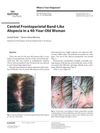
 A woman's hair loss was correctly diagnosed as Lichen planopilaris after initial misdiagnosis, highlighting the usefulness of trichoscopy in diagnosing hair disorders.
 May 2017 in “InTech eBooks”
 Hair pulling disorder is treated with therapy and medication; hair loss from tension can be reversed if caught early.