 33 citations
,
June 2016 in “Pediatric Dermatology”
33 citations
,
June 2016 in “Pediatric Dermatology” Some congenital hair disorders improve in childhood or with treatments like minoxidil and retinoids, while others like Netherton syndrome and trichothiodystrophy have a poor prognosis.
 17 citations
,
January 2011 in “Indian journal of dermatology, venereology, and leprology”
17 citations
,
January 2011 in “Indian journal of dermatology, venereology, and leprology” A rare genetic skin condition usually affecting males was found in a 9-year-old girl.
29 citations
,
February 1989 in “Journal of Cutaneous Pathology” A unique hair tumor with a rippled pattern was identified, showing incomplete differentiation and unusual cell arrangements.
14 citations
,
June 1989 in “Journal of dermatology” Three siblings had both Vohwinkel's disease and congenital alopecia, with no effective treatment.
19 citations
,
June 2020 in “BMC Cancer” Trichilemmal carcinoma shares genetic changes with other skin cancers, suggesting similar causes and potential treatments.
3 citations
,
January 2002 in “Actas Dermo-Sifiliográficas” Excessive minoxidil use can damage hair structure.
72 citations
,
July 1984 in “Journal of Investigative Dermatology” 26 citations
,
February 1991 in “PubMed” Trichotillomania can be identified by a "Friar Tuck sign" and nail-biting.
5 citations
,
March 2005 in “Pediatric dermatology” Keratosis Follicularis Spinulosa Decalvans is a rare genetic disorder causing skin and hair issues, often inherited through the X chromosome.

A 14-year-old girl with a condition that makes her hair easy to pull out also has a hair-pulling disorder, and treatment helped but she relapsed after a year.
 January 2018 in “Springer eBooks”
 Trichotillomania is a condition where people repeatedly pull out their hair, which can be triggered by stress and has various physical signs.
 May 2022 in “Experimental dermatology”
 Trichothiodystrophy hair is structurally abnormal with protein and organization issues.
16 citations
,
July 2021 in “American Journal of Medical Genetics Part A” Mutations in the LSS gene cause hair loss and may affect brain development, with varying severity.
 1 citations
,
January 2020 in “Skin appendage disorders”
1 citations
,
January 2020 in “Skin appendage disorders” A family was found with both Trichorhinophalangeal syndrome and Loose Anagen Syndrome, suggesting a genetic connection.
July 2025 in “Actas Dermo-Sifiliográficas” Trichodynia is a challenging scalp condition to treat, needing gentle care and more research for better solutions.
5 citations
,
November 1979 in “PubMed” A hereditary condition causes hair loss and twisted hair in some family members.
7 citations
,
January 2013 in “Indian dermatology online journal” A rare skin condition with dark, thick, warty patches and some hair loss was found in a newborn boy.
2 citations
,
March 2024 in “Pediatric Dermatology” Two siblings have a rare hair condition caused by a new genetic variant.
October 2024 in “Skin Research and Technology” Pili annulati causes zebra-striped hair but doesn't affect hair strength or quality of life.
7 citations
,
March 2004 in “Journal of the American Academy of Dermatology” Tiger tail banding and hair abnormalities are reliable indicators for diagnosing trichothiodystrophy.
 November 2018 in “Skin appendage disorders”
 The document concludes that a woman has both Frontal Fibrosing Alopecia and Lichen Simplex Chronicus, a previously unreported combination of conditions.
January 2025 in “International Journal of Trichology” Loose anagen hair syndrome in children often resolves on its own.
47 citations
,
November 1966 in “Archives of Dermatology” Trichorrhexis nodosa is mainly caused by hair trauma, not a metabolic defect.
32 citations
,
August 2016 in “Journal of the American Academy of Dermatology” Temporal triangular alopecia is a non-scarring hair loss in children, often linked to other health conditions.
18 citations
,
January 2013 in “Dermatology Online Journal” Trichofolliculoma is a rare skin bump on the face or scalp.
 13 citations
,
October 2004 in “Anais Brasileiros De Dermatologia”
13 citations
,
October 2004 in “Anais Brasileiros De Dermatologia” The document concludes that compulsive hair disorders, like trichotillomania, are complex and require careful diagnosis and treatment from both psychiatric and dermatological perspectives.
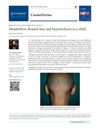 January 2026 in “Cosmoderma”
 A 9-year-old girl has a rare hair disorder causing beaded, sparse hair.
18 citations
,
September 1994 in “Clinical and Experimental Dermatology” Localized trichorrhexis nodosa is a hair condition where hair becomes fragile and breaks easily due to damage.
 12 citations
,
November 2014 in “Journal of Cutaneous Medicine and Surgery”
12 citations
,
November 2014 in “Journal of Cutaneous Medicine and Surgery” Antiviral medication valganciclovir may improve skin and hair in Trichodysplasia Spinulosa patients.
20 citations
,
October 2005 in “Archives of Dermatological Research”