 October 2025 in “Indian Dermatology Online Journal”
 Cultural practices can influence trichotillomania, requiring culturally sensitive treatment.
37 citations
,
April 1977 in “Journal of Cutaneous Pathology” Skin biopsy can help diagnose hair loss from trichotillomania.
August 2021 in “Oxford University Press eBooks” New treatments for hair-pulling disorder focus on personalized approaches and combining therapies for better results.
 May 2022 in “European medical journal”
 An 11-year-old girl with a hair-pulling disorder had a hairball in her stomach and was treated with medication, therapy, and a team of doctors.
4 citations
,
March 2024 in “International Journal of Surgery Case Reports” An 11-year-old boy with hair-eating habits needed surgery and psychiatric help.
1 citations
,
January 2025 in “JAAD reviews.” Hypertrichosis involves excessive hair growth and needs careful diagnosis and treatment, considering its psychological effects.
January 2015 in “Elsevier eBooks” Targeting the endocannabinoid system might help reduce hair pulling in trichotillomania.
 1 citations
,
December 2014 in “Klinik Psikofarmakoloji Bülteni-Bulletin of Clinical Psychopharmacology”
1 citations
,
December 2014 in “Klinik Psikofarmakoloji Bülteni-Bulletin of Clinical Psychopharmacology” Adding aripiprazole to the treatment improved hair-pulling symptoms in a teenager.
 1 citations
,
May 2003 in “Archives of Pathology & Laboratory Medicine”
1 citations
,
May 2003 in “Archives of Pathology & Laboratory Medicine” The boy had trichotillomania, causing hair loss, and treatment focused on habit reversal and support.
 9 citations
,
January 2013 in “Acta dermato-venereologica”
9 citations
,
January 2013 in “Acta dermato-venereologica” The conclusion is that "trichoknesis" should be recognized as a separate condition from trichodynia, characterized by itching instead of pain.
24 citations
,
July 2005 in “Journal of the American Academy of Dermatology” A woman's eyelashes grew thicker and longer after taking topiramate, but returned to normal when she stopped the medication.
28 citations
,
July 1980 in “British Journal of Dermatology” The hair disorder was caused by abnormal protein formation, making hair easily damaged.
 417 citations
,
March 1991 in “American Journal of Psychiatry”
417 citations
,
March 1991 in “American Journal of Psychiatry” Most adult chronic hair pullers are women who started in their early teens, often have other mental health issues, and may pull hair due to underlying psychiatric conditions.
40 citations
,
November 1966 in “Archives of Dermatology” Trichorrhexis nodosa is mainly caused by hair trauma and improves with gentler hair care.
 July 2022 in “Research Square (Research Square)”
 A young woman developed a bowel obstruction from eating hair extensions, highlighting the need for cultural awareness and research on these behaviors in the Black community.
 20 citations
,
November 2012 in “Journal der Deutschen Dermatologischen Gesellschaft”
20 citations
,
November 2012 in “Journal der Deutschen Dermatologischen Gesellschaft” Hair diseases can have psychological effects and should be treated with a combination of psychosomatic care, therapy, and medication.
 November 2017 in “Pediatrics in Review”
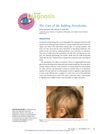
 A 4-year-old girl with hair loss was diagnosed with early-onset trichotillomania and improved with behavioral interventions.
January 2022 in “Clinical Cases in Dermatology” The girl's hair loss is due to trichotillomania, which may improve with behavioral therapy or a combination of treatments.
 January 2019 in “Clinical neuropharmacology”
 A girl's hair-pulling condition improved greatly after she started vitamin D treatment.
 15 citations
,
September 2015 in “Journal der Deutschen Dermatologischen Gesellschaft”
15 citations
,
September 2015 in “Journal der Deutschen Dermatologischen Gesellschaft” Skin doctors should recognize and treat conditions like hair-pulling and skin-picking early, often using therapy and medication, to help 50-70% of patients.
 February 2026 in “International Journal of Homoeopathic Sciences”
 Homeopathy may help reduce hair pulling and improve hair regrowth in trichotillomania.
July 2025 in “Actas Dermo-Sifiliográficas” Trichodynia is a challenging scalp condition to treat, needing gentle care and more research for better solutions.
65 citations
,
January 2012 in “International Journal of Trichology” N-acetylcysteine may help treat trichotillomania.
14 citations
,
May 1979 in “International Journal of Dermatology” Trichostasis spinulosa mainly affects the nose, with many tiny hairs in one follicle, possibly influenced by hormones and sunlight.
 37 citations
,
January 2017 in “International Journal of Dermatology”
37 citations
,
January 2017 in “International Journal of Dermatology” Trichoscopy helps tell apart alopecia areata and trichotillomania in Asians by looking at specific hair and scalp features.
 5 citations
,
January 2020 in “The mental health clinician”
5 citations
,
January 2020 in “The mental health clinician” Vitamin D supplements may reduce hair-pulling in people with Trichotillomania.
August 2025 in “Skin Appendage Disorders” Topical minoxidil can help improve hair in trichonodosis.
 August 2025 in “Psychiatry and Clinical Neurosciences Reports”
 Escitalopram helped a woman with hair-pulling due to long COVID.
 January 2022 in “Journal of Skin and Stem Cell”
 Trichodynia is a painful scalp condition needing targeted treatments beyond symptom management.
2 citations
,
April 2008 in “Advances in therapy” Proper diagnosis and treatment of childhood hair loss require distinguishing between alopecia and trichotillomania.