January 2026 in “Skin Appendage Disorders” The trichogram is a practical, non-invasive, and cost-effective tool for diagnosing female androgenetic alopecia.
 2 citations
,
April 2023 in “Archives of Aesthetic Plastic Surgery”
2 citations
,
April 2023 in “Archives of Aesthetic Plastic Surgery” The phototrichogram is better for measuring hair thickness.
 83 citations
,
January 2001 in “American journal of clinical dermatology”
83 citations
,
January 2001 in “American journal of clinical dermatology” Clomipramine may significantly reduce hair-pulling in Trichotillomania, but more research is needed on treatments and early onset cases.
May 2025 in “Apollo Medicine” Trichoscopy is a useful tool for diagnosing and assessing the severity of alopecia areata.
 18 citations
,
November 2016 in “International clinical psychopharmacology”
18 citations
,
November 2016 in “International clinical psychopharmacology” Inositol was not more effective than a placebo in treating trichotillomania.
 2 citations
,
January 2008 in “Journal of The American Academy of Dermatology”
2 citations
,
January 2008 in “Journal of The American Academy of Dermatology” Trichoscopy is a helpful and quick method to diagnose hair loss without shaving.
 86 citations
,
October 2013 in “Dermatologic Clinics”
86 citations
,
October 2013 in “Dermatologic Clinics” Trichoscopy is a useful non-invasive method for diagnosing different hair loss conditions.
 3 citations
,
January 2020 in “Clinical dermatology review”
3 citations
,
January 2020 in “Clinical dermatology review” Trichoscopy is useful for diagnosing hair and scalp disorders in people with darker skin.
12 citations
,
May 2012 in “Journal of Biomedical Optics” Trichoscan® is best for measuring hair growth, RCM for analyzing hair follicles, and OCT is useful for both.
 27 citations
,
March 1994 in “Harvard Review of Psychiatry”
27 citations
,
March 1994 in “Harvard Review of Psychiatry” Behavior therapy and medications, especially clomipramine, can help reduce hair pulling in people with trichotillomania.
 1 citations
,
March 2009 in “Hair transplant forum international”
1 citations
,
March 2009 in “Hair transplant forum international” The TrichoScan method effectively measures hair growth and helps choose patients for hair restoration surgery.
 1 citations
,
January 2013 in “International Journal of Trichology”
1 citations
,
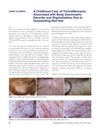
January 2013 in “International Journal of Trichology” A girl with red hair developed hair-pulling and body image disorders after being bullied for her hair color.
Hair microscopy is a useful and affordable way to diagnose hair disorders.
 74 citations
,
July 2008 in “Journal of Dermatological Case Reports”
74 citations
,
July 2008 in “Journal of Dermatological Case Reports” Trichoscopy is a quick and easy way to diagnose most genetic hair problems without invasive methods.
11 citations
,
August 2016 in “Journal of the European Academy of Dermatology and Venereology” Serial trichoscopy is more reliable than the modified hair pull test for tracking alopecia areata.
 March 2021 in “CRC Press eBooks”
 Physical exams are important in hair loss diagnosis, considering cosmetic history, systemic diseases, and classifying alopecia types.
 November 2024 in “Cureus”
 Combining therapy, behavior techniques, and medication can help manage trichotillomania and depression.
January 2022 in “Clinical Cases in Dermatology” The girl's hair loss is due to trichotillomania, which may improve with behavioral therapy or a combination of treatments.
August 2021 in “Oxford University Press eBooks” New treatments for hair-pulling disorder focus on personalized approaches and combining therapies for better results.
 December 2024 in “IntechOpen eBooks”
 Trichoscopy helps diagnose and track alopecia areata by examining specific hair and scalp markers.
Trichoscopy is effective for tracking treatment progress in hair loss when used by an experienced doctor.
 March 2014 in “Journal of The American Academy of Dermatology”
 Azathioprine may help with severe hair loss, a new topical treatment could counteract hair thinning, and trichoscopy can diagnose hair-pulling disorder effectively.
2 citations
,
April 2008 in “Advances in therapy” Proper diagnosis and treatment of childhood hair loss require distinguishing between alopecia and trichotillomania.
 90 citations
,
October 1983 in “British Journal of Dermatology”
90 citations
,
October 1983 in “British Journal of Dermatology” The unit area trichogram is a reliable method to assess hair loss and treatment response in people with androgenic alopecia by measuring hair density and thickness.
 2 citations
,
July 2015 in “The Open Dermatology Journal”
2 citations
,
July 2015 in “The Open Dermatology Journal” Trichoscopy is a tool for detailed examination of hair and scalp diseases.
26 citations
,
November 2005 in “Journal of Investigative Dermatology Symposium Proceedings” TrichoScan effectively measures hair growth improvements in people using minoxidil.

Trichotillomania involves hair-pulling due to brain and genetic factors, with behavior therapy and new drugs showing promise, but challenges like stigma and underdiagnosis persist.
 38 citations
,
May 2009 in “European journal of dermatology/EJD. European journal of dermatology”
38 citations
,
May 2009 in “European journal of dermatology/EJD. European journal of dermatology” TrichoScan® is a reliable tool for measuring hair growth, providing quicker and more consistent results than manual methods.
 March 2023 in “Journal of skin and stem cell”
 Trichoscopy is a good, quick, non-invasive way to diagnose different types of hair loss.
 October 2024 in “INTERNATIONAL JOURNAL OF SCIENTIFIC RESEARCH”
 Trichoscopy can help diagnose Vitamin B12, Vitamin D3, and ferritin deficiencies without blood tests.