 June 2025 in “International Journal of Nephrology and Renovascular Disease”
 PLA2R1 overexpression harms kidney cells by stopping their growth cycle.

CaBP1 and 2 are important for maintaining the activity of calcium channels necessary for hearing in inner ear cells.
9 citations
,
October 2017 in “Frontiers in plant science” The peach gene CTG134 helps control the interaction between auxin and ethylene, which could lead to new agricultural chemicals.
1 citations
,
December 2023 in “Frontiers in Behavioral Neuroscience” UVB exposure increases appetite by activating p53 in skin cells.
 July 2023 in “British journal of dermatology/British journal of dermatology, Supplement”
 HPV8 E6 gene causes growth of certain skin stem cells.
115 citations
,
December 2019 in “The Plant Journal” Nitrate helps plants manage phosphate uptake and starvation responses through NIGT1 proteins.
 January 2025 in “Journal of the Egyptian Womenʼs Dermatologic Society”
 Higher substance P levels may cause discomfort in hair loss patients.
12 citations
,
December 1981 in “Journal of Endocrinology” α-MSH increases melanin production in moulting hair follicles, while AVT inhibits it.
90 citations
,
February 2001 in “The journal of investigative dermatology/Journal of investigative dermatology” Interleukin-1 increases keratin K6 production in skin cells.
 31 citations
,
October 2010 in “Progress in lipid research”
31 citations
,
October 2010 in “Progress in lipid research” LPA3 is crucial for embryo implantation and links LPA to prostaglandin signaling.
42 citations
,
August 1995 in “British journal of dermatology/British journal of dermatology, Supplement” RXR-alpha is strongly expressed in both normal and psoriatic skin and may help in skin cell differentiation and hair growth.
 23 citations
,
June 2012 in “Molecular Biology Reports”
23 citations
,
June 2012 in “Molecular Biology Reports” VEGF stimulates hair cell growth and increases growth receptor levels through a specific signaling pathway.
16 citations
,
November 2018 in “Medicinal Chemistry” The compound GD-23 may reduce anxiety like diazepam by targeting the TSPO receptor.
4 citations
,
March 2024 in “The Journal of Cell Biology” Caspase-1 helps hair stem cells move to heal wounded or inflamed skin.
11 citations
,
March 2021 in “Molecular Carcinogenesis” Twist1 is crucial for UVB-induced skin cancer development.
 15 citations
,
November 2023 in “Immunity & ageing”
15 citations
,
November 2023 in “Immunity & ageing” TLR4 is important in aging-related diseases and could be a new treatment target.
 6 citations
,
January 2013 in “The Journal of Dermatology”
6 citations
,
January 2013 in “The Journal of Dermatology” Researchers found a new genetic mutation causing a rare hair loss condition in the first Japanese child studied.
 1 citations
,
January 2020 in “Skin appendage disorders”
1 citations
,
January 2020 in “Skin appendage disorders” A family was found with both Trichorhinophalangeal syndrome and Loose Anagen Syndrome, suggesting a genetic connection.
 1 citations
,
September 2017
1 citations
,
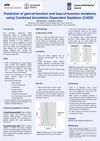
September 2017 C-scores can help predict gain-of-function and loss-of-function mutations.
 March 2015 in “The Journal of Urology”
 Finasteride reduces PSA levels by around 40-50% in BPH patients.

CaBP1 and CaBP2 are important for maintaining hearing by supporting continuous calcium currents and nerve signaling in the ear.
 1 citations
,
July 2016 in “Livestock science”
1 citations
,
July 2016 in “Livestock science” Nerve growth factor helps cashmere goat hair cells grow and is more active during the hair growth phase.
 April 2016 in “The journal of investigative dermatology/Journal of investigative dermatology”
 RPGRIP1L helps skin cells stick together by blocking PKCβII, which can prevent skin blistering like in pemphigus.
37 citations
,
January 1986 in “Carcinogenesis” ODC expression in mouse skin and tumors is varied and can be inhibited by retinoic acid or cycloheximide.
49 citations
,
August 2022 in “Frontiers in Immunology” Psoriasis involves an imbalance between certain immune cells, and targeting these could help restore skin health.
Deleting Twist1 in skin cells reduces UVB-induced skin cancer risk.
845 citations
,
February 2001 in “The Journal of Clinical Endocrinology & Metabolism” The enzyme for activating vitamin D is found in many body tissues, not just the kidneys.

Activating certain potassium channels in honey bees can lower antioxidant levels and reduce death rates during heavy mite infestations, potentially aiding their immune response.
 21 citations
,
October 2019 in “The journal of investigative dermatology/Journal of investigative dermatology”
21 citations
,
October 2019 in “The journal of investigative dermatology/Journal of investigative dermatology” A specific gene change plus an additional mutation in the same gene cause hereditary trichilemmal cysts.
105 citations
,
February 2010 in “Endocrinology” The skin produces and responds to thyroid-stimulating hormone, which is controlled by other thyroid-related hormones.