 2 citations
,
July 2008 in “Dermatologic Surgery”
2 citations
,
July 2008 in “Dermatologic Surgery” The Cross-section Trichometer is a promising tool for measuring hair characteristics without cutting the hair and may have various clinical uses.
 34 citations
,
January 2014 in “International Journal of Trichology”
34 citations
,
January 2014 in “International Journal of Trichology” Polarized dermoscopy is slightly better than nonpolarized for diagnosing hair disorders, with each method having its own strengths.
 May 2026 in “International Journal of Versatile Research and Analysis”
 Air wedge interferometry is a precise, cost-effective way to measure hair thickness.
 1 citations
,
March 2009 in “Hair transplant forum international”
1 citations
,
March 2009 in “Hair transplant forum international” The TrichoScan method effectively measures hair growth and helps choose patients for hair restoration surgery.
 29 citations
,
March 2008 in “Dermatologic Surgery”
29 citations
,
March 2008 in “Dermatologic Surgery” The Cross-section Trichometer is a new tool that can measure hair quantity and detect hair loss and growth.
 44 citations
,
August 2008 in “Archives of Dermatology”
44 citations
,
August 2008 in “Archives of Dermatology” Trichoscopy is a non-invasive way to diagnose hair and scalp problems without needing hair samples.
27 citations
,
January 2016 in “Indian Dermatology Online Journal” Dermoscopy is better than a magnifying lens for examining skin because it shows deeper details.
 54 citations
,
July 1967 in “Science”
54 citations
,
July 1967 in “Science” Decomposed tritiated thymidine is less accurate for DNA tracing, and hair changes can indicate malnutrition.
4 citations
,
April 2014 in “Lasers in Surgery and Medicine” TRASER effectively targets blood vessels and hair follicles for potential use in vascular and hair removal treatments.
8 citations
,
February 2023 in “Actas Dermo-Sifiliográficas” Dermatologists should learn trichoscopy to better diagnose hair loss conditions.
December 2024 in “Indian Dermatology Online Journal” Standard reference values for hair analysis in healthy Indian males were established.
3D models from confocal microscopy improve melanoma detection on sun-damaged skin.
 2 citations
,
May 2022 in “Clinical, Cosmetic and Investigational Dermatology”
2 citations
,
May 2022 in “Clinical, Cosmetic and Investigational Dermatology” Trichoscopy and pathological examination both have unique benefits and cannot completely replace each other in evaluating hair.
6 citations
,
March 2018 in “The American journal of dermatopathology/American journal of dermatopathology” BerEP4 and CD34 staining can help tell apart tricholemmoma from basal cell carcinoma.
 1 citations
,
April 2017 in “Journal of Investigative Dermatology”
1 citations
,
April 2017 in “Journal of Investigative Dermatology” Using a teletriage system greatly increased access to skin care for uninsured Latino immigrants at a clinic.
4 citations
,
September 1993 in “Steroids” The method accurately measures testosterone metabolites with high sensitivity and low environmental impact.
October 2023 in “Asian journal of pharmaceutical and clinical research” Standardized data is essential for diagnosing scalp and hair conditions in males.
 4 citations
,
January 2019 in “Skin appendage disorders”
4 citations
,
January 2019 in “Skin appendage disorders” The new Follicular Map method could help assess hair treatment effectiveness but has some limitations.
 September 2024 in “Journal of the American Academy of Dermatology”
 Dermatologists can detect smaller hair density changes than previously thought.
 90 citations
,
October 1983 in “British Journal of Dermatology”
90 citations
,
October 1983 in “British Journal of Dermatology” The unit area trichogram is a reliable method to assess hair loss and treatment response in people with androgenic alopecia by measuring hair density and thickness.
August 2003 in “Special report” TrichoScan offers a painless way to analyze and manage hair loss.
December 2025 in “Al-Azhar International Medical Journal /Al-Azhar International Medical Journal” Using both trichoscopy and folliscopy together improves hair loss diagnosis in men.
1 citations
,
January 2012 in “CINECA IRIS Institutial research information system (University of Pisa)” September 1989 in “PubMed” The method allows detailed observation of hair tissue structures.
 January 2024 in “Lecture notes in networks and systems”
 "TRICHOASSIST" is a system that analyzes hair and scalp images to help diagnose scalp diseases.
 28 citations
,
August 2018 in “Dermatologic Clinics”
28 citations
,
August 2018 in “Dermatologic Clinics” Trichoscopy is a useful tool for diagnosing hair and scalp issues, but doctors must be careful to avoid mistakes.
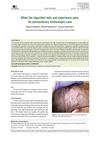 January 2026 in “Forum Dermatologicum”
 Thorough hair examination is crucial for accurate diagnosis and treatment.
 5 citations
,
September 2014 in “Journal of Pharmaceutical Sciences”
5 citations
,
September 2014 in “Journal of Pharmaceutical Sciences”  48 citations
,
April 2019 in “ACS Applied Materials & Interfaces”
48 citations
,
April 2019 in “ACS Applied Materials & Interfaces” A new method for delivering drugs through the skin using biodegradable particles was found to be effective.
Trichoscopy is a valuable tool for accurately diagnosing scalp conditions without invasive procedures.