15 citations
,
June 1961 in “Archives of Dermatology” Triamcinolone can regrow hair in alopecia areata, but the effect is temporary.
January 2022 in “Clinical Cases in Dermatology” A 4-year-old boy has a rare type of hair loss in a line pattern on his scalp.
December 2020 in “Journal of Face Aesthetics” Trichoscopy effectively helps diagnose different types of hair loss in women.
 March 2023 in “Journal of skin and stem cell”
 Trichoscopy is a good, quick, non-invasive way to diagnose different types of hair loss.
 December 2024 in “Journal of Skin and Stem Cell”
 Trichoscopy helps diagnose and manage different types of hair loss in the Indian population.
 2 citations
,
October 2020 in “Dermatologie pro praxi”
2 citations
,
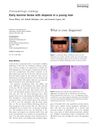
October 2020 in “Dermatologie pro praxi” Early diagnosis is crucial for treating alopecia effectively.
 3 citations
,
April 2016 in “International Journal of Dermatology”
3 citations
,
April 2016 in “International Journal of Dermatology” A young man was diagnosed with trichoepitheliomas, causing thick skin and hair loss.
40 citations
,
May 1999 in “International Journal of Dermatology” Early diagnosis and treatment are crucial to prevent permanent hair loss from scalp trauma.
2 citations
,
May 2024 in “International Journal of Dermatology” January 2026 in “Updates in clinical dermatology”  March 2021 in “CRC Press eBooks”
 Trichoscopy helps tell apart Lichen planopilaris and Frontal fibrosing alopecia from other hair loss conditions.
July 2024 in “LA CIENCIA AL SERVICIO DE LA SALUD Y NUTRICIÓN” The condition is harmless, doesn't worsen, and needs no invasive treatment.
 January 2019 in “The Egyptian Journal of Hospital Medicine”
 Trichoscopy helps effectively tell apart different types of patchy hair loss in Egyptian patients.
8 citations
,
February 2023 in “Actas Dermo-Sifiliográficas” Dermatologists should learn trichoscopy to better diagnose hair loss conditions.
40 citations
,
September 2014 in “Journal of cosmetic and laser therapy” Transepidermal drug delivery effectively treated areata alopecia with minimal side effects.
 January 2008 in “Journal of The American Academy of Dermatology”
 Trichoscopy is a helpful and quick method to identify different types of hair loss in women.
 3 citations
,
April 1978 in “PubMed”
3 citations
,
April 1978 in “PubMed” The study concludes that traction alopecia, caused by hair styling, can help understand telogen effluvium, a condition of excessive hair loss.
 178 citations
,
December 2011 in “Journal of Dermatological Case Reports”
178 citations
,
December 2011 in “Journal of Dermatological Case Reports” Trichoscopy is a useful tool for diagnosing different hair and scalp diseases by their unique visual features.
 April 2026 in “Research Square”
 Trichoscopy is reliable for diagnosing different types of frontal non-scarring hair loss.
 March 2021 in “CRC Press eBooks”
 Trichoscopy helps detect early complications in hair transplants and ensures quality in the procedure.
 10 citations
,
January 2011 in “Case reports in dermatological medicine”
10 citations
,
January 2011 in “Case reports in dermatological medicine” Hair transplant surgery effectively treated a specific type of hair loss and is recommended as a primary treatment option.
 July 2025 in “Health Sciences”
 A 7-year-old girl with non-scarring alopecia will have hair follicle transplantation to improve her quality of life.
 December 2023 in “Portuguese journal of dermatology and venereology”
 Trichoscopy can reliably distinguish between alopecia areata and trichotillomania.
 February 2024 in “Journal of cutaneous and aesthetic surgery”
 The combined treatment helps improve severe hair loss and reduces the need for other medications.
May 2025 in “Apollo Medicine” Trichoscopy is a useful tool for diagnosing and assessing the severity of alopecia areata.
8 citations
,
January 2013 in “International journal of trichology” Two people had unusual ring-shaped hair loss due to an autoimmune disorder.
January 2024 in “Muller Journal of Medical Sciences and Research” Trichoscopy is a useful tool for diagnosing patchy hair loss, reducing the need for biopsies.
 July 2023 in “Deleted Journal”
 Alopecia areata is the most common type of baldness treated with corticosteroids and minoxidil.
 4 citations
,
August 2010 in “Journal of the American Academy of Dermatology”
4 citations
,
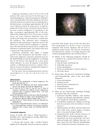
August 2010 in “Journal of the American Academy of Dermatology” Cicatricial alopecia involves scarring hair loss and can be treated with various medications.
4 citations
,
November 2025 in “Nature Reviews Disease Primers”