 March 2021 in “International Journal of Research in Dermatology”
 Trapezoid donor strips give more hair follicles than elliptical ones in hair transplants.
 July 2023 in “Clinical dermatology review”
 Intralesional triamcinolone acetonide is better than PRP for treating scalp alopecia areata, leading to faster and more complete hair regrowth.
 60 citations
,
October 2009 in “Dermatology”
60 citations
,
October 2009 in “Dermatology” Alopecia areata may appear differently depending on the individual's type of hair loss and scalp condition.
 3 citations
,
November 1999 in “Journal of Cutaneous Medicine and Surgery”
3 citations
,
November 1999 in “Journal of Cutaneous Medicine and Surgery” Examining scalp biopsies in different ways helps better diagnose hair loss types.
 February 2021 in “Cureus”
 A woman's hair loss was initially misdiagnosed as scarring hair loss but was actually a treatable autoimmune hair loss.
July 2021 in “Anais brasileiros de dermatologia/Anais Brasileiros de Dermatologia” Monilethrix causes different levels of hair loss in family members.
 May 2017 in “InTech eBooks”
 Trichoscopy and trichogram are useful for diagnosing hair and scalp conditions.
 5 citations
,
May 2008 in “Nature Precedings”
5 citations
,
May 2008 in “Nature Precedings” Trichoscopy is a useful non-invasive method to diagnose female hair loss with high accuracy.
2 citations
,
December 2023 in “International Journal of Dermatology” A unique type of hair loss mimics another condition but has minimal inflammation and specific immune cells present.
July 2022 in “Journal of Investigative Dermatology” TRPS1 loss in balding scalp areas contributes to hair loss in androgenic alopecia.
 June 2023 in “QJM: An International Journal of Medicine”
 Diagnosing diffuse alopecia is challenging due to its varied appearance and underlying causes.
17 citations
,
January 1991 in “Acta Dermato Venereologica” A family had a genetic condition causing hair loss on the scalp, passed down through four generations.
January 2026 in “Journal of Case Reports and Scientific Images” Homeopathic treatment led to full recovery from scarring alopecia.
 March 2023 in “International journal of trichology”
 Six genetic conditions are often linked to complete scalp hair loss in children.
 15 citations
,
November 2015 in “Journal of Dermatology and Dermatologic Surgery”
15 citations
,
November 2015 in “Journal of Dermatology and Dermatologic Surgery” Mixing platelet-rich plasma with triamcinolone acetonide can potentially improve hair regrowth in alopecia areata patients.
 May 2017 in “InTech eBooks”
 Hair pulling disorder is treated with therapy and medication; hair loss from tension can be reversed if caught early.
 June 2026 in “EXPERIMENTAL & CLINICAL MEDICINE GEORGIA”
 Trichoscopy is useful for assessing androgenetic alopecia severity but can't determine hair loss stage alone.
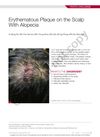
The woman has a scalp condition causing hair loss.
 January 2023 in “Vìsnik problem bìologìï ì medicini”
 Androgenic alopecia causes hair follicle degradation and skin restructuring, but some hair elements remain.
 1 citations
,
January 2020 in “Indian Dermatology Online Journal”
1 citations
,
January 2020 in “Indian Dermatology Online Journal” Pigtail hair is a sign of new hair growth and should be recognized in hair loss conditions like acute telogen effluvium.
 2 citations
,
October 2015 in “Primary Care: Clinics in Office Practice”
2 citations
,
October 2015 in “Primary Care: Clinics in Office Practice” Doctors should diagnose hair loss by examining the patient and possibly doing tests, and then treat it based on the type, which may prevent permanent hair loss.
 April 2016 in “Journal of The American Academy of Dermatology”
 Different treatments are effective for hair loss conditions, but results vary by individual factors.
 January 2011 in “Reactions Weekly”
 Long-term use of minoxidil may cause hair follicles to transform into noticeable terminal hairs, leading to trichostasis spinulosa.
April 2025 in “Pediatric Dermatology” Scalp biopsies are essential for diagnosing congenital alopecia areata.
 December 2025 in “SAS Journal of Medicine”
 Trichofolliculoma is a rare, benign scalp tumor that can be cured by surgical removal.
10 citations
,
January 1925 in “Archives of Dermatology” Trichostasis spinulosa is a rare skin condition with hair-filled plugs in hair follicles.
40 citations
,
October 2004 in “Veterinary Dermatology” Trilostane treatment led to full hair regrowth in most Pomeranians and all miniature poodles with alopecia X.
December 2023 in “International Journal of Dermatology” Accurate diagnosis of alopecia areata incognito requires trichoscopy and histopathology.
 28 citations
,
November 2008 in “Facial Plastic Surgery”
28 citations
,
November 2008 in “Facial Plastic Surgery” Follicular Unit Transplantation (FUT) can give great results and patient satisfaction when done carefully and by a skilled surgeon.
 November 2025 in “Archives of Dermatological Research”
 Using a higher concentration of triamcinolone acetonide leads to faster hair regrowth in scalp patchy alopecia areata.