Trichoscopic examination is crucial for diagnosing congenital triangular alopecia.
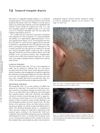 April 2012 in “Informa Healthcare eBooks”
 Temporal triangular alopecia is a lifelong condition with hairless patches on the side of the head that may be present from birth.
 December 2020 in “TURKDERM”
 A 3-year-old boy was diagnosed with a rare, non-scarring hair loss condition called temporal triangular alopecia.
July 2025 in “International Journal of Trichology” Trichoscopy effectively diagnoses temporal triangular alopecia in children.
6 citations
,
May 2016 in “Experimental Dermatology” The type of tumor suppressor gene lost affects the behavior of skin cancer.
1 citations
,
September 2023 in “Frontiers in Genetics” A heterozygous mutation in HTRA1 can cause severe CARASIL symptoms.
 64 citations
,
August 2014 in “The journal of allergy and clinical immunology/Journal of allergy and clinical immunology/The journal of allergy and clinical immunology”
64 citations
,
August 2014 in “The journal of allergy and clinical immunology/Journal of allergy and clinical immunology/The journal of allergy and clinical immunology” A deficiency in the TTC7A gene causes immune problems, gut issues, and hair loss.
 13 citations
,
January 2011 in “International Journal of Trichology”
13 citations
,
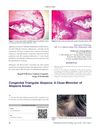
January 2011 in “International Journal of Trichology” CTA is often mistaken for AA but doesn't respond to steroids and may require hair transplantation.
 3 citations
,
January 2019 in “Journal of Dermatology”
3 citations
,
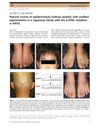
January 2019 in “Journal of Dermatology” The p.P25L mutation in the KRT5 gene causes a rare skin condition that worsens over time and may lead to hair loss starting in young adulthood.
 April 2017 in “Journal of Investigative Dermatology”
 A virus protein can activate a pathway that may lead to abnormal hair follicle development.
19 citations
,
June 2020 in “BMC Cancer” Trichilemmal carcinoma shares genetic changes with other skin cancers, suggesting similar causes and potential treatments.
 2 citations
,
February 2009 in “Clinical and Experimental Dermatology”
2 citations
,
February 2009 in “Clinical and Experimental Dermatology” A man had rare skin tumors with bone formation and cholesterol deposits.
13 citations
,
January 1985 in “International Journal of Dermatology” The document found differences in lesion distribution and microscopic features among trichostasis spinulosa and similar skin conditions.
December 2020 in “American Journal of Transplantation” Early recognition and treatment of VATS in transplant patients improve outcomes.
2 citations
,
January 1989 Tay syndrome is a unique genetic disorder causing skin, hair, and developmental issues.
32 citations
,
August 2016 in “Journal of the American Academy of Dermatology” Temporal triangular alopecia is a non-scarring hair loss in children, often linked to other health conditions.
 2 citations
,
July 2016 in “Pharmacopsychiatry”
2 citations
,
July 2016 in “Pharmacopsychiatry” A person with Turner Syndrome showed severe schizophrenia that didn't respond to treatment and had brain shrinkage.
 June 2023 in “British journal of dermatology/British journal of dermatology, Supplement”
 A girl with Becker naevus syndrome has a genetic variant in the ACTB gene related to her symptoms.
 January 2020 in “Przegla̧d dermatologiczny”
 A 5-year-old boy was diagnosed with congenital triangular alopecia, a type of hair loss without skin changes, usually starting between ages 2-5, with no specific treatment.
12 citations
,
May 2009 in “Ophthalmic plastic and reconstructive surgery” Multiple pilomatrixoma may indicate Turner syndrome.
 1 citations
,
September 2011 in “Journal of Dermatology”
1 citations
,
September 2011 in “Journal of Dermatology” A woman with a new PTCH gene mutation has both Gorlin syndrome and severe hair loss.
2 citations
,
January 2014 in “Journal of Cytology & Histology” Rapamycin and anti-EGFR antibody reduce LAM/TSC cell migration and blood vessel growth in the uterus.
January 2026 in “American Journal of Medical Genetics Part A” A new genetic variant causes trichothiodystrophy in two brothers, but their mother may carry it without showing symptoms.
January 2026 in “JDDG Journal der Deutschen Dermatologischen Gesellschaft” A 5-year-old boy has Nevus Comedonicus Syndrome, causing skin lesions and a cataract.

A neck lesion misdiagnosed as benign was later treated successfully with Mohs Micrographic Surgery.
 10 citations
,
January 2013 in “Journal of skin cancer”
10 citations
,
January 2013 in “Journal of skin cancer” PKC ε increases hair follicle stem cell turnover and may raise skin cancer risk.
April 2026 in “Case Reports in Dermatology” Tofacitinib effectively treated a woman's complex autoimmune and autoinflammatory disorders.
 October 2022 in “Boletín médico del Hospital infantil de México/Boletín médico del Hospital Infantil de México”
 The patient has a rare skin condition that shows features of two known disorders.
8 citations
,
January 2013 in “Australasian journal of dermatology” Trichodysplasia spinulosa is a rare skin condition caused by a virus, treatable with antiviral medication.
 January 2022 in “bioRxiv (Cold Spring Harbor Laboratory)”
 Skin lesions in Carney complex are likely caused by a specific group of skin cells that promote pigment production due to a genetic mutation.