 2 citations
,
January 2001 in “Dermatologic Surgery”
2 citations
,
January 2001 in “Dermatologic Surgery” Poliglecaprone 25 is better than steel staples for hair transplant surgery, causing less discomfort and finer scars.
 2 citations
,
October 1998 in “Dermatologic Surgery”
2 citations
,
October 1998 in “Dermatologic Surgery” Adjusting laser settings improved hair transplant results in Oriental patients.
 2 citations
,
June 1997 in “The American Journal of Cosmetic Surgery”
2 citations
,
June 1997 in “The American Journal of Cosmetic Surgery” Hair transplant megasessions are safe up to 1500 grafts but larger sessions have more risks and challenges.
 1 citations
,
August 2025 in “Cureus”
1 citations
,
August 2025 in “Cureus” Erectile dysfunction in young men is caused by both mental and physical factors and needs a personalized treatment approach.
 1 citations
,
May 2021 in “International Journal of Dermatology”
1 citations
,
May 2021 in “International Journal of Dermatology” Long hair follicular unit excision is effective for hair transplants, providing quick, natural-looking results with less pain but needs more time, staff, and skill.
 1 citations
,
June 2017 in “Actas Dermo-Sifiliográficas”
1 citations
,
June 2017 in “Actas Dermo-Sifiliográficas” Follicular Unit Extraction (FUE) is a hair transplant method with less scarring and discomfort but requires skilled surgeons and has limitations on graft numbers per session.
 1 citations
,
November 2016 in “International Society of Hair Restoration Surgery”
1 citations
,
November 2016 in “International Society of Hair Restoration Surgery” Continue antithrombotic therapy during hair transplants to prevent heart issues, despite bleeding risks.
 1 citations
,
January 2013 in “Archives of Aesthetic Plastic Surgery”
1 citations
,
January 2013 in “Archives of Aesthetic Plastic Surgery” Combining liposuction with laser ablation effectively reduces underarm odor with minimal side effects.
 1 citations
,
January 2011 in “Journal of Human Reproductive Sciences”
1 citations
,
January 2011 in “Journal of Human Reproductive Sciences” Finasteride may decrease semen quality but not harm sperm production, and stopping the drug can improve semen quality; hyperprolactinemia can cause infertility but is treatable with medication.
 1 citations
,
November 2009 in “Cambridge University Press eBooks”
1 citations
,
November 2009 in “Cambridge University Press eBooks” FUE is a less invasive hair restoration method with potential to become standard, offering benefits like reduced scarring and pain, but requires experience to minimize risks.
 1 citations
,
January 1998 in “Seminars in Plastic Surgery”
1 citations
,
January 1998 in “Seminars in Plastic Surgery” Hair transplantation using micro- and minigraft megasessions is safe, effective, and provides natural results with high patient satisfaction.
 June 2026 in “Journal of Cutaneous and Aesthetic Surgery”
 Recipient site scalp necrosis in hair transplantation is linked to microvascular injury and regional vascular vulnerability, especially in the frontal and mid-scalp areas.
 May 2026 in “International Journal of Drug Delivery Technology”
 Adrenaline infiltration improves hair transplant efficiency and safety.
 March 2026 in “Frontiers in Medicine”
 FUE effectively corrects poorly designed hairlines in men with androgenetic alopecia.
 March 2026 in “Clinical Cosmetic and Investigational Dermatology”
 Effective hair removal is crucial for better cosmetic results in forehead flap reconstruction, with laser hair removal being the preferred method.
 February 2026 in “Frontiers in Medicine”
 FUE hair transplants are generally safe but require careful planning to avoid rare complications.
 January 2026 in “Archive ouverte UNIGE (University of Geneva)”
 Skin-sparing techniques in gynecomastia surgery lead to good chest results and high patient satisfaction with less scarring.
 November 2024 in “International Society of Hair Restoration Surgery”
 FUT is a hair restoration method that should be chosen based on individual patient needs and preferences.
 June 2024 in “Georgetown medical review”
 Finasteride treats hair loss but may cause low libido, erectile issues, and depression.
 December 2023 in “Revista Urología Colombiana / Colombian Urology Journal”
 More research is needed to find effective treatments for sickle cell disease-related priapism.
 April 2021 in “Advances in Cosmetic Surgery”
 Hair restoration can be achieved through non-surgical treatments like minoxidil, antiandrogens, phototherapy, and PRP procedures, or through surgical methods like hair transplantation. Continued treatment is needed to maintain results, and full results are visible after 12-18 months.
 April 2019 in “Advances in Cosmetic Surgery”
 The document concludes that ongoing medical therapy is crucial for preventing hair loss, and surgical options can restore hair, with future treatments for hair loss being promising.
 January 2018 in “Georg Thieme Verlag eBooks”
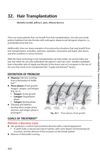
 Hair transplantation is a surgical procedure to move hair to bald areas, requires good donor hair, and results show in about a year.

Follicular unit grafting is a procedure used to treat hair loss, where small hair grafts are placed into the scalp, with future treatments likely to involve smaller incisions and cell-based therapies.
 January 2016 in “Georg Thieme Verlag eBooks”
 Hair transplantation in East Asians needs special techniques to ensure natural results and prevent complications due to their unique hair and scalp characteristics.
 April 2015 in “Andrology”
 HNG may help prevent the negative effects of chemotherapy on sperm production and white blood cell counts.
 January 2012 in “Elsevier eBooks”
 Hair transplantation is highly effective with careful technique and attention to patient needs.
 January 2009 in “Springer eBooks”
 The document concludes that treating skin conditions should include psychological care and a multidisciplinary approach is essential for effective management.
 December 2008 in “Dermatologic Surgery”
 The new powered hair transplant method is faster and damages fewer grafts than the manual technique.
 January 2007 in “Dermatologic Surgery”
 A new scalp surgery technique leads to significantly thinner scars.