65 citations
,
November 2013 in “The EMBO Journal” HDAC1 is crucial for skin development and preventing tumors.
40 citations
,
August 2018 in “Disease Models & Mechanisms” Mature cells can re-enter the cell cycle and potentially lead to cancer.
 29 citations
,
July 2014 in “PloS one”
29 citations
,
July 2014 in “PloS one” Meis1 is crucial for skin health and tumor development.
8 citations
,
August 2014 in “Biochemical and Biophysical Research Communications” ODC overexpression in hair cells increases tumor growth by reducing Notch signaling.
 8 citations
,
November 2013 in “PLOS ONE”
8 citations
,
November 2013 in “PLOS ONE” Cells with active Wnt signaling are less likely to turn into cancer when exposed to a cancer-causing gene.
 1 citations
,
January 2021
1 citations
,
January 2021 CD4+ skin cells may be precursors to basal cell carcinoma.
 March 2024 in “Vestnik Rossijskogo universiteta družby narodov. Seriâ Agronomiâ i životnovodstvo”
 Wnt and Shh signaling are key in noggin-induced tumors, and blocking them can slow tumor growth.
August 2017 in “Academic Commons (Stony Brook University)” Acer1 is essential for skin health and affects hair growth and skin cancer risk.
December 2009 in “Cancer Research” Over-expression of Sp2 can lead to cancer by preventing proper stem cell differentiation.
 15 citations
,
July 2013 in “Cell Reports”
15 citations
,
July 2013 in “Cell Reports” Indian Hedgehog helps control skin cell growth and protects against aggressive skin cancer.
 5 citations
,
May 2020 in “Life science alliance”
5 citations
,
May 2020 in “Life science alliance” Removing integrin α3β1 from hair stem cells lowers skin tumor growth by affecting CCN2 protein levels.
 April 2026 in “Amino Acids”
 Polyamines are crucial for skin tumor development, and inhibiting them can prevent tumors.
January 2012 in “DigtalCommons @ Texas Medical Center Library (Texas Medical Center)” Stat3 affects skin cancer development by altering keratinocyte stem cell behavior.
148 citations
,
May 2008 in “The journal of investigative dermatology/Journal of investigative dermatology” Mice without the vitamin D receptor are more prone to UV-induced skin tumors.
143 citations
,
May 2002 in “PubMed” LGD1069 effectively prevents breast tumors in mice without toxicity.
61 citations
,
January 1970 in “Toxicology and Applied Pharmacology” 48 citations
,
October 2004 in “Molecular and Cellular Biology” Mice with a specific BRCA1 mutation have a higher risk of tumors, especially in the uterus and ovaries.
45 citations
,
August 2009 in “American Journal Of Pathology” Noggin promotes skin tumors by activating certain cell signaling pathways.
 21 citations
,
January 2015 in “The Journal of Steroid Biochemistry and Molecular Biology”
21 citations
,
January 2015 in “The Journal of Steroid Biochemistry and Molecular Biology” Progesterone byproduct 5αP stimulates mammary tumor growth, but finasteride can suppress it.
17 citations
,
July 2013 in “Amino Acids” Increased ODC activity leads to skin tumors by recruiting stem cells, not by toxic byproducts.
15 citations
,
March 2021 in “EMBO Reports” PRSS35 enzyme may help start skin tumors and could be a target for cancer treatment.
4 citations
,
June 2024 in “The Kaohsiung Journal of Medical Sciences” Atg5 can promote tumors when autophagy is deficient but suppresses them under normal conditions.
 January 2025 in “Medical Research Archives”
 Hair follicles are vital for skin health, cancer prevention, and wound healing.
May 2022 in “The journal of investigative dermatology/Journal of investigative dermatology” Loss of TET2 increases the risk of skin and oral cancer.
 April 2016 in “Journal of Investigative Dermatology”
 SOX4 is crucial for the development of melanoma.
37 citations
,
January 2006 in “Carcinogenesis” Antizyme slows skin tumor growth by reducing cell growth in mice.
 7 citations
,
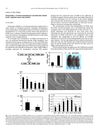
December 2008 in “Journal of Dermatological Science”
7 citations
,
December 2008 in “Journal of Dermatological Science” Progranulin overexpression leads to shorter, thinner hair and increased cell death in mouse hair follicles.
April 2016 in “Archivio Istituzionale della Ricerca (Universita Degli Studi Di Milano)” Sox9 is important in the development of tumors in domestic animals.
December 2009 in “Faculty Opinions – Post-Publication Peer Review of the Biomedical Literature” Noggin promotes skin tumors by activating Wnt and Shh pathways.
January 2008 in “Deep Blue (University of Michigan)” Wnt signaling is crucial for Hedgehog-driven skin tumor growth.