10 citations
,
December 2020 in “Palaeogeography, palaeoclimatology, palaeoecology” Elephant tusks and hair reveal seasonal diet and climate changes.
 46 citations
,
July 2007 in “Journal of comparative neurology”
46 citations
,
July 2007 in “Journal of comparative neurology” Manatee whiskers are specially adapted for touch in water.
5 citations
,
January 2021 in “PeerJ” Elephant tail-hair can show past stress levels, matching times when stressful events happened.
 3 citations
,
January 2023 in “Journal of Hard Tissue Biology”
3 citations
,
January 2023 in “Journal of Hard Tissue Biology” Wnt10a may help regenerate dental pulp and form dentine.
9 citations
,
July 2022 in “Journal of Biological Chemistry” WWP2 is crucial for tooth development in mice.
 1 citations
,
June 2024 in “European Journal of Dentistry”
1 citations
,
June 2024 in “European Journal of Dentistry” Human placental extract may be better for tooth repair than current materials.
 4 citations
,
February 2024 in “Scientific Reports”
4 citations
,
February 2024 in “Scientific Reports” Platelet-rich plasma is as effective as mineral trioxide aggregate for pulp capping and may offer better cellular responses.
37 citations
,
April 2013 in “PLoS ONE” Thymosin Beta 4 helps human dental pulp cells develop into tooth-forming cells, suggesting it could aid dental regeneration.
 9 citations
,
January 2010 in “Journal of the Korean Association of Oral and Maxillofacial Surgeons”
9 citations
,
January 2010 in “Journal of the Korean Association of Oral and Maxillofacial Surgeons” Root apical papilla cells from wisdom teeth are best for bone therapies.
 2 citations
,
January 2013 in “Journal of the Korean Association of Oral and Maxillofacial Surgeons”
2 citations
,
January 2013 in “Journal of the Korean Association of Oral and Maxillofacial Surgeons” Dental tissues are a promising and accessible source of adult stem cells for regenerative medicine.
5 citations
,
November 2024 in “Advanced Science” A new culture system can grow tooth-like structures from dental cells but can't yet develop roots.
5 citations
,
August 2011 in “Journal of Dermatological Science” Dentin sialoprotein and phosphophoryn are present in rodent hair follicles and may help hair growth and development.
 1 citations
,
November 2015
1 citations
,
November 2015 Dental pulp stem cells might not reliably become neurons.
 3 citations
,
December 2020 in “Scientific reports”
3 citations
,
December 2020 in “Scientific reports” Mitochondrial problems in tooth cells lead to bad enamel and dentin development in mice.
Dental pulp and vibrissa cells in mice show different stem cell markers, suggesting potential for regenerative medicine.
12 citations
,
February 2018 in “Brazilian Oral Research” Dental pulp cells can be successfully cultured up to 5 hours after tooth extraction.
1 citations
,
October 2017 in “Frontiers in Physiology” Hair follicle keratin may have been used in tooth enamel evolution.
42 citations
,
August 2008 in “Stem Cells and Development” Hair follicle cells can help regenerate teeth.
3 citations
,
July 2025 in “Current Issues in Molecular Biology” Dental pulp stem cells can help heal skin and mucosal wounds effectively.
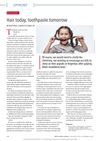
Keratin could help create enamel-regenerating toothpaste in a few years.
11 citations
,
January 2022 in “Brazilian Oral Research” XP-endo Finisher R removes more root filling material than PUI in curved canals.
 243 citations
,
October 2003 in “Developmental biology”
243 citations
,
October 2003 in “Developmental biology” Ectodin integrates BMP, SHH, and FGF signals in developing ectodermal organs.
 116 citations
,
September 2020 in “Nature Communications”
116 citations
,
September 2020 in “Nature Communications” The research identified various cell types in mouse and human teeth, which could help in developing dental regenerative treatments.
 73 citations
,
March 2017 in “Scientific Reports”
73 citations
,
March 2017 in “Scientific Reports” Bioengineered tooth germ can restore whole teeth in dogs.
January 2014 in “Contemporary clinical dentistry” Recent dental research shows diet changes increased tooth decay, red wine reduces bacteria, and dental stem cells can regenerate dentin.
Dental procedures and treatments show promise but need more research for conclusive results.
 4 citations
,
October 2020 in “Journal of oral and maxillofacial surgery”
4 citations
,
October 2020 in “Journal of oral and maxillofacial surgery” Tisseel shows promise for bone graft stabilization but needs more clinical trials to confirm its effectiveness.
16 citations
,
March 2021 in “EvoDevo” Different species use the same genes for tooth regeneration.
35 citations
,
July 2015 in “Journal of Theoretical Biology” Tooth germ shape changes due to cell growth differences and mechanical interactions.
 2 citations
,
December 2013 in “Current Oral Health Reports”
2 citations
,
December 2013 in “Current Oral Health Reports” Bioengineered teeth could replace damaged teeth and restore oral functions.