Retinoids or their analogs could treat skin pigmentation disorders like melasma and vitiligo.
12 citations
,
July 2023 in “Journal of the European Academy of Dermatology and Venereology” Upadacitinib improved Crohn's disease, atopic dermatitis, and alopecia areata in one patient.
 2 citations
,
November 2021 in “ACG Case Reports Journal”
2 citations
,
November 2021 in “ACG Case Reports Journal” Tofacitinib successfully treated hair loss in a Crohn's disease patient who previously used adalimumab.
 79 citations
,
September 2018 in “Dermatologic therapy”
79 citations
,
September 2018 in “Dermatologic therapy” Oral tofacitinib can significantly improve recalcitrant lichen planopilaris.
November 2023 in “SKIN The Journal of Cutaneous Medicine” Ritlecitinib effectively maintains hair regrowth in alopecia areata patients.
February 2026 in “The Journal of Dermatology” Ritlecitinib effectively regrows scalp, eyebrow, and eyelash hair in Asians with alopecia areata and is safe.
 March 2022 in “International Journal of Trichology”
 Tofacitinib may be effective for treating hair loss caused by alopecia areata that doesn't respond to other treatments.
June 2025 in “British Journal of Dermatology” Dual-targeting therapies like Janus kinase inhibitors may treat both alopecia areata and other immune diseases.
New cancer drugs can cause skin side effects like rashes, dry skin, hair changes, and nail problems.
 3 citations
,
March 2020 in “International Journal of Dermatology”
3 citations
,
March 2020 in “International Journal of Dermatology” Tildrakizumab showed limited effectiveness in treating chronic alopecia areata in a small group of patients.
June 2025 in “Medical alphabet” JAK inhibitors may help treat alopecia areata in children, but their safety needs careful evaluation.
 March 2024 in “Clinical, cosmetic and investigational dermatology”
 Tofacitinib successfully treated vitiligo in a patient with lupus without side effects.
 January 2023 in “Applied sciences”
 Gefitinib and Sasam-Kyeongokgo together significantly reduce cancer growth and improve immune response in mice.
June 2026 in “Frontiers in Immunology” JAK inhibitors effectively treat inflammatory skin diseases by targeting specific cytokine signals.
 July 2026 in “Zenodo (CERN European Organization for Nuclear Research)”
 JAK inhibitors may help treat alopecia areata by restoring hair growth.
 July 2026 in “Zenodo (CERN European Organization for Nuclear Research)”
 JAK inhibitors may help treat alopecia areata by restoring hair growth.
 1 citations
,
November 2023 in “BMC chemistry”
1 citations
,
November 2023 in “BMC chemistry” Tadalafil and Finasteride may help treat aggressive melanoma.
 24 citations
,
June 2016 in “Acta dermato-venereologica”
24 citations
,
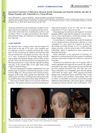
June 2016 in “Acta dermato-venereologica” Tofacitinib helped a young woman's severe hair loss and arthritis but not her plaque psoriasis.
26 citations
,
June 2003 in “PubMed” Alpha-difluoromethylornithine prevents cancer in mice but causes hair loss.
 May 2024 in “Journal of cosmetic dermatology”
 Tofacitinib is an effective and safe treatment for alopecia areata.
 May 2026 in “SKIN The Journal of Cutaneous Medicine”
 Baricitinib may cause low blood sugar in some patients, so careful monitoring is needed.
 12 citations
,
June 2023 in “JAMA network open”
12 citations
,
June 2023 in “JAMA network open” JAK inhibitors effectively improve hair regrowth in alopecia areata with an acceptable safety profile.
 51 citations
,
June 2016 in “Journal of the European Academy of Dermatology and Venereology”
51 citations
,
June 2016 in “Journal of the European Academy of Dermatology and Venereology” Tofacitinib was effective in treating hair loss in two patients with alopecia universalis.
July 2025 in “Journal of Investigative Dermatology” Baricitinib stops hair loss and promotes regrowth in alopecia areata.
 July 2025 in “Russian Journal of Clinical Dermatology and Venereology”
 Tofacitinib may help hair regrowth in familial alopecia areata with immune issues, but more research is needed.
2 citations
,
February 2023 in “Actas Dermo-Sifiliográficas” Baricitinib effectively improved both atopic dermatitis and alopecia areata symptoms in a patient.
 January 2022 in “Social Science Research Network”
 Pyruvate Kinase M2 helps hair grow by linking energy production and a key hair growth pathway.
2 citations
,
February 2025 in “Journal of the European Academy of Dermatology and Venereology” JAK inhibitors may effectively treat lichen planopilaris and frontal fibrosing alopecia with minimal side effects.
 3 citations
,
February 2022 in “Rheumatology”
3 citations
,
February 2022 in “Rheumatology” Baricitinib was effective in treating a patient with dermatomyositis and hair loss.
4 citations
,
February 2018 in “World journal of surgical oncology” A young woman with kidney cancer experienced rare hair loss from a cancer drug and unusual cancer spread, suggesting early drug treatment might reduce spread and prolong survival.