 21 citations
,
December 2016 in “PLOS ONE”
21 citations
,
December 2016 in “PLOS ONE” Scientists made skin stem cells from other human cells with over 97% efficiency, which could help treat skin conditions.
14 citations
,
May 2022 in “Stem cell reports” The study created hair-bearing skin models that lack a key protein for skin layer attachment, limiting their use for certain skin disease research.
 13 citations
,
March 1998 in “Journal of Biomedical Materials Research”
13 citations
,
March 1998 in “Journal of Biomedical Materials Research” Island grafts can help study skin regeneration separately from other healing processes.
9 citations
,
February 2001 in “Journal of Dermatological Science” p21waf1/cip1 and p27kip1 help in hair follicle differentiation in rats.
 6 citations
,
November 2021 in “Frontiers in immunology”
6 citations
,
November 2021 in “Frontiers in immunology” STAT3 signaling is important for healthy skin and hair follicles, and its disruption can lead to skin conditions like atopic dermatitis.
6 citations
,
January 1990 in “The Journal of Dermatology” Human hair follicle cells can be grown successfully on floating collagen membranes without extra support.
 4 citations
,
January 2014 in “Indian dermatology online journal”
4 citations
,
January 2014 in “Indian dermatology online journal” Monilethrix is a genetic hair disorder causing fragile, beaded hair with no effective treatment.
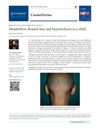 January 2026 in “Cosmoderma”
 A 9-year-old girl has a rare hair disorder causing beaded, sparse hair.

Ritlecitinib helps reduce inflammation and promote hair regrowth in alopecia areata, especially in patchy-type cases.

Deucravacitinib improves symptoms and reduces inflammation in Lichen Planopilaris.
March 2016 in “Benha Veterinary Medical Journal” Type XIX Collagen is present in specific skin and hair cells during development.
February 2016 in “Science” Foxc1 and COL17A1 are crucial for maintaining healthy hair follicles and preventing hair loss.
101 citations
,
August 2001 in “The Journal of Cell Biology” A new keratin 6 type in mice explains why some mice without certain keratin genes still have normal hair and nails.
67 citations
,
August 2005 in “Journal of Investigative Dermatology Symposium Proceedings” Androgens promote beard growth but cause hair loss in androgenetic alopecia, with TGF-β1 as a potential treatment target.
35 citations
,
May 2006 in “Journal of Investigative Dermatology” Monilethrix involves multiple genes affecting hair structure, including DSG4 mutations.
34 citations
,
August 2018 in “Cancer research” Fixing DNA errors is crucial to prevent skin cancer.
 32 citations
,
December 2018 in “Cytokine”
32 citations
,
December 2018 in “Cytokine” Type I interferons play a key role in the development of various skin diseases.
23 citations
,
July 2020 in “Aging Cell” Aging changes sugar molecules on skin stem cells, which may affect their ability to repair skin.
18 citations
,
March 2009 in “Experimental Dermatology” Pilomatricoma can develop into various hair-related structures.
14 citations
,
April 1995 in “Transplantation” Human hair follicle cells can be used to help heal and replace skin.
 6 citations
,
June 2012 in “Physiology”
6 citations
,
June 2012 in “Physiology” The document concludes that more research is needed to understand airway repair and to improve tissue engineering for lung treatments.
 6 citations
,
August 2007 in “Journal of Surgical Research”
6 citations
,
August 2007 in “Journal of Surgical Research” Mice genetically modified to produce more Del1 protein had faster hair regrowth.
 5 citations
,
January 2004 in “Japanese journal of geriatrics”
5 citations
,
January 2004 in “Japanese journal of geriatrics” Male hormones can cause hair loss, but treatments like Minoxidil and Finasteride can help, and targeting TGF-B1 could be a future solution.
 4 citations
,
November 2014
4 citations
,
November 2014 The skin protects the body, regulates temperature, senses touch, and makes vitamin D.
 2 citations
,
January 2004 in “Enshou saisei”
2 citations
,
January 2004 in “Enshou saisei” Male pattern baldness is caused by certain cells in hair follicles and could potentially be treated by targeting a specific growth factor, TGF-β1.
1 citations
,
December 1989 in “PubMed” Hair follicle cells can be grown without extra support and may help in wound healing.
July 2024 in “Journal of Investigative Dermatology” JAK inhibitors improve hair growth in alopecia areata, especially in patchy types.
 February 2020 in “Definitions”
 Mutations in the KRT16 gene can cause skin and nail disorders.
 February 2020 in “Definitions”
 KRT72 gene helps form hair.
 April 2019 in “Journal of Investigative Dermatology”
 Researchers fixed gene mutations causing a skin disease in stem cells, which then improved skin grafts in mice.