Search
for
Sort by
Research
540-570 / 1000+ results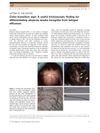
research Color-transition sign: A useful trichoscopic finding for differentiating alopecia areata incognita from telogen effluvium
The "color-transition sign" helps tell apart alopecia areata incognita from telogen effluvium by looking at hair color changes.

research Coexistence of Malassezia Species and Microsporum canis in the Lesions of Adult with Tinea Capitis
An adult woman with scalp infection recovered after antifungal treatment, with no return of symptoms.
research The Quantification of Terminal Hair by Digital Microscopy: Advancements Towards a More Objective Diagnosis of Hirsutism
Digital microscopy can help diagnose hirsutism by measuring hair growth.
research Trichoscopy as a clue to the diagnosis of scalp sarcoidosis
Orange spots in scalp trichoscopy can help diagnose scalp sarcoidosis.
research Screening and culture of human vaginal mucosa stem cells
Vaginal mucosa stem cells can be effectively isolated and cultured using specific methods.

research Four fixed points for dermoscope in male androgenetic alopecia: A way to diagnosis and monitor therapy effect
The paper suggests a way to diagnose male hair loss and check treatment results using a dermoscope at four specific scalp points.
research A Study of the Soluble Proteins of Normal and Pathologic Horny Tissues by a Modified Disc Electrophoresis Technic
Pathologic tissues have more soluble proteins than normal tissues.
research Review paper The use of reflectance confocal microscopy in selected inflammatory skin diseases
Reflectance confocal microscopy is a useful, non-invasive tool for diagnosing some skin diseases, with potential for future improvements.
research Tinea Capitis: A Practical Approach
The article concludes that proper antifungal treatment is essential for treating scalp fungal infections in children, and trichoscopy is useful for diagnosis and monitoring.
research Hair counts in scalp biopsy of males and females with androgenetic alopecia compared with normal subjects
AGA patients have fewer hairs and smaller follicles; T:V ratio above 4:1 may indicate AGA.
research Trichoscopic Findings in Androgenetic Alopecia
Trichoscopy, a hair loss evaluation technique, found that people with Androgenetic Alopecia have more thin hairs, yellow dots, and perifollicular discoloration than healthy individuals.

research Positive Jacquet's sign in traction alopecia
Recognizing Jacquet's sign helps diagnose and treat traction alopecia accurately.
research Dermatophytosis caused by Trichophyton mentagrophytes in the Southern Chamois (Rupicapra pyrenaica) in the Eastern Pyrenees
Two southern chamois in the Eastern Pyrenees had skin infections caused by a fungus.
research Trichoscopic findings in patients with patchy alopecia and its comparison with histopathological diagnosis
Trichoscopy is a useful tool for diagnosing patchy hair loss, reducing the need for biopsies.
research Conformational differences in protein disulfide linkages between normal hair and hair from subjects with trichothiodystrophy: A quantitative analysis by Raman microspectroscopy
TTD hair is brittle due to fewer sulfur amino acids and unstable disulfide bonds.
research Tricotiodistrofia. Reporte de un caso
A 2-year-old boy was diagnosed with a rare genetic condition causing fragile hair, intellectual issues, and short stature.
research White piedra
White piedra can be effectively treated with 2% miconazole nitrate lotion.

research Simultaneous Analysis of Biomarkers in Human Hair for Evaluating Chronic Tobacco Smoke Exposure and Stress/Relaxation Using Online In-Tube Solid-Phase Microextraction Coupled with Liquid Chromatography–Tandem Mass Spectrometry
A new method can quickly and accurately measure tobacco exposure and stress using a small hair sample.

research Trichoscopic findings in androgenetic alopecia and their clinical correlation
Trichoscopy helps diagnose and monitor hair loss, showing different signs at various stages of hair thinning.

research Trichoscopy of the beard: Aid tool for diagnosis of frontal fibrosing alopecia in men
Trichoscopy of the beard is useful for diagnosing frontal fibrosing alopecia in men.
research Trichoscopy as a diagnostic tool in trichorrhexis invaginata and Netherton syndrome
Trichoscopy is useful for diagnosing Netherton syndrome in children with skin issues.
research Successful Treatment of Lichen Spinulosus with Topical Tacalcitol Cream
Tacalcitol cream effectively and safely treated a rare skin condition called Lichen Spinulosus in two cases.
research Histological structure and ultrastructure of Tianzhu white yak hair
Tianzhu white yak hair varies in structure and density between fuzz and coarse hair.

research Tinea Capitis with Eyebrow Involvement: Dermoscopy Clinched the Diagnosis
Trichoscopy helped correctly diagnose and treat a scalp and eyebrow fungal infection.

research Clinical and Dermoscopic Correlation in Secondary Syphilis: A Report of Three Cases
Dermoscopy can help diagnose secondary syphilis by distinguishing it from other skin issues.
research Characterization of LHTric-1, a new monospecific monoclonal antibody to the trichocyte keratin Ha1
LHTric-1 is a specific antibody useful for studying hair and nail formation.

research Zinc transporter ZIP13 G289R variant from Spondylocheirodysplastic Ehlers-Danlos syndrome (SCD-EDS) is associated with abnormal hair quality
The ZIP13 variant is linked to abnormal hair quality.
research 267 Deep phenotyping of patients with xeroderma pigmentosum and trichothiodystrophy
Deep phenotyping helps distinguish between xeroderma pigmentosum and trichothiodystrophy, aiding in diagnosis and treatment.
research Sample collecting methods for bacterial community structure analysis of scalp hair: non-invasive swabbing versus intrusive hair shaft cutting
Non-invasive swabbing is as effective as cutting hair for collecting scalp hair bacteria.