11 citations
,
January 2022 in “Journal of Healthcare Engineering” The combined treatment is more effective and safer for improving sunken acne scars.
26 citations
,
February 2022 in “Annals of Palliative Medicine” Ultra-pulse CO2 fractional laser improves acne scars with minimal side effects and faster healing.
24 citations
,
January 2013 in “Lasers in medical science” The fractional ultrapulse CO2 laser is a safe and effective non-surgical treatment for upper eyelid issues and brow lifting.
69 citations
,
August 1995 in “Annals of Plastic Surgery” The ultrapulse carbon dioxide laser can effectively resurface skin without scarring.
 2 citations
,
August 1994 in “The Journal of Dermatologic Surgery and Oncology”
2 citations
,
August 1994 in “The Journal of Dermatologic Surgery and Oncology” The article concludes that hair transplantation is advancing, but a reliable way to ensure complete tumor removal is still needed.
 July 1998 in “Dermatologic Surgery”
 Various techniques and tools for hair restoration were presented in 1998, including a mathematical model for donor area, use of lasers in surgery, methods for controlling grafted hair direction, and ways to increase graft yield. Satisfaction rates were around 39%, and studies showed trauma and dehydration can damage hair follicles.
 March 1997 in “The American Journal of Cosmetic Surgery”
 A new hair transplant method showed promising results and a study found how deep a CO₂ laser can penetrate skin.
 June 1999 in “Proceedings of SPIE”
 The CO₂ laser is better for hair transplantation because it causes less damage than the Ho:YAG laser.
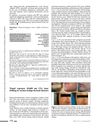 1 citations
,
July 2015 in “European Journal of Dermatology”
1 citations
,
July 2015 in “European Journal of Dermatology” CO₂ laser treatment is fast and effective for some benign skin tumors with minimal side effects.
 2 citations
,
April 2025 in “Lasers in Medical Science”
2 citations
,
April 2025 in “Lasers in Medical Science” Combining fractional CO2 laser with halometasone cream is more effective for chronic eczema than the cream alone.
 8 citations
,
April 2024 in “Cureus”
8 citations
,
April 2024 in “Cureus” CO2 lasers are better for severe acne scars, while Er:YAG lasers are gentler with fewer side effects.
 44 citations
,
July 2015 in “JAMA Facial Plastic Surgery”
44 citations
,
July 2015 in “JAMA Facial Plastic Surgery” Fractional laser resurfacing is effective and safe for skin treatment, with benefits like less downtime and a low risk of adverse events.
 19 citations
,
August 2007 in “Seminars in Plastic Surgery”
19 citations
,
August 2007 in “Seminars in Plastic Surgery” Newer skin resurfacing lasers reduce damage and scarring, with some approved for safe use and minimal side effects.
 May 2005 in “Seminars in Plastic Surgery”
 The Erbium YAG laser is effective in hair restoration, resulting in high yield and density, but it's not recommended for second replacements or those with good-quality hair.
 January 2025 in “Advances in Clinical Medicine”
 Fractional CO2 laser therapy effectively improves skin conditions and recovery when combined with other treatments.
 10 citations
,
July 1997 in “Dermatologic Clinics”
10 citations
,
July 1997 in “Dermatologic Clinics” Laser hair transplantation can be effective but should be limited to small areas and requires more training to ensure safety and effectiveness.
 11 citations
,
June 2005 in “Journal of Cosmetic Dermatology”
11 citations
,
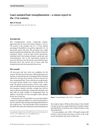
June 2005 in “Journal of Cosmetic Dermatology” Lasers in hair transplantation show promise but are not yet standard, with current methods causing some side effects and needles still being preferred for creating recipient sites.
 2 citations
,
October 1998 in “Dermatologic Surgery”
2 citations
,
October 1998 in “Dermatologic Surgery” Adjusting laser settings improved hair transplant results in Oriental patients.
 April 2003 in “Journal of Cutaneous Medicine and Surgery”
 Lasers are effective for some skin conditions but can cause side effects like scarring and pigment changes; careful selection is important, and botulinum toxin type A is successful in reducing sweat in palmar hyperhidrosis.
 1 citations
,
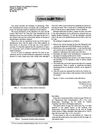
December 1996 in “Journal of Clinical Laser Medicine & Surgery”
1 citations
,
December 1996 in “Journal of Clinical Laser Medicine & Surgery” A doctor describes a new, less expensive method for treating skin issues with a laser, and another doctor corrects a false claim about hair transplantation results.
January 2025 in “Dermatologic Therapy” Combining fractional CO2 laser with type III collagen improves acne scar treatment.
 8 citations
,
July 2008 in “Facial Plastic Surgery Clinics of North America”
8 citations
,
July 2008 in “Facial Plastic Surgery Clinics of North America” More men are getting non-surgical cosmetic treatments due to increased income and social acceptance, with less invasive options being preferred.
1 citations
,
October 2025 in “Journal of Clinical Medicine” Laser therapy effectively treats all stages of hidradenitis suppurativa, offering a reliable alternative to medication.
 23 citations
,
September 2014 in “JEADV. Journal of the European Academy of Dermatology and Venereology/Journal of the European Academy of Dermatology and Venereology”
23 citations
,
September 2014 in “JEADV. Journal of the European Academy of Dermatology and Venereology/Journal of the European Academy of Dermatology and Venereology” Laser treatments are the most effective for porokeratotic adnexal ostial nevus.
 February 2026 in “Cosmetics”
 Perifollicular elastolysis is poorly understood, with limited treatment options and inconsistent results.
 January 2001 in “Dermatologic Surgery”
 The letters discussed medical tools, costs, treatment efficacy, and patient care complexities.
 24 citations
,
November 2021 in “PLoS ONE”
24 citations
,
November 2021 in “PLoS ONE” Ablative fractional laser treatment rejuvenates skin by altering gene expression and promoting wound healing and tissue regeneration.
 24 citations
,
January 2016 in “Lasers in Medical Science”
24 citations
,
January 2016 in “Lasers in Medical Science” Erbium glass laser treatment may help with skin remodeling, reduce inflammation, and improve skin cell maturation.
 3 citations
,
March 2008 in “Medical laser application”
3 citations
,
March 2008 in “Medical laser application” Lasers have become safer and more effective for treating skin problems and hair removal.
 January 2018 in “Springer eBooks”
 Lasers are less favored for hair transplant surgery but show promise for hair growth in controlled trials.