74 citations
,
January 2011 in “Reproductive Biology and Endocrinology” Testosterone therapy can improve hormone levels and quality of life in men with morphine-induced hormone issues.
10 citations
,
March 2024 in “Endocrine Reviews” Significant progress was made in understanding androgen excess disorders, but much is still unknown.
10 citations
,
March 2023 in “Journal of Chemistry” New compounds show promise for treating benign prostate hyperplasia with fewer side effects.
 May 2025 in “Clinical Endocrinology”
 Metformin lowers prolactin in men with normal hair but not in those with early hair loss.
 May 2024 in “Scientific African”
 Three natural compounds from Ghanaian plants may help treat BPH and alopecia.
 31 citations
,
September 2006 in “International journal of gynaecology and obstetrics”
31 citations
,
September 2006 in “International journal of gynaecology and obstetrics” New treatments for PCOS focus on insulin resistance and reducing testosterone levels, along with traditional hormone therapies.
22 citations
,
September 2024 in “Human Reproduction Update” Androgen measurement helps diagnose PCOS, but accuracy varies, needing standard methods.
 January 2025 in “The Journal of Clinical Endocrinology & Metabolism”
 Diagnosing PCOS is challenging due to its complex and varied symptoms.
8 citations
,
January 2021 in “Fermentation” Probiotics and synbiotics might help manage hirsutism by improving insulin resistance.
22 citations
,
January 2021 in “Clinical Therapeutics” Men face more severe COVID-19 outcomes, while women are more likely to have long-term symptoms.
 1 citations
,
April 2017 in “Journal of Dermatology and Dermatologic Surgery”
1 citations
,
April 2017 in “Journal of Dermatology and Dermatologic Surgery” IVIG therapy was linked to hair regrowth in two patients with hair loss, but it's not recommended due to its risks and costs.
 21 citations
,
December 2007 in “Primary Care”
21 citations
,
December 2007 in “Primary Care” Early diagnosis and treatment of PCOS is crucial to reduce emotional distress and health risks.
 41 citations
,
November 2003 in “Annals of the New York Academy of Sciences”
41 citations
,
November 2003 in “Annals of the New York Academy of Sciences” Male hormones, or androgens, affect women's health in areas like mood and bone density, and hormone replacement therapy using antiandrogenic progestogens can improve mood disorders and alertness in menopausal women.
 30 citations
,
April 1997 in “European journal of endocrinology”
30 citations
,
April 1997 in “European journal of endocrinology” The document concludes that managing hirsutism involves identifying the cause, using a scoring system for severity, combining cosmetic and medical treatments, encouraging weight loss, and providing psychological support, while noting the need for more research on drug treatments.
 28 citations
,
January 2003 in “Urologic oncology”
28 citations
,
January 2003 in “Urologic oncology” Suppressing certain hormones might help prevent prostate cancer.
 21 citations
,
January 2003 in “Seminars in reproductive medicine”
21 citations
,
January 2003 in “Seminars in reproductive medicine” The document concludes that various drugs can manage symptoms and metabolic issues in women with PCOS.
 12 citations
,
November 1993 in “International Journal of Dermatology”
12 citations
,
November 1993 in “International Journal of Dermatology” The document explains that hirsutism, often caused by hormonal issues, can be managed with treatment to improve both physical appearance and mental health.
 2 citations
,
September 2009 in “Hormone Molecular Biology and Clinical Investigation”
2 citations
,
September 2009 in “Hormone Molecular Biology and Clinical Investigation” Low dose finasteride decreases certain steroids, possibly increasing depression risk.
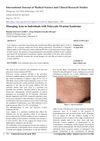 April 2024 in “International journal of medical science and clinical research studies”
 Effective acne management in PCOS includes hormone therapy, metformin, isotretinoin, weight loss, diet, exercise, and personalized treatment plans.
 May 2017 in “American Society of Health-System Pharmacists eBooks”
  January 2017 in “Elsevier eBooks”
 Sex hormones affect reproduction, sexual development, and oral health, and it's important for dental practitioners to understand their effects and interactions.
 January 1995 in “Adolescent and pediatric gynecology”
 Mutations in the androgen receptor gene cause different levels of androgen insensitivity, making it hard to create simple tests for the condition.
 32 citations
,
October 2003
32 citations
,
October 2003 Spironolactone is better than placebo for reducing excessive hair growth in women, but its effectiveness for acne is unclear due to small study sizes.
 29 citations
,
April 2004 in “Annals of Pharmacotherapy”
29 citations
,
April 2004 in “Annals of Pharmacotherapy” Finasteride reduces hirsutism effectively with fewer side effects but is a second-choice treatment due to safety concerns.
 20 citations
,
April 2006 in “Dermatologic Clinics”
20 citations
,
April 2006 in “Dermatologic Clinics” Antiandrogen therapies are beneficial for treating skin and hair conditions related to androgen levels.
 16 citations
,
July 2002 in “JOGC/Journal of obstetrics and gynaecology Canada”
16 citations
,
July 2002 in “JOGC/Journal of obstetrics and gynaecology Canada” Birth control pills can help reduce mild to moderate acne in women.

There are many treatments for common hair loss, but more trials are needed to decide which are best.
 53 citations
,
October 1984 in “Endocrine reviews”
53 citations
,
October 1984 in “Endocrine reviews” Excessive hair growth in women often has no known cause and is not linked to race or other hormonal symptoms.
 24 citations
,
January 2001 in “Dermatologic clinics”
24 citations
,
January 2001 in “Dermatologic clinics” Hormonal therapy is a treatment option for acne, the only medical treatment for hirsutism, and the most promising for androgenetic alopecia.
 2 citations
,
January 2017 in “Cambridge University Press eBooks”
2 citations
,
January 2017 in “Cambridge University Press eBooks” Manage PCOS in primary care with weight loss, psychological support, medication, and monitoring for health risks.