4 citations
,
June 2020 in “Processes” Geranium sibiricum may help manage diabetic complications by inhibiting a key enzyme.
 26 citations
,
March 2007 in “Clinical and experimental dermatology”
26 citations
,
March 2007 in “Clinical and experimental dermatology” Pimecrolimus cream is not effective for treating alopecia areata.
Upadacitinib effectively treated a patient with multiple inflammatory conditions.
2 citations
,
January 2023 in “Brazilian Journal of Development” Illegal wildlife captivity poses health risks and highlights the need for conservation and public health awareness.
5 citations
,
May 2025 in “Journal of the American Academy of Dermatology” 16 citations
,
July 1994 in “Journal of Dermatological Science” Minoxidil sulfate and pinacidil may promote hair growth through increased blood flow, not by activating potassium channels.
March 2024 in “Veterinary sciences” Geriatric Julia Creek dunnarts often suffer from reproductive and skin diseases, impacting conservation efforts.
2 citations
,
May 2025 in “Antioxidants” Prunus africana bark has the highest antioxidant activity and phenolic content.
 6 citations
,
July 2015 in “Journal of Investigative Dermatology”
6 citations
,
July 2015 in “Journal of Investigative Dermatology” Chicken feather gene mutation helps understand human hair disorders.
183 citations
,
July 2000 in “American Journal of Botany” Root hairs help Arabidopsis plants absorb more phosphorus when it's scarce.
1 citations
,
December 1971 in “PubMed”  3 citations
,
March 2015 in “Journal of the European Academy of Dermatology and Venereology”
3 citations
,
March 2015 in “Journal of the European Academy of Dermatology and Venereology” Some people with primary cicatricial alopecia also have inflammatory bowel disease, suggesting a possible connection.
 May 2024 in “Indian Journal of Dermatology”
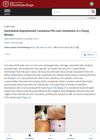
 The woman has a rare skin condition called follicular Dowling-Degos disease, which has limited treatment options.
1 citations
,
January 2011 in “MOspace Institutional Repository (University of Missouri)” Topical immunotherapy with SADBE and DPCP is most effective for short-term hair regrowth in children with severe alopecia areata.
36 citations
,
March 1989 in “British journal of dermatology/British journal of dermatology, Supplement” DPCP is more effective than tretinoin gel for treating severe alopecia.
 5 citations
,
March 2005 in “Journal of The American Academy of Dermatology”
5 citations
,
March 2005 in “Journal of The American Academy of Dermatology”  August 2016 in “Journal of Investigative Dermatology”
An integrated approach with accurate diagnosis and targeted treatment improves outcomes for female hair loss.
12 citations
,
June 2015 in “Dermatology Reports” Middle-aged women in Iran are most affected by primary cicatricial alopecia, especially discoid lupus erythematous.
1 citations
,
July 2021 in “DOAJ (DOAJ: Directory of Open Access Journals)”  January 2026 in “Dermatology Practical & Conceptual”
 Nail changes are common in alopecia areata and can indicate its severity.
 January 2018 in “Sohag Medical Journal”
 Combining topical dutasteride with microneedling is more effective for hair growth than microneedling alone.
Dutasteride can stabilize hair loss in patients with frontal fibrosing alopecia, but its safety in women is unclear, so use it with caution.
April 2013 in “The FASEB journal” Platycarya strobilacea extract significantly improves hair growth and follicle health.
48 citations
,
June 2003 in “Journal of Investigative Dermatology Symposium Proceedings” Contact sensitizers like DCP and SADBE are the most effective treatments for alopecia areata.
 October 2022 in “Gadua Journal of Pure and Allied Science”
 Terbinafine is the most effective treatment for tinea capitis, a scalp infection often confused with other conditions.
 1 citations
,
January 2015 in “Indian journal of dermatology, venereology, and leprology”
1 citations
,
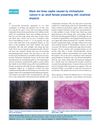
January 2015 in “Indian journal of dermatology, venereology, and leprology” A woman's scalp infection caused by a fungus led to permanent hair loss and was hard to treat but responded to a specific antifungal.
 January 2017 in “Journal of cosmetology & trichology”
 Polydioxanone threads can effectively reduce hair loss and increase hair re-growth in patients with androgenetic alopecia, providing a quick and relatively painless treatment option.
January 2025 in “Medical Research Archives” A new classification and scoring system is needed for alopecia areata to better assess severity.