 3 citations
,
May 2023 in “Clinical drug investigation”
3 citations
,
May 2023 in “Clinical drug investigation” JAK inhibitors for alopecia areata are linked to minor side effects like headache and acne, but not to an increased risk of serious adverse events.
 May 2014 in “JAMA Dermatology”
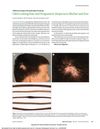
 Mother and son diagnosed with a rare genetic hair loss condition with no effective treatment.
 43 citations
,
February 2013 in “Developmental dynamics”
43 citations
,
February 2013 in “Developmental dynamics” Foxi3 expression in developing teeth and hair is controlled by the ectodysplasin pathway.

JAK inhibitors effectively regrow hair in children with alopecia areata and are safe to use.
1 citations
,
November 2023 in “Life” Hyaluronic acid injections can improve mouth opening and quality of life in scleroderma patients.
 October 2023 in “Frontiers in medicine”
 Comprehensive screening for infections is crucial before starting JAK inhibitors in alopecia areata patients.
25 citations
,
November 2020 in “Proceedings of the National Academy of Sciences” HoxC genes are crucial for normal hair and nail development.
1 citations
,
August 2020 The Shaven mutation in mice affects hair growth and causes a greasy coat due to abnormal lipid content.
1 citations
,
July 2001 in “Pediatrics in review” The girl has a hormonal imbalance causing increased hair growth and other male characteristics.
16 citations
,
September 1997 in “Oral surgery, oral medicine, oral pathology, oral radiology and endodontics” Hair loss from alopecia areata can rarely be caused by dental problems, and treating the dental issue may reverse the hair loss.
78 citations
,
October 2007 in “Journal of Investigative Dermatology” Delta1 is crucial for controlling skin cell growth and preventing tumors in mice.
87 citations
,
March 2017 in “Journal of Clinical Investigation” PSENEN gene mutations can cause both Dowling-Degos disease and acne inversa.
 56 citations
,
March 2010 in “Journal of Dermatology”
56 citations
,
March 2010 in “Journal of Dermatology” Most cases of Temporal Triangular Alopecia are found in early childhood and may be related to genetic conditions.
1 citations
,
May 2017 in “Molecular and Clinical Oncology” An epidermal cyst in the temporal bone can occur as a rare delayed complication after ear surgery.

The document concludes that the girl's hairlessness is likely inherited from her parents.
 3 citations
,
September 2019 in “Journal of Orthodontics”
3 citations
,
September 2019 in “Journal of Orthodontics” A boy's hair grew back after he stopped using orthodontic headgear that caused temporary hair loss.
 February 2025 in “Indian Dermatology Online Journal”
 Pincer nails are rare in lupus patients and may be managed conservatively.
September 2017 in “Dermatologic Surgery” 5 citations
,
April 2019 in “Journal of Investigative Dermatology” Oral JAK inhibitors improved alopecia areata by modulating immune responses and boosting hair growth.
 1 citations
,
January 2015 in “Trace Elements in Medicine (Moscow)”
1 citations
,
January 2015 in “Trace Elements in Medicine (Moscow)” A 3.75-year-old girl showed that different body organs can grow at different rates.
 June 2024 in “Annals of Medicine and Surgery”
 A 23-year-old Syrian woman has two rare hair disorders, and avoiding hair treatments plus using vitamins and minoxidil may help.
 19 citations
,
March 1988 in “International Journal of Dermatology”
19 citations
,
March 1988 in “International Journal of Dermatology” Hair shaft dysplasias are abnormal hair conditions that can be inherited or acquired and may signal other health issues, with limited treatment options available.
August 2024 in “JAAD Case Reports” Upadacitinib successfully regrew hair in a child with alopecia universalis and specific genetic mutations.
May 2022 in “Journal of Neurology Neurosurgery & Psychiatry” The woman's facial symptoms are best explained by primary Sjögren’s Syndrome.
January 2023 in “Medicines” Micronized-gingival connective tissues are safe and may help regenerate soft tissue around dental implants.
 January 2024 in “Wiadomości Lekarskie”
 Early physiotherapy with exercises and stretching is crucial for treating congenital torticollis.
19 citations
,
July 2004 in “Journal of Medical Primatology” Infant baboons suffered from zinc poisoning due to poor cage conditions.
41 citations
,
July 2018 in “Frontiers in Neurology” Myotonic dystrophy may be classified as a segmental progeroid disorder.
 December 2016 in “Journal of Evolution of Medical and Dental Sciences”
 Chronic Acrodermatitis Enteropathica can persist into adulthood and requires careful zinc treatment.
7 citations
,
April 2000 in “Mammalian Genome” A new mutation in mice causes crooked whiskers and messy hair.