A hat with sensors can measure scalp moisture well, helping with hair care.
14 citations
,
April 2017 in “Dermatology practical & conceptual” Yellow dots are common in severe alopecia areata.
3 citations
,
January 2020 in “JAAD Case Reports” A girl had two rare hair conditions that helped understand their overlap.
 April 2023 in “Journal of Investigative Dermatology”
 The improved EczemaNet more reliably and clearly identifies and assesses the severity of atopic dermatitis from photos.
Machine learning can accurately predict hair loss early, improving treatment options.
 January 2025 in “Clinical Cosmetic and Investigational Dermatology”
 Genetic testing is crucial for diagnosing rare hair loss disorders.
March 2026 in “Frontiers in Medicine” A hybrid model using traditional methods, trichoscopy, and AI improves hair loss assessment.
7 citations
,
June 2018 in “Journal of the American Academy of Dermatology” The document suggests finding a simpler, cheaper way to diagnose Uncombable Hair Syndrome.
43 citations
,
September 2009 in “Stem Cells” A nonviral method was developed to label and culture human hair follicle stem cells.
 October 2000 in “Pediatrics in Review”
 The document's conclusion cannot be summarized because the content is not available to parse.
June 2020 in “The journal of investigative dermatology/Journal of investigative dermatology” Scientists found new and known long non-coding RNAs in mouse hair follicle stem cells that may be important for stem cell function and could be targets for cancer treatment.
October 2025 in “Frontiers in Artificial Intelligence” "HairSentinel" accurately detects hairfall trends using simple user data, helping identify health risks early.
A new CNN model can detect Alopecia Areata with 98% accuracy.
 1 citations
,
September 2025 in “PLOS Digital Health”
1 citations
,
September 2025 in “PLOS Digital Health” Large language models often give biased or inaccurate medical responses, especially for LGBTQIA+ prompts.
 1 citations
,
January 2024 in “Curēus”
1 citations
,
January 2024 in “Curēus” Clinicians should use social and prescription data to track trends in performance-enhancing drug use.
January 2026 in “Figshare” January 2026 in “Figshare” 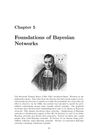 5 citations
,
January 2009 in “Elsevier eBooks”
5 citations
,
January 2009 in “Elsevier eBooks” Bayesian networks are tools for modeling variables' probabilistic relationships, which can efficiently represent complex probabilities and help in making inferences.
Transfer learning with three neural network architectures accurately classifies hair diseases.
 867 citations
,
November 2020 in “Nature Communications”
867 citations
,
November 2020 in “Nature Communications” Collider bias can distort our understanding of COVID-19 risk and severity.
 March 2023 in “Applied and Computational Engineering”
 Deep learning models can analyze scalp diseases effectively.
 1 citations
,
September 1997 in “PubMed”
1 citations
,
September 1997 in “PubMed” The uniform density approach in hair restoration is less noticeable in situations like wind or exercise.
 July 2022 in “International Journal of Applied Pharmaceutics”
 Machine learning and deep learning can effectively diagnose alopecia areata.
 April 1974 in “Pediatric Research”
 The Naked (N) trait in mice is linked to lower glycine and tyrosine in hair proteins.
January 2025 in “Communications in computer and information science” HairLossMultinet accurately classifies hair damage with 98% accuracy but needs a more diverse dataset for broader use.
March 2026 in “Pediatric Dermatology” Generative AI tools can accurately score alopecia areata, reducing subjectivity in evaluations.
VitaDetect uses AI to find vitamin deficiencies by analyzing images of nails, tongue, and skin.
 1 citations
,
August 2025
1 citations
,
August 2025 Drug repurposing can speed up and reduce costs in drug discovery, especially for cancer treatment.
12 citations
,
March 2011 in “Pediatric dermatology” An 18-year-old girl was diagnosed with a rare hereditary hair loss condition, despite no family history.
August 2025 in “International Journal of Research Publication and Reviews” Machine learning can predict stress-related hair loss and suggest prevention tips.