3 citations
,
August 2018 in “Stem cells international” Hair follicle cells help maintain and support stem cells and blood cell formation.
 1 citations
,
January 2017 in “Elsevier eBooks”
1 citations
,
January 2017 in “Elsevier eBooks” The document concludes that new treatments for hair loss may involve a combination of cosmetics, clinical methods, and genetic approaches.
 22 citations
,
December 2013 in “Molecular biology of the cell”
22 citations
,
December 2013 in “Molecular biology of the cell” ILK is essential for proper hair follicle development and structure.
 17 citations
,
February 2015 in “International Journal of Molecular Sciences”
17 citations
,
February 2015 in “International Journal of Molecular Sciences” A special mix from certain skin cells can help hair grow by making hair root cells grow faster and activating growth signals.
140 citations
,
December 1998 in “Journal of Investigative Dermatology” Apoptosis in hair follicles varies by growth phase, with TGF-β possibly starting the catagen phase.
30 citations
,
March 2008 in “Wound Repair and Regeneration” Estrogen affects scalp cell types differently, enhancing some wound healing processes.
5 citations
,
January 2022 in “Health Science Reports” Gremlin proteins help regulate hair growth by balancing signals in hair follicles.
 January 2022 in “Biomedical Reports”
 Inaudible sound at 30 kHz can boost hair growth and decrease hair loss by promoting cell growth and reducing cell death in hair follicles.
 November 2023 in “International Journal of Medical Sciences”
 New regenerative medicine-based therapies for hair loss look promising but need more clinical validation.
 May 2015 in “Hair transplant forum international”
 Androgenetic alopecia causes hair loss by shrinking hair follicles due to androgens, with the connection between the muscle and hair follicle determining if the loss is reversible.
86 citations
,
June 1998 in “Journal of Investigative Dermatology” The hairless gene mutation causes baldness by disrupting hair follicle structure.
57 citations
,
April 2009 in “Differentiation” SDF-1/CXCL12 and its receptor CXCR4 are crucial for melanocyte movement in mouse hair follicles.
41 citations
,
July 1994 in “Journal of Dermatological Science” Hair follicle cells need complex interactions to fully differentiate.
7 citations
,
September 2003 in “Journal of Investigative Dermatology” PAR-1 may play a role in hair growth regulation in human hair follicles.
May 2002 in “Journal of Investigative Dermatology” New findings on hair keratin, wound healing, and skin blistering were presented.
47 citations
,
December 2003 in “Journal of Investigative Dermatology” DS cells in hair follicles can help form and restore hair, especially in hair loss conditions.
 January 2016 in “Research Explorer (The University of Manchester)”
 Activating the Eda/Edar pathway improves wound healing by enhancing hair follicle growth.
October 2025 in “Journal of Investigative Dermatology” Hair follicle dermal stem cells help control hair growth timing by regulating signals at the hair germ–dermal papilla interface.
 16 citations
,
October 2014 in “Oral surgery, oral medicine, oral pathology and oral radiology”
16 citations
,
October 2014 in “Oral surgery, oral medicine, oral pathology and oral radiology” Keratoacanthoma comes from hair follicle cells.
 41 citations
,
June 2013 in “PLOS ONE”
41 citations
,
June 2013 in “PLOS ONE” Engineered skin substitutes can grow hair but have limitations like missing sebaceous glands and hair not breaking through the skin naturally.
 1 citations
,
October 2012 in “Elsevier eBooks”
1 citations
,
October 2012 in “Elsevier eBooks” Skin stem cells can help improve skin repair and regeneration.
Different types of sun exposure damage skin cells and immune cells, with chronic exposure leading to more severe and lasting damage.
949 citations
,
January 2001 in “Cell” Adult mouse skin contains stem cells that can create new hair, skin, and oil glands.
13 citations
,
December 1983 in “Canadian journal of zoology” Heterotypic cell contacts likely help hair matrix cells differentiate during mouse hair follicle development.
22 citations
,
June 2010 in “Experimental Dermatology” Lower MC2R expression may contribute to alopecia areata.
34 citations
,
June 2005 in “Developmental dynamics” Runx3 helps determine hair shape.
 1 citations
,
April 2022 in “Regenerative Therapy”
1 citations
,
April 2022 in “Regenerative Therapy” Activating the GDNF-GFRα1-RET signaling pathway could potentially promote skin and limb regeneration in humans and could be used to treat hair loss and promote wound healing.
37 citations
,
February 2007 in “Experimental Dermatology” Increasing PDCD4 protein may help prevent or treat some skin cancers.
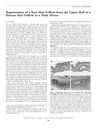 13 citations
,
October 2002 in “Journal of Investigative Dermatology”
13 citations
,
October 2002 in “Journal of Investigative Dermatology” The upper half of a human hair follicle can grow a new hair in a mouse, but success is rare.

The inner root sheath in hair follicles plays a key role in hair growth and health.