September 2014 in “Emergency Medicine News” The man's skin condition improved with sun protection and topical steroids, but UV exposure still caused flare-ups.
November 2025 in “Journal of Investigative Dermatology” NUL-5 may boost hair growth by improving hair follicle health and structure.
January 1994 in “Medical Entomology and Zoology” Electron microscopy helps understand skin structure and diseases.

PRP therapy effectively treats hair loss, wrinkles, scars, ulcers, and skin pigmentation disorders.
 May 2015 in “Journal of Investigative Dermatology”
 Melanoma risk tools need improvement, a gene mutation causes a hair disorder that might be treated by managing cell stress, a potential therapy for a skin-ear disorder involves blocking cell channels, skin wrinkling may indicate lung aging regardless of smoking, and oxidative stress might contribute to common baldness.
 1 citations
,
May 2017 in “Asian journal of medical sciences”
1 citations
,
May 2017 in “Asian journal of medical sciences” The dietary supplement significantly improved skin, nails, and hair in older adults.
 September 2018 in “International Journal of Advanced Community Medicine”
 The cream effectively treats acne and dermatitis without causing irritation.
1 citations
,
January 2025 in “Dermatologic Therapy” Immune checkpoint inhibitors can increase the risk of autoimmune skin diseases, especially bullous pemphigoid.
 66 citations
,
February 2013 in “Pediatric Dermatology”
66 citations
,
February 2013 in “Pediatric Dermatology” Dermoscopy improves diagnosis and treatment monitoring for children's skin infections, inflammations, and hair disorders.
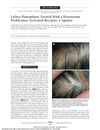 105 citations
,
December 2009 in “Archives of dermatology”
105 citations
,
December 2009 in “Archives of dermatology” A specific drug can help treat Lichen Planopilaris, a condition causing permanent hair loss.
6 citations
,
January 2022 in “Database” The data set helps improve predictions of how substances are absorbed through pig skin.
 July 2003 in “Journal of Cutaneous Medicine and Surgery”
 The document concludes that various treatments for skin conditions are effective, but some require further research, and certain factors like gender and lifestyle can influence disease outcomes.
September 2019 in “Journal of Investigative Dermatology” Vitiligo patients are willing to pay the most for treatment, regardless of disease severity.
 April 2016 in “Journal of The American Academy of Dermatology”
 Daylight photodynamic therapy is effective and well-tolerated for treating actinic keratoses with minimal side effects.
 114 citations
,
April 2004 in “International Journal of Dermatology”
114 citations
,
April 2004 in “International Journal of Dermatology” Postinflammatory hyperpigmentation causes dark skin patches and needs personalized treatment.
1 citations
,
January 2018 in “International Journal of Clinical and Developmental Anatomy” Dermoscopy improves accuracy in predicting treatment success for androgenetic alopecia with the Regenera® protocol.
 13 citations
,
March 2013 in “International Journal of Cosmetic Science”
13 citations
,
March 2013 in “International Journal of Cosmetic Science” AcSDKP may help prevent skin and hair aging and promote their growth.
10 citations
,
November 2016 in “Clinical and experimental dermatology” PAS III can cause multiple autoimmune diseases with noticeable skin issues.
January 2024 in “Animals” SP1 promotes and KROX20 inhibits hair cell growth by affecting the CUX1 gene.
June 2026 in “Frontiers in Physiology” The cream effectively reduces oily skin, improves hydration, and changes skin bacteria.
 34 citations
,
August 2002 in “British Journal of Dermatology”
34 citations
,
August 2002 in “British Journal of Dermatology” ALA-PDT is effective and safe for chronic X-ray dermatitis, providing complete or partial remission.
January 2018 in “Journal of Investigative Dermatology” Blocking certain pathways with kinase inhibitors may help treat cutaneous lupus erythematosus.
 November 2020 in “Journal of The American Academy of Dermatology”
 Taking vitamin C and vitamin E twice a day can help prevent sunburn and DNA damage from UVB exposure.
 December 2020 in “Nippon Laser Igakkaishi”
 Photobiomodulation therapy is beneficial in plastic surgery and dermatology.
3 citations
,
June 2025 in “Gyemyeong uidae haksulji” PDRN is effective and safe for healing wounds and skin issues.
 May 2026 in “The Scientific Issues of Ternopil Volodymyr Hnatiuk National Pedagogical University Series pedagogy”
 Detoxil effectively treats chronic skin conditions by improving liver detoxification and reducing symptoms.
 4 citations
,
February 2018 in “Journal of Investigative Dermatology”
4 citations
,
February 2018 in “Journal of Investigative Dermatology” The document concludes that a protein involved in hair growth may link to baldness and that more research is needed on its role in hair loss and skin cancer treatments.
May 2018 in “Dermatologic Surgery”  November 2010 in “Value in Health”
 Real-life dosing of biologics for plaque psoriasis often deviates from recommended guidelines, especially for high-need patients.
 17 citations
,
April 2004 in “Acta Clinica Belgica”
17 citations
,
April 2004 in “Acta Clinica Belgica” UV light makes skin signs of lack of carotene and vitamin A more visible.