March 2007 in “International Journal of Cosmetic Science” Hair with more melanin resists weather damage better.
8 citations
,
May 2020 in “International journal of biological macromolecules” Certain treatments can increase protein binding to natural hair but are less effective on permed hair.
 January 2024 in “Molecules (Basel. Online)”
 Juglone from walnut extracts may help repair damaged hair.
 May 2025 in “International Journal of Pharmacognosy and Chemistry”
 A new accurate and cost-effective method was developed to measure Minoxidil in different forms.
 July 2023 in “International Journal of Pharmaceutical Sciences and Drug Analysis”
 The study found different absorbance values for simplex and complex homoeopathic hair oils when analyzed with a UV-visible spectrophotometer.
 May 2026 in “Jurnal Riset Kefarmasian Indonesia”
 Robusta coffee beans have high caffeine content, useful for products like hair growth stimulants.
 March 2026 in “International Journal of Pharmaceutics and Drug Analysis”
 A reliable, cost-effective method was developed for accurately measuring finasteride in medicines.
 22 citations
,
July 2004 in “International Journal of Cosmetic Science”
22 citations
,
July 2004 in “International Journal of Cosmetic Science” UV radiation and visible light can damage hair, but there are ways to protect it.
7 citations
,
September 2004 in “International Journal of Cosmetic Science” Blond hair lightens more with visible light directly, while ultraviolet light lightens it after washing by damaging other hair parts.
45 citations
,
January 2016 in “Journal of Nanomaterials” Silver nanoparticles from Ziziphus nummularia leaves have better antibacterial, antifungal, antioxidant, and hair growth effects than the leaf extract alone.
 8 citations
,
January 2011 in “Organic and Biomolecular Chemistry”
8 citations
,
January 2011 in “Organic and Biomolecular Chemistry” Minoxidil reacts to nitrosation 7 times more than phenol, mainly due to its -NH₂ groups, leading to the creation of N-nitrosominoxidil.
 6 citations
,
August 2014 in “Spectroscopy Letters”
6 citations
,
August 2014 in “Spectroscopy Letters” The analysis shows where minoxidil's atoms are likely to react and describes its electronic transitions and behavior with temperature changes.
 1 citations
,
June 2025 in “International Journal of Plant and Environment”
1 citations
,
June 2025 in “International Journal of Plant and Environment” Nickel oxide nanoparticles made with plant extract can kill bacteria and fungi and break down dyes.
July 2023 in “International Journal of Molecular Biology and Biochemistry” The hair oil made with Arnica montana, castor, and mustard oils is effective.
 January 2017 in “Bulletin of Pharmaceutical Research”
 Chemical fingerprints can distinguish Eclipta prostrata from Wedelia calendulacea to prevent confusion and adulteration.
4 citations
,
August 2016 in “PubMed” Repeated dyeing and shampooing cause hair color loss and damage.
18 citations
,
March 2009 in “Skin pharmacology and physiology” Sunlight damages hair, causing cuticle loss, protein changes, and discoloration.
 86 citations
,
June 2017 in “Anais Brasileiros de Dermatologia”
86 citations
,
June 2017 in “Anais Brasileiros de Dermatologia” Antioxidants can benefit skin health but should be used carefully to avoid negative effects.
144 citations
,
December 2017 in “Pigment cell & melanoma research” Melasma is now considered a skin aging disorder caused by sun exposure in people with a genetic tendency, which impacts treatment and prevention approaches.
24 citations
,
January 2009 in “International Journal of Trichology” Sunlight exposure ages hair, making it brittle, stiff, and dry.
 November 2022 in “Journal of Investigative Dermatology”
 The study found that skin inflammation and immune response pathways are activated in Solar Urticaria patients after UV exposure, unlike in healthy people.
 17 citations
,
April 2004 in “Acta Clinica Belgica”
17 citations
,
April 2004 in “Acta Clinica Belgica” UV light makes skin signs of lack of carotene and vitamin A more visible.
 January 2021 in “Journal of clinical and cosmetic dermatology”
 Human skin responds to light with protective mechanisms, but more research is needed to understand these processes and their implications for health and therapy.
6 citations
,
December 2019 in “International Journal of Cosmetic Science” White hair has weaker tryptophan fluorescence than other unpigmented fibers, possibly due to UV exposure or unknown substances.
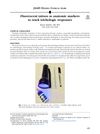 July 2018 in “Journal of The American Academy of Dermatology”
 Fluorescent tattoos are a good way to mark the scalp for hair treatments because they're accurate, invisible in normal light, and have low risk.
 April 2025 in “Dermatology Practical & Conceptual”
 UV-enhanced trichoscopy helps diagnose hair shaft disorders like pili annulati.
7 citations
,
September 2021 in “Journal of Applied Polymer Science” Cuttlefish ink melanin protects hair from UV damage.
January 2026 in “Skin Appendage Disorders” UV dermoscopy helps detect white hairs in children more effectively.
5 citations
,
December 2020 in “Materials Research Express” Silver nanoparticles from Ostericum koreanum may help treat allergies.
 January 2026 in “E3S Web of Conferences”
 Silver nanoparticles from Mitracarpus scaber protect the liver and reduce prostate enlargement.