 August 2023 in “International Journal of Nanomedicine”
 A new wound healing treatment using a graphene-based material with white light speeds up healing and reduces infection and scarring.
February 2009 in “Journal of the American Academy of Dermatology”  February 2023 in “Journal of Advanced Research”
 A new method using Platelet-rich Plasma (PRP) in a microneedle can promote hair regrowth more efficiently and is painless, minimally invasive, and affordable.
 April 2025 in “Pharmaceutics”
 Oil A formulation with Baricitinib shows promise for treating alopecia areata by promoting hair growth.
March 2025 in “Molecules” Tectona grandis leaf extracts, especially with propylene glycol, may be promising for topical hair loss treatments.
 November 2023 in “Materials Today Bio”
 The new treatment using nanoparticles with ISX9 can effectively regrow hair without major side effects.
83 citations
,
August 2020 in “Resources” Macroalgae compounds offer sustainable, effective benefits for cosmetics.
81 citations
,
October 2023 in “Bioactive Materials” 3D-printed microneedles improve drug delivery and diagnostics but face scalability and regulatory challenges.
25 citations
,
March 2024 in “Sustainability” Using food industry waste and fermentation can create sustainable cosmetics.
5 citations
,
July 2025 in “Nutrients” Nanotechnology can improve food safety, nutrition, and health, but safety and regulation challenges need addressing.
3 citations
,
October 2023 in “Cosmetics” Effervescent cleansing tablets with Asiatic acid were successfully developed, showing good stability and cleansing effectiveness.
 1 citations
,
January 2022 in “Journal of Pharmaceutical Sciences”
1 citations
,
January 2022 in “Journal of Pharmaceutical Sciences” The new skin cream with FOL-005 safely promotes hair growth and is stable and user-friendly.
 February 2025 in “Cosmetics”
 Blue light therapy is promising for skin and hair conditions but needs more research for widespread use.
 January 2024 in “Materials chemistry frontiers (Online)”
 New near-infrared OLED emitters are more efficient, especially platinum(II) complexes, and have promising applications like hair growth treatment.
 May 2025 in “International Journal of Pharmacognosy and Chemistry”
 A new accurate and cost-effective method was developed to measure Minoxidil in different forms.
 July 2023 in “International Journal of Pharmaceutical Sciences and Drug Analysis”
 The study found different absorbance values for simplex and complex homoeopathic hair oils when analyzed with a UV-visible spectrophotometer.
 May 2026 in “Jurnal Riset Kefarmasian Indonesia”
 Robusta coffee beans have high caffeine content, useful for products like hair growth stimulants.
 22 citations
,
July 2004 in “International Journal of Cosmetic Science”
22 citations
,
July 2004 in “International Journal of Cosmetic Science” UV radiation and visible light can damage hair, but there are ways to protect it.
7 citations
,
September 2004 in “International Journal of Cosmetic Science” Blond hair lightens more with visible light directly, while ultraviolet light lightens it after washing by damaging other hair parts.
18 citations
,
March 2009 in “Skin pharmacology and physiology” Sunlight damages hair, causing cuticle loss, protein changes, and discoloration.
 86 citations
,
June 2017 in “Anais Brasileiros de Dermatologia”
86 citations
,
June 2017 in “Anais Brasileiros de Dermatologia” Antioxidants can benefit skin health but should be used carefully to avoid negative effects.
24 citations
,
January 2009 in “International Journal of Trichology” Sunlight exposure ages hair, making it brittle, stiff, and dry.
 November 2022 in “Journal of Investigative Dermatology”
 The study found that skin inflammation and immune response pathways are activated in Solar Urticaria patients after UV exposure, unlike in healthy people.
 17 citations
,
April 2004 in “Acta Clinica Belgica”
17 citations
,
April 2004 in “Acta Clinica Belgica” UV light makes skin signs of lack of carotene and vitamin A more visible.
 January 2021 in “Journal of clinical and cosmetic dermatology”
 Human skin responds to light with protective mechanisms, but more research is needed to understand these processes and their implications for health and therapy.
6 citations
,
December 2019 in “International Journal of Cosmetic Science” White hair has weaker tryptophan fluorescence than other unpigmented fibers, possibly due to UV exposure or unknown substances.
 July 2018 in “Journal of The American Academy of Dermatology”
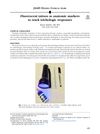
 Fluorescent tattoos are a good way to mark the scalp for hair treatments because they're accurate, invisible in normal light, and have low risk.
 April 2025 in “Dermatology Practical & Conceptual”
 UV-enhanced trichoscopy helps diagnose hair shaft disorders like pili annulati.
7 citations
,
September 2021 in “Journal of Applied Polymer Science” Cuttlefish ink melanin protects hair from UV damage.
January 2026 in “Skin Appendage Disorders” UV dermoscopy helps detect white hairs in children more effectively.