 September 2024 in “Journal of the Pakistan Medical Association”
 A 589 nm laser increases IL-2 and IFN-y gene expression in human T-cells.
 December 2022 in “American journal of medical genetics. Part A”
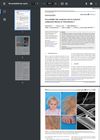
 A person got uncombable hair syndrome from two copies of chromosome 1 from their mother.
6 citations
,
August 2016 in “Journal of Visualized Experiments” The CUBIC protocol allows detailed 3D visualization of proteins in mouse skin biopsies.
99 citations
,
April 1998 in “The journal of investigative dermatology/Journal of investigative dermatology” Hair follicles help skin immune recovery after UVB exposure.
 14 citations
,
January 2016 in “Experimental and molecular pathology”
14 citations
,
January 2016 in “Experimental and molecular pathology” Giving immune serum from vaccinated mice to mice without T cells prevents infection and tumor growth.
1 citations
,
January 2007 in “Side effects of drugs annual” Dermatological treatments can have significant side effects, including allergic reactions, sexual dysfunction, and increased cancer risk.
5 citations
,
November 2003 in “PubMed” Chemical treatments and light exposure damage hair proteins.
 14 citations
,
April 2011 in “Journal of the American Academy of Dermatology”
14 citations
,
April 2011 in “Journal of the American Academy of Dermatology” Researchers found a gene mutation responsible for a rare hair loss condition.
April 2026 in “Spectrochimica Acta Part A Molecular and Biomolecular Spectroscopy”  June 2024 in “British Journal of Dermatology”
 A rare case of a transplant patient developing a skin condition linked to HPV-49.
September 2025 in “Acta Medica International” The triple wavelength laser is effective, safe, and well-tolerated for hair reduction in Indian women.
August 2025 in “Al-Iraqia Medical College Journal” Virus infection risk is linked to heat tolerance and size, but decreases with high humidity and mutation rates.
April 2023 in “Journal of The American Academy of Dermatology” Use a 3-mm spot size and specific protective eyewear for safer and more effective laser treatment of facial veins.
April 2024 in “Al-Azhar International Medical Journal /Al-Azhar International Medical Journal” Combining fractional CO2 laser or microneedling with 5-FU is more effective and safer for treating vitiligo.
 1 citations
,
November 2019 in “Applied sciences”
1 citations
,
November 2019 in “Applied sciences” Human hair provides more UV protection when aligned and at higher angles, but the scalp still gets UV exposure.
4 citations
,
December 2014 in “Dermatologica sinica/Zhōnghuá pífūkē yīxué zázhì” The excimer lamp is a safe and effective treatment for severe alopecia areata.
 January 2026 in “Forum Dermatologicum”
 LED therapy is safe and can help with acne, aging skin, and hair loss, but consumer devices may be less effective.
1 citations
,
September 2020 in “bioRxiv (Cold Spring Harbor Laboratory)” γδ T cells are crucial for early wound healing after a skin virus infection.
15 citations
,
August 2011 in “Lasers in medical science” The 755-nm alexandrite laser effectively and quickly treats trichostasis spinulosa with minimal pain and no side effects.
43 citations
,
November 2012 in “Pharmaceutical research” Fractional CO2 laser treatment significantly boosts drug and nanoparticle skin absorption, especially through hair follicles.
23 citations
,
May 2010 in “Surface and interface analysis” Chemical treatments and UV radiation severely damage the lipid layer on hair.
 21 citations
,
January 2013 in “Annals of dermatology/Annals of Dermatology”
21 citations
,
January 2013 in “Annals of dermatology/Annals of Dermatology” The combination of cyclosporine and PUVA might help treat severe alopecia areata.
198 citations
,
September 2007 in “Clinics in Dermatology” Radiofrequency devices effectively tighten skin without surgery.
August 2022 in “Frontiers in Pharmacology” Ultrasound can improve targeted drug delivery, making treatments more effective with fewer side effects.
 133 citations
,
May 2016 in “Cell Host & Microbe”
133 citations
,
May 2016 in “Cell Host & Microbe” Human dermal fibroblasts are the main cells targeted by a virus that can cause a deadly skin cancer, and a certain inhibitor can effectively block this infection.
 May 2015 in “Journal of The American Academy of Dermatology”
 A heart transplant patient developed a skin condition called epidermodysplasia verruciformis after taking immune-suppressing drugs.
3D models from confocal microscopy improve melanoma detection on sun-damaged skin.
October 2013 in “CRC Press eBooks” Low-level light therapy is used in cosmetics and dermatology to repair skin, reduce inflammation, and treat various skin conditions.
 July 2025 in “Journal of medical & health sciences review.”
 Ultrasound-assisted gene therapy could revolutionize tissue regeneration by improving gene delivery.
 2 citations
,
November 2018 in “International Journal of Cosmetic Science”
2 citations
,
November 2018 in “International Journal of Cosmetic Science” Chamomile extract can protect hair from damage caused by light.