January 2013 in “Frontiers in Immunology” Parental uveitis increases offspring's risk and severity of autoimmune eye disease.

Hair turning darker can be a sign of skin cancer.
 86 citations
,
October 2017 in “Clinics in Dermatology”
86 citations
,
October 2017 in “Clinics in Dermatology” Older adults have a high rate of skin cancers like basal cell carcinoma and melanoma, mainly due to UV exposure and age.
5 citations
,
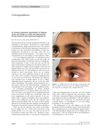
January 2021 in “Indian Journal of Pathology and Microbiology” A rare eyelid tumor was successfully diagnosed and removed, highlighting the need for careful examination.
 14 citations
,
November 2009 in “Clinical and experimental dermatology”
14 citations
,
November 2009 in “Clinical and experimental dermatology” Topical prostaglandin E2 can help treat both alopecia areata and vitiligo.
10 citations
,
September 1994 in “International Journal of Dermatology” Three Iranian men had reddish-brown facial pigmentation with no effective treatment.
 April 2016 in “Journal of Investigative Dermatology”
 Tumor cell adhesion is linked to higher risk of SLN metastasis and melanoma recurrence, and a model including these factors predicts these outcomes better than one with just clinical data.
7 citations
,
January 2013 in “Ophthalmic plastic and reconstructive surgery” A 79-year-old man was diagnosed with a rare skin condition called nevus comedonicus on his eyelids.
January 1999 in “Praxis sociológica” Melanocyte stem cells can become melanoma, resembling human melanoma.
 February 2024 in “Journal of the American Academy of Dermatology”
 Vascular patterns in dermoscopy help tell apart malignant and benign skin tumors.
 May 2015 in “Actas Dermo-Sifiliográficas”
 A young man was unexpectedly diagnosed with basal cell carcinoma after a scalp examination and confocal microscopy.
January 2022 in “Optometric clinical practice” A woman had a non-cancerous skin tumor on her eyelid removed successfully.
March 1998 in “JEADV. Journal of the European Academy of Dermatology and Venereology/Journal of the European Academy of Dermatology and Venereology” Removing a tumor may resolve associated skin and hair symptoms.
21 citations
,
August 2002 in “British Journal of Ophthalmology” Drug misuse can cause serious eye infections and other severe side effects.
1 citations
,
April 2021 in “Annals of Otology Rhinology & Laryngology” Surgical removal is advised for large congenital blue nevi due to rare cancer risk.
3D models from confocal microscopy improve melanoma detection on sun-damaged skin.
3 citations
,
June 2025 in “Stem Cell Research & Therapy” Hair follicle-derived melanocyte transplant could effectively treat vitiligo by restoring skin color.
 June 2023 in “JAAD Case Reports”
 A man had a rare skin cancer that looked like a bald spot.
 4 citations
,
October 2012 in “Expert Review of Dermatology”
4 citations
,
October 2012 in “Expert Review of Dermatology” Dermoscopy greatly improves melanoma diagnosis and reduces unneeded surgeries.
15 citations
,
April 2011 in “The journal of investigative dermatology/Journal of investigative dermatology” A3B5 can reduce skin pigmentation and slow melanoma growth.
6 citations
,
March 2022 in “IET Image Processing” Targeting the narrowest part of the anterior chamber angle may help prevent pupil block in glaucoma.
 1 citations
,
November 2023 in “BMC chemistry”
1 citations
,
November 2023 in “BMC chemistry” Tadalafil and Finasteride may help treat aggressive melanoma.
January 2026 in “EJC Skin Cancer” Early detection and intervention improve survival in melanoma patients.
 3 citations
,
November 2023 in “Frontiers in cell and developmental biology”
3 citations
,
November 2023 in “Frontiers in cell and developmental biology” Melanocytes are important for skin and hair color and protect the skin from UV damage.
December 2020 in “American Journal of Transplantation” Early recognition and treatment of VATS in transplant patients improve outcomes.
144 citations
,
December 2017 in “Pigment cell & melanoma research” Melasma is now considered a skin aging disorder caused by sun exposure in people with a genetic tendency, which impacts treatment and prevention approaches.
 17 citations
,
April 2004 in “Acta Clinica Belgica”
17 citations
,
April 2004 in “Acta Clinica Belgica” UV light makes skin signs of lack of carotene and vitamin A more visible.
March 2025 in “Laboratory Investigation” Mesothelioma of the tunica vaginalis testis is rare, often high-grade, and has a median survival of about 24 months.
 2 citations
,
September 2022 in “Annals of Medicine and Surgery”
2 citations
,
September 2022 in “Annals of Medicine and Surgery” A man with a rare scalp cancer was successfully treated, highlighting the need for early management to prevent spread and complications.
 June 2011 in “Expert Review of Dermatology”
 Researchers discovered potential origins and new treatments for skin cancer, including biomarkers for melanoma and therapies that reduce tumor growth.