 March 2026 in “Scientific Reports”
 Ferulic acid may help hair grow by activating certain receptors in cells.
 25 citations
,
September 2020 in “Molecules”
25 citations
,
September 2020 in “Molecules” Quercitrin may help treat hair loss by promoting hair growth and improving cell health.
 4 citations
,
April 2024 in “Cellular and Molecular Biology”
4 citations
,
April 2024 in “Cellular and Molecular Biology” Injectable platelet-rich fibrin is better than platelet-rich plasma for promoting hair growth.
 May 2026 in “Frontiers in Pharmacology”
 Dendrobium officinale polysaccharide helps hair regrowth in hair loss mice by affecting local steroid metabolism and hair follicle responses.
 July 2022 in “The journal of investigative dermatology/Journal of investigative dermatology”
 Silybum marianum extract, Manganese PCA, and Lespedeza capitata extract may help with hair growth and anchorage, potentially aiding in hair loss treatment.
April 2026 in “Skin Appendage Disorders” Exosome therapy shows promise for treating hair loss but needs more research and standardization.
 November 2024 in “Journal of Cosmetic Dermatology”
 The plant extracts may help treat hair loss by promoting hair growth and reducing DHT levels.
 1 citations
,
November 2023 in “iScience”
1 citations
,
November 2023 in “iScience” A protein called desmoglein 3 is important for keeping hair follicle stem cells inactive and helps in their regeneration.
 3 citations
,
November 2015 in “Journal of Investigative Dermatology”
3 citations
,
November 2015 in “Journal of Investigative Dermatology” Testosterone can both promote hair growth and cause baldness by affecting hair growth signals.
 54 citations
,
January 2013 in “BMC Complementary and Alternative Medicine”
54 citations
,
January 2013 in “BMC Complementary and Alternative Medicine” Thuja orientalis hot water extract may help hair grow by starting the growth phase and improving hair follicle development.
 133 citations
,
May 2016 in “Cell Host & Microbe”
133 citations
,
May 2016 in “Cell Host & Microbe” Human dermal fibroblasts are the main cells targeted by a virus that can cause a deadly skin cancer, and a certain inhibitor can effectively block this infection.
 43 citations
,
December 2008 in “Molecular biology of the cell”
43 citations
,
December 2008 in “Molecular biology of the cell” Disrupting Smad4 in mouse skin causes early hair follicle stem cell activity that leads to their eventual depletion.
 42 citations
,
March 2014 in “European Journal of Pharmacology”
42 citations
,
March 2014 in “European Journal of Pharmacology” Ginsenoside F2 from ginseng may increase hair growth better than standard treatments by affecting cell growth signals.
 24 citations
,
July 2017 in “Structure”
24 citations
,
July 2017 in “Structure” FGF9 controls which receptors it binds to through a process where two FGF9 molecules join, and changes in FGF9 can lead to incorrect receptor activation.
 555 citations
,
July 2001 in “Genes & Development”
555 citations
,
July 2001 in “Genes & Development” Tcf3 and Lef1 are key in deciding skin stem cell roles.
 170 citations
,
July 2012 in “Journal of Investigative Dermatology”
170 citations
,
July 2012 in “Journal of Investigative Dermatology” Wnt ligands are crucial for hair growth and repair.
 72 citations
,
April 2008 in “Organogenesis”
72 citations
,
April 2008 in “Organogenesis” Wnt signaling is crucial for skin and hair development and its disruption can cause skin tumors.
 48 citations
,
July 2008 in “Acta Biochimica et Biophysica Sinica”
48 citations
,
July 2008 in “Acta Biochimica et Biophysica Sinica” Wnt signaling is important for development and cell regulation but can cause diseases like cancer when not working properly.
 May 2015 in “Journal of Investigative Dermatology”
 Wnt-3a helps grow more skin stem cells, which could lead to new hair loss treatments.
 33 citations
,
September 2017 in “Molecules”
33 citations
,
September 2017 in “Molecules” Red ginseng oil and its components help promote hair regrowth and could treat hair loss.
 8 citations
,
January 2016 in “Evidence-based Complementary and Alternative Medicine”
8 citations
,
January 2016 in “Evidence-based Complementary and Alternative Medicine” Rumex japonicus extract may promote hair growth more effectively than Minoxidil.
 1 citations
,
April 2021 in “Journal of Investigative Dermatology”
1 citations
,
April 2021 in “Journal of Investigative Dermatology” The ingredients could help prevent hair loss by promoting hair growth and increasing VEGF secretion.
 508 citations
,
February 2007 in “Cell”
508 citations
,
February 2007 in “Cell” Epithelial stem cells are crucial for tissue renewal and repair, and understanding them could improve treatments for damage and cancer.
 24 citations
,
January 2019 in “Theranostics”
24 citations
,
January 2019 in “Theranostics” Loss of Pten in certain hair follicle stem cells increases skin cancer risk.
 21 citations
,
June 2016 in “Genesis”
21 citations
,
June 2016 in “Genesis” Researchers identified specific genes that are important for mouse skin cell development and healing.
 21 citations
,
October 2013 in “Molecular Biology of the Cell”
21 citations
,
October 2013 in “Molecular Biology of the Cell” The protein CCN2 controls hair growth by affecting hair follicle formation and stem cell activity in mice.
 3 citations
,
February 2014 in “Asian Pacific journal of tropical medicine”
3 citations
,
February 2014 in “Asian Pacific journal of tropical medicine” Wnt5a may slow down hair growth in mice.
 February 2026 in “Plastic and Aesthetic Research”
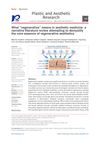
 Regenerative aesthetic medicine aims to restore tissue function, but needs more consistent evidence and standardized practices.
 112 citations
,
January 2014 in “Molecular and cellular therapies”
112 citations
,
January 2014 in “Molecular and cellular therapies” Blocking the Wnt pathway could lead to new treatments for cancer and tissue repair but requires careful development to avoid side effects.
 81 citations
,
February 2019 in “Experimental & Molecular Medicine”
81 citations
,
February 2019 in “Experimental & Molecular Medicine” PAK4 is crucial in cancer progression, brain development, and could be a therapeutic target, especially through the PAK4-CREB axis.