2 citations
,
September 2024 in “Internal Medicine Journal” Upadacitinib helped regrow hair and maintain ulcerative colitis remission.
January 2024 in “Acta dermato-venereologica”  1 citations
,
October 2023 in “Clinical, cosmetic and investigational dermatology”
1 citations
,
October 2023 in “Clinical, cosmetic and investigational dermatology” Tofacitinib improved hair loss and skin symptoms in a patient after secukinumab caused hair loss.
September 2023 in “Journal of the American Academy of Dermatology” 
Hit15 shows promise as a COVID-19 treatment by reducing virus infection and inflammation.
January 2023 in “Reactions Weekly”  June 2026 in “Eurasian Journal of Medicine”
 Baricitinib effectively regrew hair in a woman with alopecia universalis after other treatments failed.
March 2023 in “Reactions Weekly” January 2023 in “Reactions Weekly” January 2023 in “Reactions Weekly”  March 2024 in “International Journal of Dermatology”
 Baricitinib improved nail condition and hair regrowth in a patient with alopecia and nail abnormalities.
 October 2025 in “Dermatology and Therapy”
 Ritlecitinib is being tested for effectiveness and safety in treating severe alopecia areata.
 June 2025 in “International Journal of Science and Research (IJSR)”
 Tofacitinib effectively promotes hair regrowth in alopecia areata with minimal side effects.
 May 2025 in “Birth Defects Research”
 YWS1903 is safe for pregnant rats at moderate doses but causes fetal issues at high doses.
 7 citations
,
April 2013 in “Clinical and Experimental Dermatology”
7 citations
,
April 2013 in “Clinical and Experimental Dermatology” Tianeptine, an antidepressant, may prevent stress-induced hair loss in mice.
 September 2024 in “Journal of the American Academy of Dermatology”
 Baricitinib maintains significant hair regrowth in severe alopecia areata over three years.
August 2025 in “Acta Biomaterialia” The new hydrogel speeds up wound healing by reducing inflammation and promoting tissue growth.
 6 citations
,
February 2023 in “Journal of nanobiotechnology”
6 citations
,
February 2023 in “Journal of nanobiotechnology” The new anti-acne treatment HA-P5 effectively reduces acne by targeting two key receptors and avoids an enzyme that can hinder treatment.
 January 2024 in “Revista de la Asociación Colombiana de Dermatología y Cirugía Dermatológica/Revista de la Asociacion Colombiana de Dermatologia y Cirugia Dermatologica”
 Baricitinib successfully treated severe hair loss.
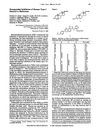 89 citations
,
February 1993 in “Journal of Medicinal Chemistry”
89 citations
,
February 1993 in “Journal of Medicinal Chemistry” New compounds called benzoquinolinones may treat conditions linked to excess DHT.
10 citations
,
May 2020 in “Clinical and Experimental Health Sciences” Tideglusib may help bone regeneration without being toxic at low doses.
3 citations
,
February 2019 in “Molecular genetics and metabolism” The combination of tadalafil and finasteride improves urinary symptoms and erectile function in men with enlarged prostates.
2 citations
,
March 2026 in “Journal of Dermatological Treatment” JAK inhibitors for alopecia areata have different safety risks, requiring specific monitoring for each drug.

The patch effectively promotes hair growth for alopecia areata without pain.
 September 2023 in “Dermatology and Therapy”
 Baricitinib effectively regrows hair in most people with severe alopecia, especially those with patchy hair loss, but hair may fall out again if treatment stops.
 January 2025 in “Acta Dermatovenerologica Alpina Pannonica et Adriatica”
 Baricitinib is effective and safe for treating severe alopecia areata.
Baricitinib works better than methotrexate for severe alopecia areata.
1 citations
,
January 2024 in “Medicine” Taohong Siwu Decoction may help treat deep vein thrombosis by reducing inflammation.
Baricitinib is effective for Alopecia Areata but requires careful patient history evaluation.
 2 citations
,
June 2019 in “Boletín médico del Hospital Infantil de México”
2 citations
,
June 2019 in “Boletín médico del Hospital Infantil de México” Tofacitinib treatment is used for teenagers with alopecia areata.