101 citations
,
August 2001 in “The Journal of Cell Biology” A new keratin 6 type in mice explains why some mice without certain keratin genes still have normal hair and nails.
September 2016 in “Journal of dermatological science” The conclusion is that the variation in hair thinness in patients is mostly due to the amount of underdeveloped hairs, and treatments that thicken fine hairs might work for those with mild to severe conditions.
140 citations
,
August 2010 in “Pigment Cell & Melanoma Research” We know a lot about mouse hair color, but not much about human hair color differences.
 September 2022 in “Canadian journal of animal science”
 Certain gene variations are linked to the thickness of cashmere goat hair.
 32 citations
,
June 2013 in “Journal of Investigative Dermatology”
32 citations
,
June 2013 in “Journal of Investigative Dermatology” Mice without certain skin proteins had abnormal skin and hair development.
36 citations
,
February 2004 in “Veterinary Dermatology” Lymphangiosarcoma was confirmed in cats with specific skin symptoms using a lymphatic marker.
 46 citations
,
January 2010 in “The journal of investigative dermatology/Journal of investigative dermatology”
46 citations
,
January 2010 in “The journal of investigative dermatology/Journal of investigative dermatology” Mice lacking Insig proteins had hair growth problems due to cholesterol buildup, but this was fixed by the drug simvastatin.
31 citations
,
November 2015 in “PloS one” Reducing Tyrosinase prevents mature color pigment cells from forming in mouse hair.
55 citations
,
August 2013 in “PloS one” Genetic differences between young and old Tan sheep explain why their fleece changes from curly to straight as they age.
23 citations
,
August 2017 in “Genome” Gene expression affects fur development in rex rabbits.
 November 2009 in “Medical & surgical dermatology”
 The document concludes that Borrelia afzelii causes a skin condition in France, a gene is linked to hair loss in Caucasian women, and various genetic mutations affect skin diseases.
26 citations
,
January 2011 in “Open Journal of Genetics” The KAP13-3 gene in sheep affects wool quality by influencing keratin assembly.
18 citations
,
November 2009 in “Calcified tissue international” A genetic mutation caused severe rickets and alopecia in an Indian patient, but high-dose calcium and phosphate treatment improved their condition.
9 citations
,
February 2002 in “PubMed” A new gene mutation causes hereditary coproporphyria with reduced enzyme activity.
 November 2023 in “The journal of investigative dermatology/Journal of investigative dermatology”
 Removing MCPIP1 from myeloid cells in mice leads to hair loss and prevents skin tumors but causes pigmented spots.
January 2014 in “ACTA SCIENTIAE VETERINARIAE” The cat's skin condition was resistant to treatment and did not improve.
2 citations
,
May 2025 in “IntechOpen eBooks” Early treatment with corticosteroids and immunosuppressants is crucial for managing Vogt-Koyanagi-Harada disease.
The chapter explains causes of hair loss and excessive hair growth in animals.
3 citations
,
May 2024 in “BMC Medical Genomics” A new ARID1B gene variation causes Coffin-Siris syndrome 1 and early high myopia in a Chinese family.
1 citations
,
November 2024 in “Orphanet Journal of Rare Diseases” Changes in genes FGA, VWF, and ACTG1 may contribute to pemphigus vulgaris.
 13 citations
,
December 1940 in “The journal of nutrition/The Journal of nutrition”
13 citations
,
December 1940 in “The journal of nutrition/The Journal of nutrition” Lack of certain vitamins causes fur loss and greying in silver foxes.
 35 citations
,
August 2010 in “The American journal of pathology”
35 citations
,
August 2010 in “The American journal of pathology” Researchers created a new mouse model for studying Citrullinemia Type I and similar conditions, showing symptoms and treatment responses like those in humans.
 July 2024 in “Journal Archives of Health”
 Woolly hair is a rare genetic condition with no effective treatments.
Genetic analysis of rabbits identified key genes for traits like coat color, body size, and fertility.
113 citations
,
June 2010 in “Biological Chemistry” Cathepsin L deficiency causes large, abnormal cell structures and health issues in mice.
 4 citations
,
July 2014 in “International Journal of Dermatology”
4 citations
,
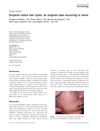
July 2014 in “International Journal of Dermatology” Twins had rare skin cysts likely due to genetics.
 42 citations
,
January 2017 in “Genes”
42 citations
,
January 2017 in “Genes” The gene KAP22-1 affects wool yield and fiber shape in sheep.
1 citations
,
October 2024 in “Veterinary Dermatology” A Cavalier King Charles Spaniel had both uveodermatological syndrome and alopecia areata, and treatment with ciclosporin helped regrow hair.
12 citations
,
September 2017 in “JDR Clinical & Translational Research” Early detection of specific VDR mutations is crucial for effective treatment and better dental outcomes in children with hereditary vitamin D–resistant rickets.
January 2026 in “Animals” TBX3 gene affects pigmentation and marking formation in Dun Mongolian horses.