January 2016 in “Minerva Access (University of Melbourne)” Hair follicle transplantation can improve wound healing and nerve growth.
 62 citations
,
January 2000 in “Developmental dynamics”
62 citations
,
January 2000 in “Developmental dynamics” Notch-related genes play a key role in the development and cycling of hair follicles.
 121 citations
,
March 1989 in “Journal of Investigative Dermatology”
121 citations
,
March 1989 in “Journal of Investigative Dermatology” Minoxidil can help grow hair in mice by making cells grow and improving hair quality. More research needed.
 11 citations
,
September 2012 in “Journal of Nanjing Medical University”
11 citations
,
September 2012 in “Journal of Nanjing Medical University” Cyclosporine A was found to increase hair growth in mouse whisker follicles.
1 citations
,
January 1993 in “Skin Pharmacology and Physiology” Hair growth drugs and epidermal growth factor do not change the calcium binding site gradient in hair follicles.
 39 citations
,
April 1992 in “Development”
39 citations
,
April 1992 in “Development” Both cell and non-cell parts are important for rat whisker follicle regrowth.
 10 citations
,
January 2014 in “BioMed research international”
10 citations
,
January 2014 in “BioMed research international” Rat whisker cells can help turn other cells into nerve cells and might be used to treat brain injuries or diseases.

K15 and Id3 are important in hair follicle regeneration, with K15 increasing in early stages and Id3 responding later.
 28 citations
,
October 2011 in “International Journal of Molecular Medicine”
28 citations
,
October 2011 in “International Journal of Molecular Medicine” Adenosine helps hair grow longer and stronger by boosting certain growth factors and signaling pathways.

KY19382 helps to regrow hair and create new hair follicles.
 September 2016 in “Journal of Dermatological Science”
 Plasmacytoid dendritic cells, which overproduce IFN-α, may play a crucial role in starting alopecia areata, an autoimmune disease causing hair loss.
1 citations
,
January 2012 in “International journal of trichology” Sheep hair follicle cells can grow a lot but need the dermal papilla to do so.
3 citations
,
January 2023 in “Nutrients” Hordenine may help hair grow by activating a specific cell growth pathway.
 33 citations
,
February 1999 in “The journal of investigative dermatology/Journal of investigative dermatology”
33 citations
,
February 1999 in “The journal of investigative dermatology/Journal of investigative dermatology” IGF-1 increases whisker growth in transgenic mice.
 39 citations
,
March 2009 in “Archives of Dermatological Research”
39 citations
,
March 2009 in “Archives of Dermatological Research” Apigenin may help promote hair growth and could treat hair loss.
 20 citations
,
August 2015 in “International Journal of Molecular Medicine”
20 citations
,
August 2015 in “International Journal of Molecular Medicine” Human placental extract may help hair growth by affecting certain cell signals and could be more effective with minoxidil.
 17 citations
,
December 2001 in “Journal of Investigative Dermatology”
17 citations
,
December 2001 in “Journal of Investigative Dermatology” The osteopontin gene is active in a specific part of rat hair follicles during a certain hair growth phase and might affect hair cycle and diseases.
45 citations
,
August 1992 in “PubMed” The rat vibrissa follicle can quickly remodel its basement membrane during hair growth, affecting cell signaling and activity.
31 citations
,
September 1996 in “Differentiation” The upper dermal sheath can regenerate hair in rats.
 September 2017 in “Journal of Investigative Dermatology”
 Fermented mackerel oil was found to promote hair growth by activating certain cell signals and increasing cell growth.
Wheat bran promotes hair growth by helping hair cells multiply.
January 2008 in “Dialnet (Universidad de la Rioja)” Certain compounds from Polygonum multiflorum roots may help treat hair loss.
January 2007 in “Durham e-Theses (Durham University)” Hair growth and shedding involve specific cell changes and gene roles.
 3 citations
,
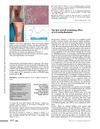
November 2011 in “European Journal of Dermatology”
3 citations
,
November 2011 in “European Journal of Dermatology” 4-O-methylhonokiol from Magnolia officinalis significantly promotes hair growth.
 April 2016 in “Plastic and reconstructive surgery. Global open”
 Tafluprost could be a potential treatment for hair loss by promoting hair growth phase changes.
135 citations
,
October 2010 in “Stem Cells” Hair follicle stem cells can help treat eye surface issues by becoming corneal cells.
162 citations
,
December 2008 in “Stem Cells” Hair follicle stem cells can become corneal-like cells, potentially helping restore vision.
949 citations
,
January 2001 in “Cell” Adult mouse skin contains stem cells that can create new hair, skin, and oil glands.
319 citations
,
November 2005 in “Proceedings of the National Academy of Sciences” Hair follicle stem cells can help repair damaged nerves.
September 2008 in “Acta Ophthalmologica” Hair follicle stem cells can become corneal-like cells with the right environment.