10 citations
,
May 2011 in “American Journal of Hematology” Vinblastine can help treat childhood ITP but may cause reversible side effects.
Vinblastine and its metabolites may cause nausea and hair loss by binding to specific receptors and could lead to better chemotherapy drugs with fewer side effects.
 April 2020 in “Journal of the Endocrine Society”
 An 87-year-old man showed unusual signs of Hodgkin lymphoma, primarily high calcium levels, which improved after treatment and revealed the disease.
 January 1989 in “Side effects of drugs annual”
 Some cancer and immune system drugs can cause serious side effects, including heart, lung, nerve, and organ damage, which need careful monitoring and management.
 1 citations
,
May 2021 in “Scientific Reports”
1 citations
,
May 2021 in “Scientific Reports” Certain cancer drugs are strongly linked to nerve damage, requiring close monitoring and early treatment.
 April 2022 in “JOURNAL OF RESEARCH AND REVIEW IN SCIENCE”
 African plants may help treat cancer by boosting immunity and protecting cells.
 January 1978 in “Clin-Alert”
 A document listed serious side effects from various drugs, including deaths and diseases, emphasizing the importance of being aware of drug side effects.
 8 citations
,
February 2005 in “British Journal of Haematology”
8 citations
,
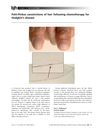
February 2005 in “British Journal of Haematology” Chemotherapy caused the patient's hair to have alternating thick and thin segments.
 August 1978 in “Dicp-The annals of pharmacotherapy”
 Mannitol diuresis allows higher doses of cis-platinum for testicular cancer treatment without increasing kidney damage.
2 citations
,
September 2024 in “PLoS ONE” Bendamustine combined with tucidinostat may effectively treat adult T-cell leukemia.
 172 citations
,
November 1983 in “Journal of The American Academy of Dermatology”
172 citations
,
November 1983 in “Journal of The American Academy of Dermatology” Chemotherapy can cause skin problems like hair loss, mouth sores, and skin darkening, and recognizing these can affect treatment decisions.
 19 citations
,
October 2008 in “Journal der Deutschen Dermatologischen Gesellschaft”
19 citations
,
October 2008 in “Journal der Deutschen Dermatologischen Gesellschaft” Anti-cancer treatments can cause reversible hair loss, skin sensitivity, pigmentation changes, nail damage, and skin reactions, with a need for more research on managing these side effects.
 9 citations
,
September 2024 in “Scientific Reports”
9 citations
,
September 2024 in “Scientific Reports” Cardamonin may help treat oral cancer by promoting cell death and stopping cancer cell growth.
 3 citations
,
January 2011 in “Wspolczesna Onkologia-Contemporary Oncology”
3 citations
,
January 2011 in “Wspolczesna Onkologia-Contemporary Oncology” Scalp hypothermia can prevent chemotherapy-induced hair loss but is not suitable for all patients, and more research is needed to improve prevention methods.
 January 2026 in “Frontiers in Pharmacology”
 Certain drugs can cause male infertility, so fertility counseling and sperm preservation are advised.
 January 2025 in “Dermatology Review”
 Trichilemmal carcinoma is rare, usually benign after removal, but needs close follow-up due to recurrence risks.
January 2020 in “Revista Dermatológica Centro Uraga” Recognizing trichoscopic features is crucial for diagnosing various hair loss conditions.
 August 1994 in “Drugs & Therapy Perspectives”
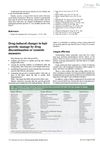
 Some drugs can cause hair loss or growth, but hair usually returns to normal after stopping the drug.
 9 citations
,
January 2018 in “Acta Clinica Croatica”
9 citations
,
January 2018 in “Acta Clinica Croatica” Bendamustine, often combined with other drugs, is effective and less toxic for certain blood cancers, but less effective for young, fit patients with CLL.
8 citations
,
January 1977 in “Acta Haematologica” The treatment was effective for advanced non-Hodgkin's lymphomas.
 724 citations
,
April 2004 in “Lancet Oncology”
724 citations
,
April 2004 in “Lancet Oncology” Chemotherapy in the first trimester of pregnancy is risky, but in the second and third trimesters, it's generally safe with careful drug selection and timing.
 310 citations
,
November 2011 in “Environment International”
310 citations
,
November 2011 in “Environment International” Anticancer drugs are increasingly found in surface waters, and their long-term environmental effects are not well understood, requiring better testing methods.
 260 citations
,
January 2019 in “Pharmaceutics”
260 citations
,
January 2019 in “Pharmaceutics” Niosomes are a promising, stable, and cost-effective drug delivery system with potential for improved targeting and safety.
 209 citations
,
March 1989 in “Journal of The American Academy of Dermatology”
209 citations
,
March 1989 in “Journal of The American Academy of Dermatology” Interferon alfa-2a is effective for treating cutaneous T cell lymphoma but has significant side effects.
 150 citations
,
March 1995 in “Annals of Oncology”
150 citations
,
March 1995 in “Annals of Oncology” Palliative chemotherapy is cost-effective for advanced gastric and colorectal cancer but not clearly for pancreatic-biliary cancer.
 147 citations
,
April 1994 in “Drug Safety”
147 citations
,
April 1994 in “Drug Safety” Some drugs can cause hair loss or increase hair growth, but these effects are usually reversible when the drug is stopped.
 129 citations
,
October 2007 in “The New England Journal of Medicine”
129 citations
,
October 2007 in “The New England Journal of Medicine” Over one-third of women experience hair loss, with female-pattern hair loss being most common, and treatments include minoxidil and possibly hair transplantation.
 114 citations
,
March 2002 in “Current opinion in oncology/Current opinion in oncology, with cancerlit”
114 citations
,
March 2002 in “Current opinion in oncology/Current opinion in oncology, with cancerlit” Cancer therapy can cause various skin problems, including hair loss, skin darkening, painful hand-foot syndrome, and severe skin damage.
 108 citations
,
December 2003 in “Clinical breast cancer”
108 citations
,
December 2003 in “Clinical breast cancer” PLD is an effective and safer alternative for treating breast cancer.
 107 citations
,
December 2003 in “Dermatologic Therapy”
107 citations
,
December 2003 in “Dermatologic Therapy” Interferon, especially alfa interferon, is an effective treatment for cutaneous T-cell lymphoma with manageable side effects.