 27 citations
,
April 2017 in “European journal of endocrinology”
27 citations
,
April 2017 in “European journal of endocrinology” The research found that MRI and certain hormone levels can help tell apart ovarian tumors from hyperthecosis in postmenopausal women, but tissue analysis is still needed for a definite diagnosis.
 May 2016 in “Endocrine Abstracts”
 The removal of the adrenal tumor improved the patient's symptoms and reduced androgen levels, indicating successful surgery.
6 citations
,
June 2006 in “International Journal of Gynecological Pathology” A postmenopausal woman's hormone imbalance and symptoms improved after removing benign ovarian tumors.
 6 citations
,
January 2011 in “PubMed”
6 citations
,
January 2011 in “PubMed” The document concludes that most patients with endocrine disorders experience diffuse, non-scarring hair loss, with scarring hair loss being rare.
 20 citations
,
October 2017 in “Clinical Endocrinology”
20 citations
,
October 2017 in “Clinical Endocrinology” The conclusion is that removing both ovaries is the best treatment for excess male hormones in postmenopausal women, with medication as another option, and managing insulin resistance is important for diagnosis and treatment.
 8 citations
,
April 2019 in “Journal of the Endocrine Society”
8 citations
,
April 2019 in “Journal of the Endocrine Society” Postmenopausal women with hyperandrogenism didn't have better metabolic health even after their testosterone levels became normal.
 May 2025 in “International Journal of Reproduction Contraception Obstetrics and Gynecology”
 Ovarian tumors should be considered when postmenopausal women show signs of virilization.
3 citations
,
May 2002 in “PubMed” The document concludes that treatment for excessive hair growth depends on the cause, with options including hair removal methods and medications like anti-androgens or insulin-sensitizing drugs.
 September 2024 in “Pediatrics in Review”
 Parental support and gender-affirming care are crucial for the mental health of transgender adolescents.
 January 2019 in “Skin appendage disorders”
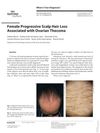
 A woman's hair loss was linked to a rare hormone-secreting ovarian tumor, treated with surgery and hair loss medication.
The document concludes that antiandrogenic drugs like cyproterone acetate and spironolactone are effective but not permanent treatments for skin-related androgenization in women.
 14 citations
,
March 2022 in “Clinical Endocrinology”
14 citations
,
March 2022 in “Clinical Endocrinology” The document concludes that a systematic approach is crucial to identify causes of androgen excess in women beyond the most common cause, Polycystic ovary syndrome (PCOS).
January 2013 in “Obstetrical & gynecological survey” Most women with hirsutism have normal hormone levels and can be treated with cosmetic methods; obesity and PCOS are common causes, and treatments depend on the underlying issue.
2 citations
,
July 2023 in “AACE Clinical Case Reports” Ovarian vein sampling can effectively locate ovarian tumors when imaging is unclear.
January 2017 in “University journal of surgery and surgical specialities” Steroid cell tumors in ovaries are rare, can cause hormone changes, and may be cancerous.
 1 citations
,
January 2018 in “Journal of SAFOMS”
1 citations
,
January 2018 in “Journal of SAFOMS” A rare ovarian tumor can cause unusual male-like symptoms, but surgery usually leads to a good outcome.
6 citations
,
March 2021 in “Frontiers in surgery” A woman's symptoms of increased body hair and testosterone were caused by a rare adrenal tumor, which was removed successfully.
 December 2022 in “Journal of Medical Case Reports”
 A 20-year-old woman was found to have a rare ovarian tumor causing symptoms like acne and a low-pitched voice, which disappeared after the tumor was removed.
August 2017 in “Journal of pediatric surgery case reports” A toddler with a rare adrenal gland tumor causing male-like physical changes was successfully treated with surgery.
 April 2023 in “Research Square (Research Square)”
 A young woman had a rare, aggressive ovarian tumor that was hard to diagnose and treat, leading to disease progression despite treatment.
October 2008 in “DOAJ (DOAJ: Directory of Open Access Journals)” A 20-month-old girl had a rare adrenal tumor removed successfully, with no recurrence for 10 years.
October 2016 in “Journal of Case Reports” A rare ovarian tumor can occur without causing male-like symptoms.
3 citations
,
May 2025 in “Clinical Endocrinology” Evaluate and manage androgen excess in women with a systematic approach, considering both physical and psychological impacts.
 April 2020 in “Journal of the Endocrine Society”
 An ovarian tumor caused a woman's male-like symptoms, which improved after surgery.
 June 2026 in “Romanian Journal of Medical Practice”
 Surgery resolved hormone imbalance and symptoms in a rare ovarian tumor case in an elderly woman.
May 2025 in “Journal of the ASEAN Federation of Endocrine Societies” Thorough evaluation is crucial for postmenopausal women with virilization to detect rare ovarian tumors.
7 citations
,
March 2023 in “Gynecological Endocrinology” After tumor removal, the woman regained normal hormone levels, menstruated, and had a healthy baby.
 January 2024 in “Journal of surgical case reports”
 Removing an adrenal tumor can significantly reduce high androgen levels in postmenopausal women.
 January 2025 in “JCEM Case Reports”
 Ovarian thecomas can cause virilization in postmenopausal women and are treated with surgery.
 4 citations
,
December 2012 in “Arquivos Brasileiros De Endocrinologia E Metabologia”
4 citations
,
December 2012 in “Arquivos Brasileiros De Endocrinologia E Metabologia” A postmenopausal woman's masculine symptoms improved after surgery for a hormone-producing ovarian tumor.