13 citations
,
April 2023 in “Biochemical Society Transactions” Tissue stiffness helps shape how organisms develop.
The method effectively measures hair elasticity and could be useful in forensics.
 38 citations
,
December 2012 in “Journal of Cutaneous Pathology”
38 citations
,
December 2012 in “Journal of Cutaneous Pathology” EVG staining is a valuable, simple, and cost-effective method for diagnosing various skin conditions in dermatopathology.

Stiffness gradients in alginate gels can guide cancer cell invasion and study cellular behaviors.
 February 2019 in “PubMed”
 The research found that twisting hair fibers can show changes in stiffness and damage, and help tell apart different hair treatments.
 August 2020 in “Textile research journal”
 The model helps understand how wool fiber structure affects its strength and flexibility.
61 citations
,
April 2023 in “Advanced Materials” The new electrode improves long-term monitoring on hairy skin by reducing motion issues and is easy to use.
 February 2026 in “Journal of the Korean Society of Cosmetology”
 Silicone oil viscosity affects hair curling and damage during treatments.
28 citations
,
June 2023 in “Small” VVF alone can't fully describe porosity in granular scaffolds.
1 citations
,
June 2014 in “[Thesis]. Manchester, UK: The University of Manchester; 2014.” Chemical modifications can alter hair's stability and flexibility, with hydrophobic interactions helping maintain structure in humid conditions.
2 citations
,
December 2010 in “PubMed” The new stiffness test works well for gels but not for sprays.
 7 citations
,
October 1963 in “Textile Research Journal”
7 citations
,
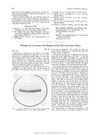
October 1963 in “Textile Research Journal” Merino wool fibers change shape with moisture, while human hair shape stays the same.
 80 citations
,
March 2000 in “Journal of cutaneous pathology”
80 citations
,
March 2000 in “Journal of cutaneous pathology” The VVG stain effectively differentiates scar tissue from normal skin and helps classify types of permanent alopecia.
Yak hair stretches mainly due to macromolecules slipping past each other.
147 citations
,
September 2001 in “Computer graphics forum” The authors created a realistic and efficient method to simulate hair movement by combining fluid dynamics with individual hair strand behavior.
1 citations
,
December 2022 in “Skin Research and Technology” The technique helps measure how hair styling ingredients affect hair's stiffness and flexibility.
49 citations
,
June 2004 in “Philosophical Transactions of the Royal Society A Mathematical Physical and Engineering Sciences” Human hair becomes weaker and stretches more easily at higher temperatures.
12 citations
,
September 2013 in “BMC Biophysics” Keratin filaments' elasticity is influenced by their terminal domains and surrounding medium.
 February 2025 in “Brazilian Journal of Hair Health”
 Multiparametric ultrasound effectively monitors scalp changes after using vasoconstrictive cosmetics.
 July 2023 in “Research Square (Research Square)”
 Skin's uneven surface and hair follicles affect its stress and strain but don't change its overall strength, and help prevent the skin from peeling apart.
March 2026 in “Journal of the mechanical behavior of biomedical materials/Journal of mechanical behavior of biomedical materials” Hair cuticles remain stable and resilient under stress due to strong protein content and crosslinking.
January 2025 in “SSRN Electronic Journal”  January 2026 in “Lithuanian University of Health Sciences”
 Methyl cellulose makes the most stable Equisetum arvense gel.
 2 citations
,
April 2022 in “PLoS ONE”
2 citations
,
April 2022 in “PLoS ONE” Vibration treatment may reduce migraine pain by changing cell structures.
2 citations
,
July 2019 in “Cosmetics” Beautiful hair is flexible and elastic due to its unique double-layered structure and can be enhanced with succinic acid treatment.
2 citations
,
September 2023 in “bioRxiv (Cold Spring Harbor Laboratory)” Tissue stiffness is influenced by contractility, which suppresses collagen breakdown.
 16 citations
,
December 2016 in “Dermatologic Surgery”
16 citations
,
December 2016 in “Dermatologic Surgery” Higher scalp elasticity leads to wider scars after hair transplantation; a new method to measure elasticity may help predict scar size.
22 citations
,
January 1985 Water makes hair more flexible, especially the outer layer.
May 2026 in “Applied Spectroscopy” Humidity affects hair structure changes during stretching.