 1 citations
,
February 2022 in “Terapevtičeskij arhiv”
1 citations
,
February 2022 in “Terapevtičeskij arhiv” A young woman got liver damage from taking too much vitamin A for two years.
 March 2026 in “Clinical Cosmetic and Investigational Dermatology”
 The combination therapy is safe and more effective for treating pediatric facial and cervical vitiligo.
 January 2024 in “Biochemistry Research International”
 Compounds from Ziziphus spina-christi roots show strong antibacterial and antioxidant potential.
 41 citations
,
December 2008 in “Journal of the American Academy of Dermatology”
41 citations
,
December 2008 in “Journal of the American Academy of Dermatology” Oral valganciclovir improved a patient's skin condition caused by immunosuppression.
May 2024 in “Clinical and experimental optometry”  37 citations
,
October 2017 in “Clinical and Experimental Dermatology”
37 citations
,
October 2017 in “Clinical and Experimental Dermatology” Oral tofacitinib shows promise in treating atopic dermatitis and alopecia areata, but only slight improvement in vitiligo.
28 citations
,
March 1986 in “The American journal of medicine” Too much vitamin A can cause liver damage and skin issues.
 4 citations
,
December 2024 in “Clinical Cosmetic and Investigational Dermatology”
4 citations
,
December 2024 in “Clinical Cosmetic and Investigational Dermatology” Combining baricitinib with UV-B therapy effectively treats non-segmental vitiligo and is well-tolerated.
February 1945 in “New England Journal of Medicine” October 2025 in “Plant Science Today” Cytokinins help Vitex negundo grow better and bloom more.
 17 citations
,
January 2011 in “The Korean Journal of Hepatology”
17 citations
,
January 2011 in “The Korean Journal of Hepatology” Vogt-Koyanagi-Harada disease can develop during interferon therapy for chronic hepatitis C.
 15 citations
,
January 2019 in “Journal of the Formosan Medical Association”
15 citations
,
January 2019 in “Journal of the Formosan Medical Association” Adalimumab helped control a child's severe eye disease when other treatments failed.
29 citations
,
September 1942 in “Archives of ophthalmology” Vogt-Koyanagi syndrome often leads to partial or complete blindness and responds poorly to treatment.
May 2011 in “Journal of Clinical Neuroscience” The woman was diagnosed with Vogt–Koyanagi–Harada disease and successfully treated with medication, restoring her vision and stopping headaches.
 9 citations
,
April 2024 in “Cureus”
9 citations
,
April 2024 in “Cureus” Vogt-Koyanagi-Harada disease affects vision and skin, mainly in people with darker skin, and is treated with steroids and immunosuppressants.
 12 citations
,
April 2005 in “Mycoses”
12 citations
,
April 2005 in “Mycoses” A 1-day or 3-day itraconazole treatment is effective for acute vulvovaginal candidosis, but recurrent cases may need longer treatment.
52 citations
,
January 2016 in “Brazilian Journal of Medical and Biological Research” Combining glycyrrhizin and UVB light is most effective for improving vitiligo.
 January 2025 in “The Egyptian Journal of Hospital Medicine”
 Baricitinib is effective and safe for treating localized vitiligo, alone or with topical tacrolimus.
7 citations
,
March 2002 in “AIDS” Indinavir, especially with vitamin A, may cause bone changes, but switching to nelfinavir can reduce these effects.
March 2024 in “International journal of molecular sciences” taVNS reduces vitiligo symptoms in mice.
1 citations
,
October 2018 in “Ukraïnsʹkij žurnal dermatologìï, venerologìï, kosmetologìï” Wolvit® (biotin 5 mg) is effective and safe for treating hair loss and scalp conditions in women.
9 citations
,
May 2014 in “Clinical Cosmetic and Investigational Dermatology” Using tazarotene with GliSODin improves facial skin more than tazarotene alone.
November 2025 in “Journal of Investigative Dermatology” TEC kinases may help cause inflammation in vitiligo and could be targeted for treatment.
 1 citations
,
January 2014 in “The Journal of Dermatology”
1 citations
,
January 2014 in “The Journal of Dermatology” A patient with Ivemark syndrome developed mixed type vitiligo after a hepatitis C infection, showing different treatment responses and immune cell involvement in the skin.
23 citations
,
March 2017 in “PTR. Phytotherapy research/Phytotherapy research” Butin is effective in treating vitiligo in mice.
 3 citations
,
January 2015 in “Journal of clinical and diagnostic research”
3 citations
,
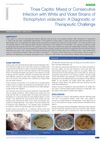
January 2015 in “Journal of clinical and diagnostic research” Treating a boy's scalp infection was challenging because two different colors of the same fungus appeared.
 May 2015 in “Journal of The American Academy of Dermatology”
 Povidone-iodine nail solution effectively treats nail infections caused by chemotherapy.
21 citations
,
January 2006 in “Hormone Research in Paediatrics” A mutation in the VDR gene affects hair cycling without needing ligand binding.
19 citations
,
December 1999 in “International Journal of Dermatology” Dihydroxyacetone in self-tanning lotion helped reduce sun-related skin issues in a woman with variegate porphyria.
74 citations
,
February 2018 in “Journal of the American Academy of Dermatology”