Search
for
Sort by
Research
150-180 / 1000+ resultsresearch Does D matter? The role of vitamin D in hair disorders and hair follicle cycling
Vitamin D may help treat hair disorders.

research Integrating Ayurvedic therapies with minoxidil: a randomized, single-blinded, parallel-controlled trial assessing the efficacy and safety of Traya's customized approach for treating male androgenetic alopecia
Combining Ayurvedic therapies with minoxidil is more effective for hair growth in men than using minoxidil alone.
research Integrative Nutritional Mechanisms of Keyora Lycopene 23 in 1 Man's Multi-Vitamin in Erectile Dysfunction, Male Infertility, Prostatic Disorders, and Metabolic Dysregulation
Keyora Lycopene 23 in 1 Man's Multi-Vitamin improves male reproductive health and metabolism.
research Disproportional signal of sexual dysfunction reports associated with finasteride use in young men with androgenetic alopecia: A pharmacovigilance analysis of VigiBase
Finasteride use in young men with hair loss is linked to sexual dysfunction.
research Dietary supplement increases anagen hair rate in women with telogen effluvium: results of a double-blind, placebo-controlled trial
The dietary supplement helped increase hair growth in women with hair loss.
research Safety and efficacy of actinic keratoses reduction with a 3 day application of ingenol disoxate field treatment to the face, chest and balding scalp
The treatment increased hair follicle counts and is potentially effective for male hair loss without serious side effects.
research Clinical efficacy of supplement and scalp lotion containing astaxanthin in male androgenetic alopecia
research Minoxidil Stimulates Mouse Vibrissae Follicles in Organ Culture
Minoxidil can help grow hair in mice by making cells grow and improving hair quality. More research needed.

research Comparative study between the Efficacy of Topical Sildenafil 2% and Topical Minoxidil 5% in the Treatment of Male Androgenic Alopecia
Minoxidil is the most common treatment for male hair loss, but sildenafil shows promise as an alternative.

research A Well‐Tolerated Hair Serum Containing New Natural Active Ingredients Reduced Hair Loss and Improved Quality of Life in Women With Chronic Telogen Effluvium: A 16‐Week Controlled Study
The hair serum reduced hair loss and improved hair quality in women.
research MINOXIDIL FOR MALE-PATTERN BALDNESS

research Natural products for male androgenetic alopecia
Natural products like saw palmetto, caffeine, melatonin, marine extracts, rosemary oil, procyanidin, pumpkin seed oil, and cannabidiol oil could potentially treat male hair loss.

research Medical treatments for balding in men.
Two drugs, Minoxidil and Finasteride, can modestly maintain or regrow hair on the scalp's vertex with minimal side effects.

research Efficacy of Compound GV-350 with Tricofer® Iron, Cystine and Biotin in the Management of Telogen Effluvium in Women with Iron Deficiency
GV-350 improves hair growth and quality of life in iron-deficient women without side effects.

research 51252 Oral supplementation with L-Cystine, Serenoa repens, Pumpkin seed oil and Pygeum africanum in Chronic Telogen Effluvium and Androgenetic Alopecia: A double-blind, placebo-controlled, randomized clinical study
The supplements improved hair density and reduced hair loss.
research Novel agents for the treatment of alopecia
New treatments for hair loss show promise, especially finasteride for men and a stronger minoxidil formula.

research Botanical Extract–Infused Shampoo and Hair Tonic for Hair Loss in Androgenetic Alopecia: A TREND‐Compliant, Prospective Single‐Arm Preexperimental Study
Botanical extract shampoo and tonic improved hair loss in most participants.
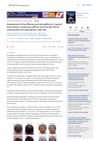
research Assessment of the efficacy and tolerability of a topical formulation containing caffeine and Procapil 3% for improvement of male pattern hair loss
The topical treatment with caffeine and Procapil 3% improved male pattern hair loss and was well tolerated after 12 weeks.
research Verilich hair serum in reducing hair shedding: A Case Report series
Verilich hair serum significantly reduces hair shedding and is safe to use.
research Finasteride bij vroege mannelijke kaalheid
Finasteride helps hair growth in early male baldness, but more long-term research needed.

research Crown-X: A Novel Menstrual Stem Cell-Based Therapy for Hair Regeneration in Male Pattern Baldness
Crown-X may effectively restore hair in male pattern baldness using menstrual stem cells.
research [Low dosage retinol and L-cystine combination improve alopecia of the diffuse type following long-term oral administration].
Retinol and L-cystine improve diffuse hair loss without side effects.
research Viable terminal scalp hair follicles constitute a necessary and sufficient biological end‐organ that conditions clinical efficacy of finasteride in males with male pattern hair loss without implying reversal of miniaturized follicles
Finasteride works for hair loss by maintaining existing hair follicles, not reversing miniaturization.
research Finasteride 1 mg in alopecia: sexual dysfunction, suicidal ideation. Providing balanced information to male patients is key.
research Evaluating the safety and effectiveness of minoxidil (5%) with procapil, redensyl, caffeine & transcutol vs plain minoxidil (5%) in androgenetic alopecia
MpowerTM may improve hair growth and satisfaction more than plain minoxidil, with mild side effects.
research 285 A new scalp treatment for anti-ageing hair
The new scalp treatment preserves hair color, reduces hair loss, and maintains hair strength.

research Mechanistic synergy of hair growth promotion by the Avicennia marina extract and its active constituent (avicequinone C) in dermal papilla cells isolated from androgenic alopecia patients
Avicennia marina extract and avicequinone C can potentially promote hair growth and treat hair loss by interfering with hair loss mechanisms and boosting growth factors.
research Male androgenetic alopecia treated with finasteride
Finasteride 1mg daily effectively increases hair growth and slows hair loss in men with male pattern baldness over two years.
research Artikel Pemanfaatan Lidah Mertua Sebagai Hair Tonic Untuk Perawatan Rambut Rontok
Using senseviera as a hair tonic can significantly reduce hair loss.