 June 2025 in “Biomolecules”
 RORA affects hair follicle stem cells' structure and movement, potentially helping treat hair loss.
 June 2025 in “International Journal of Cosmetic Science”
 Keratin-encapsulated liposomes effectively repair and protect UV-damaged hair.
 May 2025 in “International Journal of Molecular Sciences”
 DHHB from Platycladus orientalis L. promotes hair growth and could be a natural alternative to current treatments.
 May 2025 in “International Journal of Molecular Sciences”
 Exosomes from rat hair follicle stem cells may help heal wounds and regenerate skin.
 February 2025 in “Biomolecules”
 RORA boosts autophagy in hair follicle stem cells, potentially aiding hair growth.
 February 2025 in “International Journal of Molecular Sciences”
 RORA plays a key role in controlling seasonal hair molting by affecting hair follicle cell activity.
 January 2025 in “Advanced Materials Interfaces”
 Tannic acid can reduce hair loss by 56.2% by coating hair and releasing beneficial molecules.
 December 2024 in “Microorganisms”
 Microbiota changes in deer antler velvet aid in wound healing and tissue regeneration.
 August 2024 in “Current Protocols”
 The C3H/HeJ mouse model is useful for studying and testing treatments for alopecia areata.
 May 2024 in “Proteome science”
 Bleaching damages hair by reducing the quality of keratin and keratin-associated proteins.
 April 2024 in “Advances in Redox Research”
 Human hair strength and health are linked to sulfur compounds that can be reduced by stress but improved with sulfur supplements.
 February 2024 in “Heliyon”
 People with androgenetic alopecia have different lipid levels in their blood, which vary between men and women, and may be linked to a higher risk of metabolic syndrome.
 October 2023 in “Current Issues in Molecular Biology”
 The YH complex, made from Astragalus membranaceus and Cinnamomum cassia, may help treat hair loss by promoting hair growth and follicle development.
 July 2023 in “Journal of Cosmetic Dermatology”
 Ethosomes could improve how well skin treatments work, but more research is needed on their safety and stability.
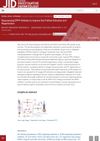 May 2023 in “Journal of Investigative Dermatology”
 Blocking DPP4 can potentially speed up hair growth and regeneration, especially after injury or in cases of hair loss.
 April 2023 in “JMIR Research Protocols”
 The study aims to create a model to predict health attributes using diverse health data from Japanese adults.
 January 2023 in “Brazilian Journal of Pharmaceutical Sciences”
 A method was found to accurately measure spironolactone and canrenone in blood samples using liquid chromatography-mass spectrometry.
Non-immune dermal cells dominate, epidermal cells increase after day 9, and certain immune cells persist beyond inflammation in wound-induced hair follicle regeneration.
February 2015 in “American journal of medical and biological research” Balding hair follicles have less growth-promoting factors and more inhibitory factors, leading to hair loss.
 January 2025 in “Nature Communications”
 Large-scale reconstructions enhance understanding of vibrissal sensory mapping in the brain.
 July 2025 in “Communications Biology”
 Rat vibrissae structure relates to their sensory function.
28 citations
,
June 2023 in “Small” VVF alone can't fully describe porosity in granular scaffolds.
December 2025 in “Indian Journal of Dermatology” Extraction videodermoscopy is an effective, non-invasive diagnostic tool for eruptive vellus hair cysts.
147 citations
,
September 2001 in “Computer graphics forum” The authors created a realistic and efficient method to simulate hair movement by combining fluid dynamics with individual hair strand behavior.
 April 2023 in “Our Dermatology Online”
 Trichoscopy is effective in diagnosing trichotillomania by showing specific hair patterns.
6 citations
,
February 2025 in “International Journal of Molecular Sciences” The new system greatly improves carvedilol's solubility and effectiveness.
 September 2025 in “Animals”
 Key proteins and pathways are crucial for wool fineness, but more research is needed.
April 2023 in “Anatomy Physiology & Biochemistry International Journal” PCOS in women from Karnataka is influenced by genetics, family history, and insulin resistance, requiring better diagnosis and treatment.
February 2023 in “Materials today bio” The treatment effectively promotes hair regrowth in androgenetic alopecia without causing skin irritation.
 December 2025 in “Zenodo (CERN European Organization for Nuclear Research)”
 Hair loss is caused by mechanical, thermal, and metabolic factors, not just hormones.