81 citations
,
February 2022 in “Bioactive Materials” The nanoparticles effectively deliver antibiotics to fight resistant bacteria.
 December 2023 in “Biological & pharmaceutical bulletin”
 IPM enhances skin penetration of hydrophilic drugs.
 1 citations
,
January 2009 in “X-ray Structure Analysis Online”
1 citations
,
January 2009 in “X-ray Structure Analysis Online” A new compound was made that might help treat diseases related to male hormones.
January 2026 in “SSRN Electronic Journal”  5 citations
,
April 2016 in “Proceedings of the Latvian Academy of Sciences. Section B, Natural, Exact and Applied Sciences”
5 citations
,
April 2016 in “Proceedings of the Latvian Academy of Sciences. Section B, Natural, Exact and Applied Sciences” Researchers created small amber particles for use in bioactive and biocompatible fibers that could help with skin and hair restoration and are safe for infant clothing.
116 citations
,
April 2022 in “Science Translational Medicine” The EG7 foam dressing improved wound healing and reduced inflammation better than other treatments.

Topical latanoprost acid at 0.05% concentration improved hair growth in women with androgenetic alopecia.
 1 citations
,
December 2016 in “Vìsnik farmacìï”
1 citations
,
December 2016 in “Vìsnik farmacìï” The best gel to treat a type of hair loss has 1% sodium alginate, 1% carbopol, 5% glycerin, 0.2% potassium sorbate, and water.
 January 2006 in “Journal of Society of Cosmetic Chemists of Japan”
 The new hybrid polymer improves dyed hair's color, feel, and manageability.
8 citations
,
February 2020 in “Journal of Drug Delivery Science and Technology” Encapsulating chlorogenic acid in nanoparticles boosts type 17 collagen production, potentially aiding skin care.
 January 2011 in “Journal of Society of Cosmetic Chemists of Japan”
 18-MEA and SPDA can restore damaged hair's smoothness and reduce frizz.
 6 citations
,
January 2018 in “Journal of Cutaneous and Aesthetic Surgery”
6 citations
,
January 2018 in “Journal of Cutaneous and Aesthetic Surgery” ACD-A gives the highest platelet count for hair rejuvenation, but Sodium Citrate results in less contamination, making it higher quality.
 1 citations
,
January 2025 in “RSC Advances”
1 citations
,
January 2025 in “RSC Advances” Ascorbic acid derivatives improve drug delivery systems.
November 2022 in “Asian Journal of Pharmaceutical Research” The hydrogel with Finasteride provides controlled, sustained drug release and improved bioavailability.
 15 citations
,
July 2002 in “Australasian Journal of Dermatology”
15 citations
,
July 2002 in “Australasian Journal of Dermatology” Two plywood factory workers developed contact dermatitis from phenol-formaldehyde resin, a known allergen.
 263 citations
,
February 2013 in “Wiley interdisciplinary reviews. Nanomedicine and nanobiotechnology”
263 citations
,
February 2013 in “Wiley interdisciplinary reviews. Nanomedicine and nanobiotechnology” Polymeric nanoparticles show promise for treating skin diseases.
 June 2024 in “International journal of biological macromolecules”
 The hydrogel effectively stops bleeding and heals diabetic wounds quickly.
1 citations
,
May 2025 in “Carbohydrate Polymers” The new chitosan dressing heals wounds better and faster than current products.
14 citations
,
March 2025 in “Nano Today” The hydrogel dressing speeds up and improves diabetic wound healing.
 1 citations
,
June 2014 in “Vìsnik farmacìï”
1 citations
,
June 2014 in “Vìsnik farmacìï” A medicinal cosmetic product for treating Androgenetic Alopecia was developed using plant-based substances, Saw palmetto and Japanese Sophora, with pumpkin seed oil and stabilizers like Carbopol, sodium alginate, xanthan gum, Tween-20 and cetyl alcohol.
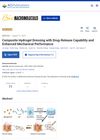 August 2025 in “Biomacromolecules”
 The hydrogel dressing improves wound healing, offers long-lasting antibacterial effects, and enhances patient comfort.
30% supramolecular salicylic acid is safe and effective for treating mild to moderate facial acne.
5 citations
,
January 2020 in “Skin Appendage Disorders” The nail strengthener with Pistacia lentiscus and hyaluronic acid improves brittle nails' appearance and strength.
October 2022 in “Zenodo (CERN European Organization for Nuclear Research)” Combining PDLLA and PRP effectively reduces wrinkles and improves skin quality.
 2 citations
,
January 2015 in “Elsevier eBooks”
2 citations
,
January 2015 in “Elsevier eBooks” The document says biodegradable cosmetics and packaging are better for the environment and user experience.
49 citations
,
January 2017 in “Journal of Materials Chemistry B” The hydrogel helps heal skin injuries by promoting blood vessel and hair growth.
 34 citations
,
October 2014 in “European journal of pharmaceutics and biopharmaceutics”
34 citations
,
October 2014 in “European journal of pharmaceutics and biopharmaceutics” The new drug delivery system releases the drug better in sebum and targets follicles more effectively than the conventional cream.
12 citations
,
October 2015 in “Journal of bioactive and compatible polymers” Keratin hydrogel from human hair is a promising biocompatible material for soft tissue fillers.
3 citations
,
October 2023 in “Cosmetics” Effervescent cleansing tablets with Asiatic acid were successfully developed, showing good stability and cleansing effectiveness.
 January 2025 in “International Journal of Pharmaceutical Research and Applications”
 Hibiscus mucilage is an effective gelling agent for diclofenac diethylamine gel.